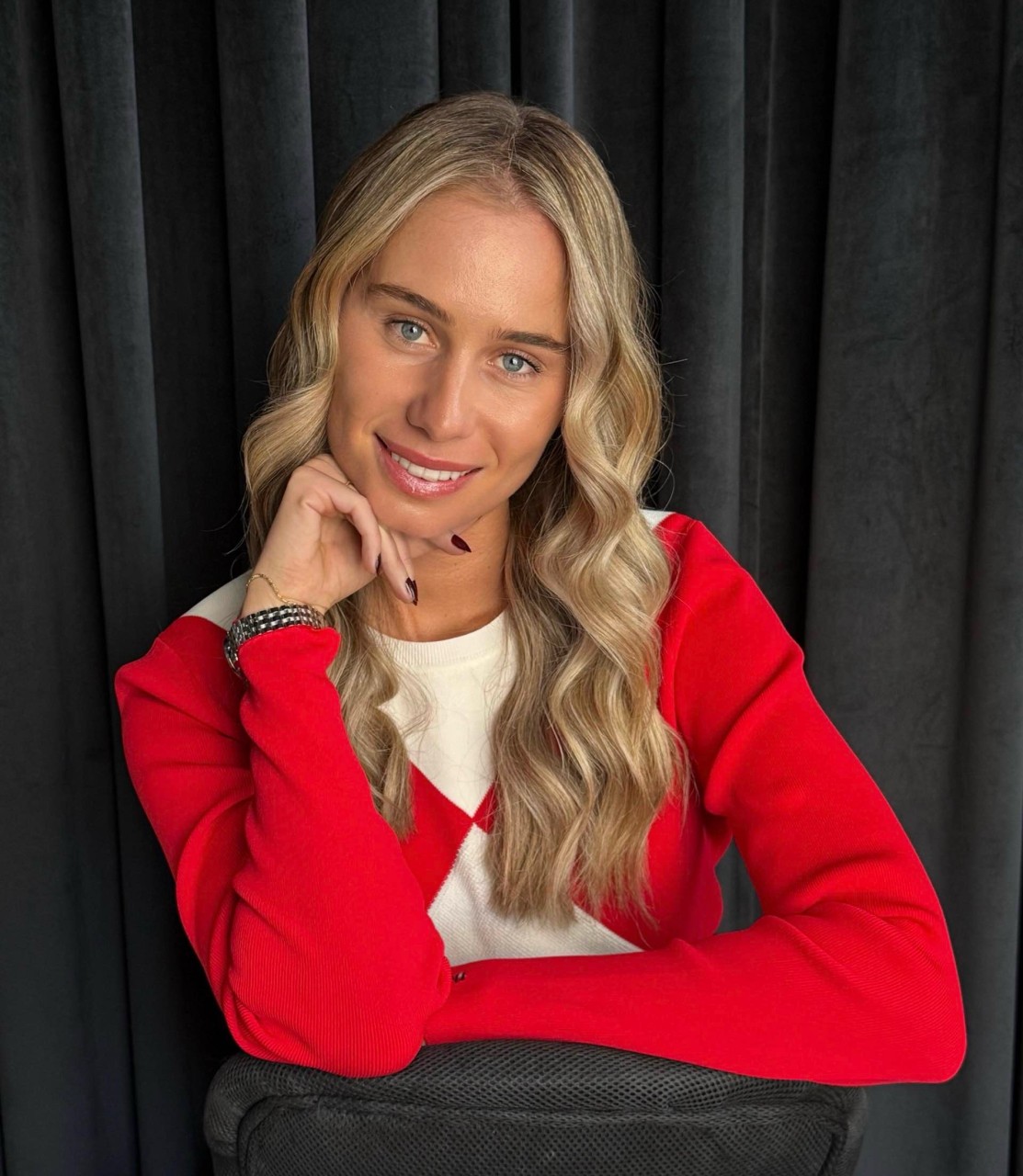
Introduction
As a teenager, Elena Bogdan stepped into the spotlight at Roland-Garros: a girls’ singles finalist against Simona Halep in 2008, she returned the following year to win the junior doubles title. The Romanian player later reached world No. 151 in singles and No. 79 in doubles, adding a WTA title to her record. Yet rankings tell only part of her story.
In Beyond the Lines: Timeless Insights from the Tennis Court to Life, her book released in 2026, she draws on fifteen years of competition to explore twelve principles of courage, patience, confidence and perseverance. Writing has also opened a different path: sharing the lessons of sport with people facing challenges far beyond the tennis court.
In this written interview for JLPDécryptage, Bogdan reflects on the weight of early expectations, the point at which perseverance can become counterproductive, and a belief that runs through her work: a person’s worth cannot be reduced to results.

ELENA BOGDAN’S BOOK
Beyond the Lines
Timeless Insights from the Tennis Court to Life
Drawing on fifteen years in professional tennis, Beyond the Lines explores twelve life principles, including courage, patience, confidence and perseverance.
THE INTERVIEW · EIGHT QUESTIONS
THE BOOK: THE STORY BEHIND THE LESSONS
Beyond the Lines transforms fifteen years of professional tennis into twelve principles for navigating life. Yet writing about one’s own experiences often requires confronting memories that competition leaves little time to process.
QUESTION JLPDÉCRYPTAGE
When you began writing this book, what did you discover about yourself that you had never fully understood during your playing career? And was there a particular experience that ultimately convinced you these lessons deserved to be shared beyond tennis?
ANSWER ELENA BOGDAN
I don’t think there was anything I discovered that I wasn’t already aware of, but it was definitely a reminder of the importance of patience, as this whole process lasted over two years. It was also a reminder that if you persevere, you will eventually succeed. As this was an entirely new process for me, there were many times when I wanted to give up, and I’m really glad I didn’t.
I think it’s important to give back in life, and I’m happy to do that on the tennis court. However, there was also a part of me that wanted to make an impact on a larger scale, and that’s how the book came to life. I believe tennis is the sport that most closely relates to life, and I believe many people can benefit from the life lessons we learn as professional tennis players.
THE INVISIBLE WEIGHT OF EXPECTATIONS
In 2008, you reached the Roland-Garros junior singles final against Simona Halep, before winning the junior doubles title the following year. Such early achievements can create enormous expectations, both from others and from within.
QUESTION JLPDÉCRYPTAGE
Looking back through the perspective you have developed in Beyond the Lines, how did the pressure to fulfil your early potential influence your relationship with success, self-worth and the fear of disappointing others? What would you now tell the young Elena preparing to enter the professional circuit?
ANSWER ELENA BOGDAN
Well, this is a great question. I think that, as I’ve done a lot of work on myself and matured, I’ve realized how important it is to define what success looks like to you, because if you don’t, you’ll spend the rest of your life chasing someone else’s version of it.
I’ve stopped measuring my self-worth by the trophies I win or my financial success. Instead, I base it on how I treat others and the impact I have on their lives.
With the knowledge I have now, I think I would tell my younger self, Elena, to follow her own inner voice and define success on her own terms, rather than listening to other people’s opinions.
WHEN RESILIENCE BECOMES A BURDEN
Your career was shaped not only by significant achievements but also by injuries, financial uncertainty and moments when continuing to compete became increasingly difficult. Your book explores perseverance, patience and the lessons of failure.
QUESTION JLPDÉCRYPTAGE
Where do you now draw the line between healthy perseverance and the pressure to keep fighting at any cost? Can knowing when to change direction require more courage than refusing to give up?
ANSWER ELENA BOGDAN
Well, I would say I’ve never been particularly stubborn.
I think healthy perseverance comes from having a goal that you simply can’t stop thinking about. That was certainly the case with my book.
I believe perseverance becomes unhealthy when you chase a goal that doesn’t align with who you are. Maybe it’s something someone else wants for you, or something you think you should want. I believe things can become toxic in those situations. But when you are fully aligned with your goal, perseverance can be a wonderful thing.
THE PSYCHOLOGY OF PERFORMANCE
One of the central ideas in Beyond the Lines is learning to remain present under pressure and finding a state of flow rather than becoming overwhelmed by the importance of a result.
QUESTION JLPDÉCRYPTAGE
What have you learned about the relationship between confidence, emotional regulation and peak performance? And how can someone develop a more constructive relationship with pressure when their instinctive response is fear, self-doubt or excessive self-criticism?
ANSWER ELENA BOGDAN
I think confidence, emotional regulation and peak performance are deeply connected. Confidence is not about believing everything will go your way or that you will never make mistakes. It is about trusting yourself and knowing that, whatever happens, you will be able to handle it.
One of the most important things I’ve learned is that you cannot always control the outcome, but you can control how you respond. In tennis, as in life, we often become overwhelmed because we attach too much importance to the result and lose connection with the present moment. I believe the key is to shift your focus from the outcome to the process, one point or one step at a time.
For someone struggling with fear or self-doubt, I would encourage them to become more aware of their inner dialogue, treat themselves with compassion and understand that mistakes are part of growth. Ultimately, peak performance comes when you can give your best without being emotionally attached to the result. When you trust yourself and stay present, you create the conditions to find your flow.
FROM PROFESSIONAL ATHLETE TO MENTAL COACH
You have spoken about working with a sports psychologist during your career and, more recently, supporting players with the mental aspects of competition while developing your own expertise in this field.
QUESTION JLPDÉCRYPTAGE
What first inspired you to move from experiencing the psychological demands of elite sport to helping others navigate them? Was there a defining moment when you realised that your most valuable contribution might no longer come from your own results, but from what you could help another person understand or overcome?
ANSWER ELENA BOGDAN
I think it came quite naturally from my own experiences as a professional player. Having worked with a sports psychologist during my career, I understood first-hand how much of a difference the mental side of the game can make, not only to performance but also to the way you experience the sport and yourself.
Throughout my career, I learned many lessons through challenges, setbacks and moments of self-doubt. Over time, I became increasingly interested in understanding the mental side of performance and realised how much I enjoyed sharing those lessons with others.
I think there comes a point when you start looking beyond your own achievements and asking yourself how you can use your experiences to help others. For me, that has become incredibly rewarding. Seeing another player gain confidence, overcome a mental barrier or simply develop a healthier relationship with the game can be just as fulfilling as winning a match yourself.
EXPERIENCE, EXPERTISE AND RESPONSIBILITY
Having experienced the pressures of professional tennis gives you a perspective that cannot be acquired through textbooks alone. At the same time, effective mental coaching requires structured methods, professional boundaries and an understanding that every individual responds differently.
QUESTION JLPDÉCRYPTAGE
How do you combine your personal experience as an elite athlete with the coaching knowledge you are developing? And how do you ensure that the lessons that helped you personally become useful guidance for someone whose personality, circumstances and challenges may be entirely different?
ANSWER ELENA BOGDAN
I think my experience as a professional athlete gives me a valuable starting point because I understand first-hand the pressures, emotions and challenges that come with competing at the highest level. However, I also believe that one of the most important things in coaching is understanding that there is no one-size-fits-all approach.
What worked for me might not necessarily work for someone else. That is why I believe it is important to listen, ask the right questions and understand each individual’s personality, needs and circumstances before offering guidance. I want to combine the lessons I’ve learned throughout my career with the knowledge and tools I am developing, rather than simply telling people what worked for me.
Ultimately, my role is not to give someone my answers, but to help them find their own. I believe the best coaching happens when people feel understood, supported and empowered to discover what works best for them.
BEYOND TENNIS: A PHILOSOPHY FOR EVERYDAY LIFE
Your book is intended not only for athletes but also for people navigating professional transitions, setbacks, uncertainty and the search for a more meaningful direction.
QUESTION JLPDÉCRYPTAGE
Among the twelve principles explored in Beyond the Lines, which one do you believe is most misunderstood or overlooked in everyday life? How could applying that principle genuinely change the way someone approaches an important personal or professional challenge?
ANSWER ELENA BOGDAN
I would say the chapter on courage. I think courage is often misunderstood because people associate it with being fearless, when in reality, courage is about taking action despite being afraid. It is about being willing to step outside your comfort zone, take risks and embrace uncertainty, even when you don’t know how things will turn out.
I believe this is particularly relevant in everyday life because so many people stay in situations that no longer fulfil them simply because they are afraid of change or of failing. We often wait until we feel completely ready or confident before taking the next step, but I think courage is about understanding that you may never feel 100% ready.
Applying this principle can be life-changing. Whether it means starting something new, changing careers, pursuing a dream or having a difficult conversation, courage allows you to move forward instead of letting fear make decisions for you. I believe that some of the most meaningful opportunities in life begin when we have the courage to do something that scares us.
THE LEGACY BEYOND THE SCOREBOARD
For much of your life, progress could be measured through rankings, victories and performances. Today, through your book and your work in mental coaching, you are beginning to build something whose impact may be far less visible but potentially more enduring.
QUESTION JLPDÉCRYPTAGE
When you imagine the legacy you would like to leave through Beyond the Lines and your work with others, what matters most to you? And if a reader were to remember only one idea from your book many years from now, what would you hope it would be?
ANSWER ELENA BOGDAN
I think what matters most to me is knowing that something I’ve experienced or learned along the way can make a positive difference in someone else’s life. Throughout my tennis career, success was often measured through rankings and results, but today I find just as much meaning in being able to help someone overcome a challenge, see things differently or believe in themselves a little more.
With Beyond the Lines, I hope to remind people that there is so much more to life than achievements and external validation. The lessons we learn through sport are incredibly relevant to everyday life, and I would love for the book to reach people who might need a different perspective or a little encouragement at a particular moment in their lives.
If readers were to remember just one thing, I would hope it would be that your worth is not defined by your results, that you always have the ability to choose how you respond to life’s challenges, and that the most important victories are often the ones that happen within you.
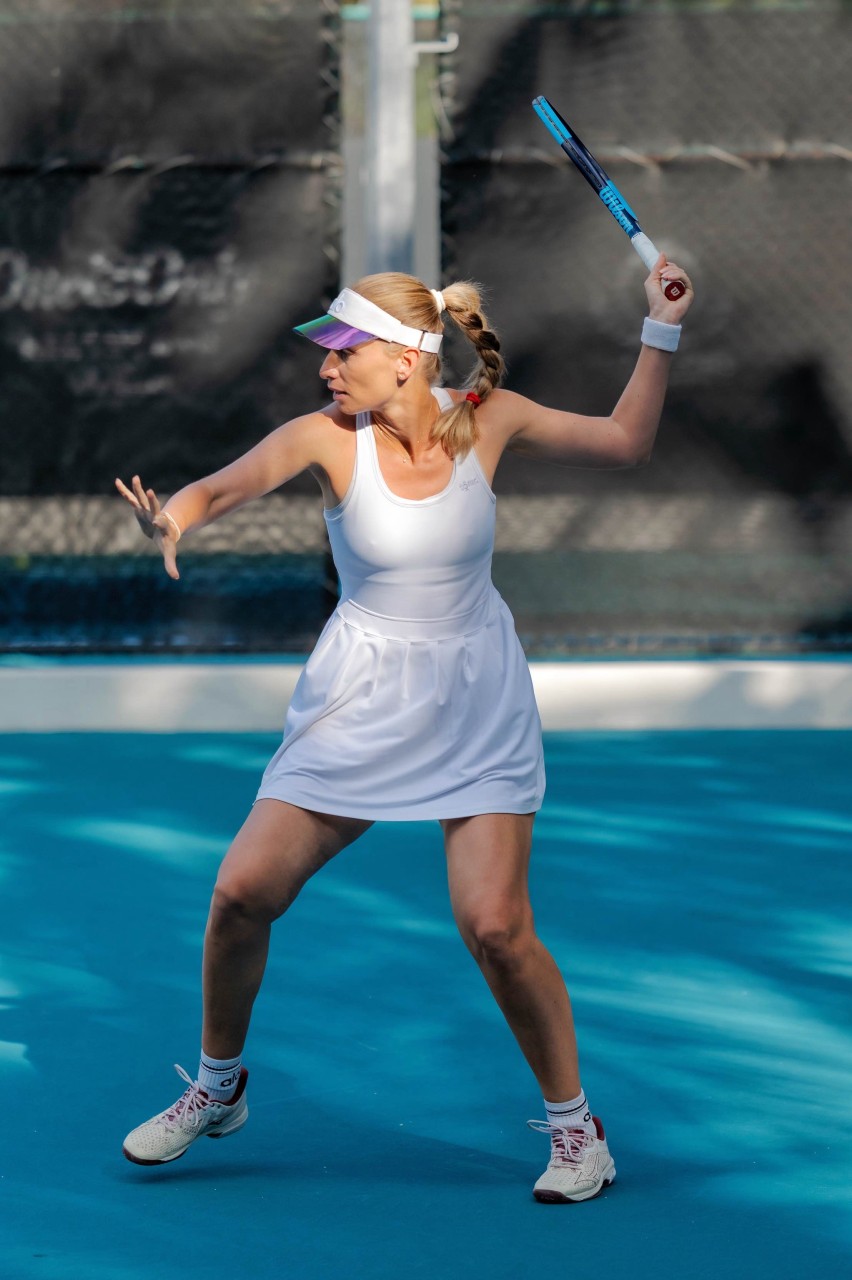
ABOUT ELENA BOGDAN
Elena Bogdan is a former Romanian professional tennis player, born in Craiova in 1992. She was runner-up to Simona Halep in the 2008 Roland-Garros girls’ singles final and won the tournament’s junior doubles title in 2009 alongside Noppawan Lertcheewakarn. On the professional tour, she reached a career-high world ranking of No. 151 in singles (2011) and No. 79 in doubles (2015). In 2014, she won the WTA Bucharest doubles title with Alexandra Cadanțu.
Since her playing career, she has pursued mental coaching and the sharing of lessons learned in elite sport. Her 2026 book, Beyond the Lines: Timeless Insights from the Tennis Court to Life, draws twelve principles from fifteen years of professional tennis, exploring confidence, courage, patience, failure and the freedom to define success on one’s own terms.
SOURCES DE VÉRIFICATION / FACT-CHECKING SOURCES
Repères biographiques et bibliographiques utilisés pour l’introduction et les sections « À propos ». Les questions et les réponses anglaises proviennent du document transmis par Elena Bogdan. La version française est une traduction éditoriale fidèle.
- Roland-Garros / FFT — finale juniors 2008https://www.rolandgarros.com/fr-fr/article/top-10-ils-elles-ont-fait-le-double-juniors-seniors-roland-garros (new tab)
- ITF — palmarès et profils officielshttps://www.itftennis.com/en/players/elena-bogdan/800279018/rou/wt/s/overview/ (new tab)
- WTA — classement, palmarès de Bucarest et titreshttps://www.wtatennis.com/players/314318/elena-bogdan/record (new tab)
- WTA — Bucarest 2014, résultats du doublehttps://www.wtatennis.com/tournaments/1079/bucharest/2014 (new tab)
- Google Play Books — Beyond the Lines, édition audio, octobre 2026https://play.google.com/store/audiobooks/details/Elena_Bogdan_Beyond_the_Lines?id=AQAAAEBG2DKYZM (new tab)
- Roland-Garros juniors 2009 — palmarès du doublehttps://en.wikipedia.org/wiki/2009_French_Open_%E2%80%93_Girls%27_doubles (new tab)
Note éditoriale : les réponses originales anglaises sont reproduites intégralement, sans coupe ni réécriture de fond ; seules les coquilles éventuelles ont été harmonisées. La traduction française a pour seul objet de restituer fidèlement les propos de l’interviewée.