Interview
Frédéric Petit
“Language is a freedom, language is an invitation”
The Franco-German couple, digital sovereignty, mediation and influence diplomacy: a lived reading of European construction.
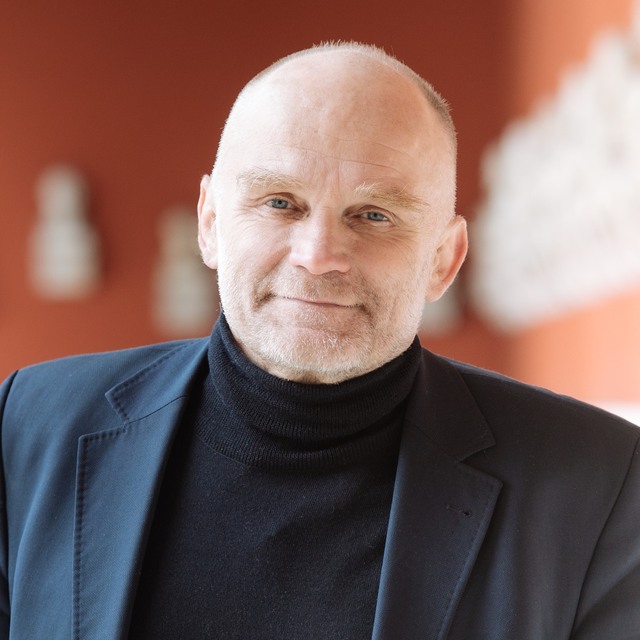
Facing the geopolitical recompositions crossing the continent, a strictly institutional reading of Europe quickly shows its limits. Understanding the tensions attributed to the East and the West, the resistance of democracies in the face of the war in Ukraine, or the stakes of digital sovereignty also requires a concrete knowledge of civil societies. It is precisely at this human and territorial scale that Frédéric Petit is situated.
An engineer by training, an executive in Central Europe, a mediator and then a member of parliament for French citizens established in Germany, Central Europe, and the Balkans, his career departs from the usual trajectories of the European technostructure. This plural experience gives him a singular perspective on the realities of the continent. Far from an exclusively institutional approach, he observes the spaces where influence diplomacy is built, where languages shape political representations and can become, as the war in Ukraine reminds us, an issue of sovereignty and domination.
For Frédéric Petit, European construction is not decreed: it is practiced and inhabited. From the constitutive tension of the Franco-German engine to mediation as a principle of democratic organization, his reflection draws on the experience of peoples, territories, and languages. The myth of Babel, which he interprets not as a punishment but as an invitation to encounter otherness, sheds light on his conception of a Europe whose linguistic diversity would not be an obstacle, but one of its foundations.
At a time when the European Union must simultaneously respond to war, climate change, and technological dependencies, this reading anchored in reality makes it possible to question its adaptive capacities, its instruments of influence, and the principles on which it intends to build its future.
The Franco-German couple remains central in the European Union, but several Central European countries have sometimes stood aside. Does this Franco-German engine still bring Europe together, or does it risk accentuating the fracture between East and West?
I do not believe much in the true reality of this fracture between East and West. One of my former collaborators wrote a very good book called "Eastern Europe Does Not Exist".
I believe that there are many things in the history of the European Union, in the history of Europe, which prove that this idea of the European Union, the central idea, even, of the European Union, the nie wieder, the idea that one can disagree without making war if one builds something in common, has existed for several centuries, and including in the territories of Eastern Europe: the Republic of Two Nations from Vilnius to Odessa, the Republic of Voivodina in the Balkans in the 19th century, the Vormärz (Mickiewicz, who came from today’s Belarus, was present at the Hambach Festival...). So I do not believe much in the relevance of this East-West division in the destiny of the European Union.
Of course, there is a historical division that arrived later because of the Iron Curtain. But there are enormous things that come from very, very far back and that are part of this very deep European construction. So yes, in this, the Franco-German couple represents a very particular history since it is a history more than of reconciliation, it is accepting to be united despite enmity, despite the fact that we have been enemies and that we are, even today, in disagreement on a certain number of things.
And this, yes, remains essential in European construction.
An engine is made of action and reaction. An engine is in tension. When we speak of the Franco-German engine, if there is energy in an engine, it is because there are things that clash and friction, and that is normal. Otherwise, if it is a long quiet river, there is much less energy.
I do not think that this Franco-German engine is exclusionary because it represents something that is extremely symbolic and that is very specific to what European history is. And obviously, there are stories of reconciliation that also exist between Germany and Poland, that also exist between Poland and the
Czech Republic, that also exist between Hungary and Austria, between Hungary and the Balkans.
But what we call the Franco-German engine couple is nevertheless a story of reconciliation that has been brought to its paroxysm and therefore which brings together, at least symbolically, Europe, whether it is Northern Europe, Southern Europe, Europe that is more to the east or Europe that is more to the west.
Energy transition, industrial autonomy, and security are now closely linked. Is climate change transforming geopolitical balances faster than the European Union can adapt to it?
Yes, but not only climate change. I believe that climate change is a phenomenon that is increasingly present in all geopolitical balances, no more in the Franco-German context than in others. I had written a publicly accessible report with a colleague in 2019 called "The Impact of Climate Change on Geopolitical Issues in the World."
We ended up excluding the Arctic Ocean, because it is a completely separate subject, but we had carried out quite significant work to show how, indeed, the issues linked to climate change transform geopolitical issues. Very concrete things: the drying up of Lake Chad, the Sahel will never be the same again. The political, geopolitical balances of the Sahel with a Lake Chad in which, like when I was a kid, one could still drown - there were 2 meters, 3 meters of water, there were kouril cattle passing from island to island, there was life around Lake Chad, which was a kind of inland sea - It is certain that at that time, the countries around it had a completely different geopolitics than today where it is almost dry. So yes, we took another example: there are about ten or a dozen enormous coastal cities, coastal megacities that could be swallowed up in the coming decades. It is necessarily a disruption that does not only concern the country where they are located, but which will be a geopolitical disruption.
That being said, until now, the European Union as we began to build it 80 years ago is not very adapted to these transformations coming from climate change, to this kind of major rupture. It learns quickly, it is learning. It was not adapted to Covid, it adapted to Covid. It was not adapted to the eruption of war on its territory, it adapted to it. I think the European Union will inevitably adapt to climate change. I think the current discussions on the new CAP are part of this.
What is a somewhat unfortunate force of inertia within the European Union, sometimes, is that since the European Union was made during a large part of its history at the time when we were reaping the peace dividends, it sometimes tends to be a bit wordy, and not to work very quickly on issues that sometimes require more speed. But I find that it is making very interesting efforts at the moment.
You distinguish economic sanctions against Russia from cultural sanctions that you consider counterproductive. In a war where culture and information are also weapons, does this distinction remain tenable?
I admit I do not understand this question. I think there is a misunderstanding in a sentence I may have said, and I do not see what you are referring to.
So I have a lot of difficulty answering it.
I do not see what a cultural sanction is. I would even rather be in the opposite, I do not distinguish. I believe that precisely, in a war where culture and information are also weapons, it is possible that we have to defend ourselves on several fronts. Moreover, like culture, the economy is both a tool of reconciliation, like the ECSC between France and Germany, or a tool of pressure…
In Central Europe and the Balkans, France is confronted with strong competition for influence. Has it bet too much on the discourse of values to the detriment of sustainable investments in education, language, and universities?
No, I do not really agree with this proposition.
First, because often, in these countries, it is the French school that is still there, and very much there. In all the countries of my constituency, there are one or two French schools. There are French Alliances, Cultural Centers. There are research centers. There are French researchers almost everywhere, in Warsaw, Odessa, Belgrade, Romania, Prague. There is the Marc Bloch, obviously, in Germany, but in Prague, there is the CFRES. I do not think there is a disappearance of these investments. On the contrary, I find that it is on the affirmation of values that France has sometimes been a bit timid. Things must be said simply. When a dictatorship is a dictatorship, it must be said that it is a dictatorship. We do not necessarily have to enter into hard conflict, to send an atomic bomb because it is a dictatorship, but things must be said.
So I believe it is rather the opposite.
That being said, the big problem we have in influence, in what is called influence diplomacy - which I call civil society diplomacy - the big problem we have is a problem of coordination of France’s action, and therefore also the evolution of the role of embassies. We have made enormous progress over the last 10 years, there was a very good speech by Jean-Yves Le Drian and the President of the Republic in 2019 to the ambassadors, which marked this break, saying that we must form "Team France". There is not institutional, governmental, or official diplomacy on one side, then on the other side the action of France, then on the other side the action of companies, then on the other side the French high school, then on the other side town twinning... etc... Obviously, everyone must remain themselves, and within their competencies. It is not the ambassador who must do economics, it is not even the ambassador who must be a teacher, it is everyone’s job, but there must
be French teams, people who work together, and I believe that is the improvement we must bring, because we are sometimes barely visible, while still being very present. Very quickly, for example in the Balkans, as soon as there was the idea of making a strategy, companies came, French alliances were created, the presence of French-speaking journalists developed, bilateral associations were created, etc. So I think we have more of a problem with how our diplomacy is organized, and which is, in fact, a question of the State’s efficiency as a network animator where it no longer does everything, all by itself,
We have important work, on which I will focus my effort in my report on cultural diplomacy this year, which is the development of university research centers abroad.
We could, in particular in the constituency, that is to say in Central Europe, develop a few UMIFREs. UMIFREs are these research units that are abroad, like Marc Bloch, like the CFRES, we have 27 of them in the world. I think it is a very light tool, they are well coordinated by the CNRS. But the CNRS has always rather positioned itself as a manager of those that exist, rather than as a developer and strategist.
A small brick is missing between geopolitics and science for this work to be completed. A very simple example: it is ripe today to go create a UMIFRE in Odessa. We have someone who has done sociological research, a French woman who has done sociological research in Kharkiv and who has done absolutely extraordinary work on the territory of Kharkiv. So I think this aspect of research centers abroad could be further developed.
But fundamentally, I find the situation encouraging. And I insist: on values, we must assert our values. When there is an invasion, there is an invasion. When there is a dictatorship, there is a dictatorship. When there is an economic error, there is an economic error, etc.
To be French, to be a democrat, is to say things as they are.
The main artificial intelligence models are largely English-speaking and fed by American corpora. Does European digital sovereignty also depend on our ability to preserve French as a scientific, technical, and political language?
I agree with the first part of the question. But European digital sovereignty does not have to be "English-speaking" or "French-speaking", the problem comes from the fact that today, corpora and models are mastered by foreign countries, and which contest our sovereignty, whether they are English-speaking or otherwise. We must master our tools, but whether it is in German, Polish, or other languages. It is not a will to bring French back to the forefront. French will develop because the French will be good, because the French will be present, because the French
will go back to all corners of the world to carry their values. To take up the concrete example above, if the French spend their time saying that a dictatorship is a dictatorship, people who are against dictatorships will start speaking French again. It is in this sense that the question must be asked, not starting by bringing French back as such in order to be able to work, but starting by working, and French will return.
And then I think that French is a language that evolves, a language that moves forward, French is present, in fact, and it is even on the rise, apparently, since Brexit, particularly in Brussels. There are tons of places where one can increasingly speak French, but not because it has been imposed, not because a campaign has been made for people to speak French, simply because we have been more present, because we have a growing French high school, because we have more presence and actions that make people want to: watch our films, work with our companies, with our researchers, with our politicians, even…
Allow me a focus on this subject. I think it is important to learn German. What bothers me more is that people no longer learn very rich languages. English is not really a very rich language, a language that allows one to have a cultural background and to be projected outside of oneself to go discover the world. English is a universal communication language, but a bit poor in the way it is used.
Learning German is much more than learning a language to get by in a foreign country. It is a matrix, more than "just another language". I am fighting for German to make a comeback in education in France, and then I dream, why not Polish? Because I am sure that someone who has learned German, or Polish, someone who will have discovered these other linguistic worlds (which simple, vehicular languages do not do – no one speaks the English of Shakespeare or the Spanish of Cervantes, nor even the Italian of Dante or Eco) will be more open to the world and will better carry European values than someone who speaks only one language.
You present European construction as a mediation between former enemies. Faced with a lasting war in Ukraine and the apparent absence of compromise, does mediation remain a credible path or must it be entirely rethought?
Yes, mediation will inevitably be a credible path, but I do not really see what it means that mediation should be entirely rethought. There are many different models of mediation, and mediation is something that is necessarily constantly rethought by its actors. Otherwise, it is not mediation. Mediation is not rules, it is not a judgment, precisely. There are no two mediations that are identical and there are no two mediators who are identical.
Mediation is increasingly developed, indeed, and I think it is a tool of the future for our democracies.
But mediation is not arbitration, conciliation, negotiation... etc. It is quite precise. The principles of mediation, I recall them: a mediation is first of all voluntary - one never imposes a mediation, otherwise it is not a mediation! Then, there must be a neutral third party, chosen by the parties, impartial and independent - which are in fact different notions. And from there, one can set up a mediation.
In geopolitics, I often say that the European Union is a permanent mediation, because the creation of the European Union was voluntary. It was people who said "yes, we want to stop fighting. We do not know yet how we are going to do it, but we want to do it". And then, is there a neutral, impartial, and independent third party? Yes, that is what we are trying to create with the treaties and common institutions. There is therefore an effort of neutrality and independence; and it is impartial, since the treaties do not favor anyone.
Engineer, executive in Central Europe, mediator and then member of parliament, which experience has most profoundly transformed your way of thinking about Europe and international relations?
That is quite easy, what has most transformed my way of seeing Europe is the learning of languages. I will be very clear.
First, very early in my life, about forty years ago, I discovered what it was to plunge into the ocean of a language that one did not understand at all, at all, at all, and that one told oneself one would never manage it.
Then to discover that one, then to discover others and to understand that, as a friend said: "one does not learn a language, one inhabits it". One appropriates more and more new spaces, sometimes contradictory but which precisely allow finding agreements, relations. What is the opposite of international relations is not necessarily conflict - conflict is a form of international relations as long as it remains unarmed: destroying the other is not being in relation, of course.
But what is the opposite of international relations is indifference, it is not having any relation at all, and not even being interested in the way the other speaks, writes, thinks...
I consider that what took me out of my comfort zone as a young French person in the 70s and made me discover that the world was not as simple as one could think, but that moreover it was much more interesting, much richer and much more promising than my little horizon made of French language, a little German and then international English, is certainly that of having learned languages. When one learns a language, one knows what songs are sung to children, one knows what fairy tales are, one knows what the ways of laughing are. In one language and in another. All these things that make one decenter and manage to approach notions that are humanist notions, and not selfish and identity-based notions.
Man’s identity can only be a constructed and shared identity.
There is something I often say and in which I deeply believe - too bad for my Polish friends who think that in the west there is no one left who is believing…
I think that Babel, the myth of Babel, is not a punishment, it is an answer.
Let me explain: the story in the Bible is that men say "we want, we want to be God, we want to compare ourselves to God, to go see Him"; God is up there so we go, we all get together, we organize ourselves and we are going to build a very, very big tower and we are going to see Him, we are going to talk to Him, tell Him what we think. God sees this and imposes different languages on them, and the construction site of the Tower of Babel stops and perishes...
The text says, at that moment, God scattered them on the earth and made them speak different languages. But I do not say at all that it was a punishment, to divide them to better rule. It is an answer. It is that God told them: you are looking for Me, you want to talk to Me, but I am not up there, Me. I am in the difference. I am in the fact that you do not understand the other. I am in the relationship with someone you do not understand. That is where I am found, if you want to see Me. I give you different languages so that you learn to go out and to transcend yourselves.
That is exactly what Babel is for me.
What therefore helped me the most in my career is this notion of language. I was very proud to be able, more or less, with more or less assistance in the different languages, but to be able, for example, to manage in Central Europe. I was at the commercial register in Serbia. That meant having to understand a minimum of Serbian to know what I was signing. That idea expresses, yes, that I am going to come and understand you, although I am facing this wall of sounds and syntax that separates us both.
And I believe that it is very symbolic, moreover, the European Union is the only political bloc in which it has been decided that every directive would be translated into 24 languages. It is a sign of what we are.
And moreover, confrontation, one of the fields of confrontation that produced the war in Ukraine, is language. We, we say that we have 24 languages, and over there, Moscow says: "If your parents speak Russian, or if you speak Russian, or if your children speak Russian because I am going to take care of them, I am the boss".
And I remind you of what Lavrov said in March or April 2022 to justify the aggression. He said: "But finally, suppose the Walloons have a problem with the Flemish, everyone would understand that Macron takes his army to go defend the French minority in Belgium!"
Well no. He, he believes in that. But we, we say, no. There is no French minority in Belgium. There are Belgian citizens who speak French.
So language is not a determinism. Language is a freedom, language is an invitation.
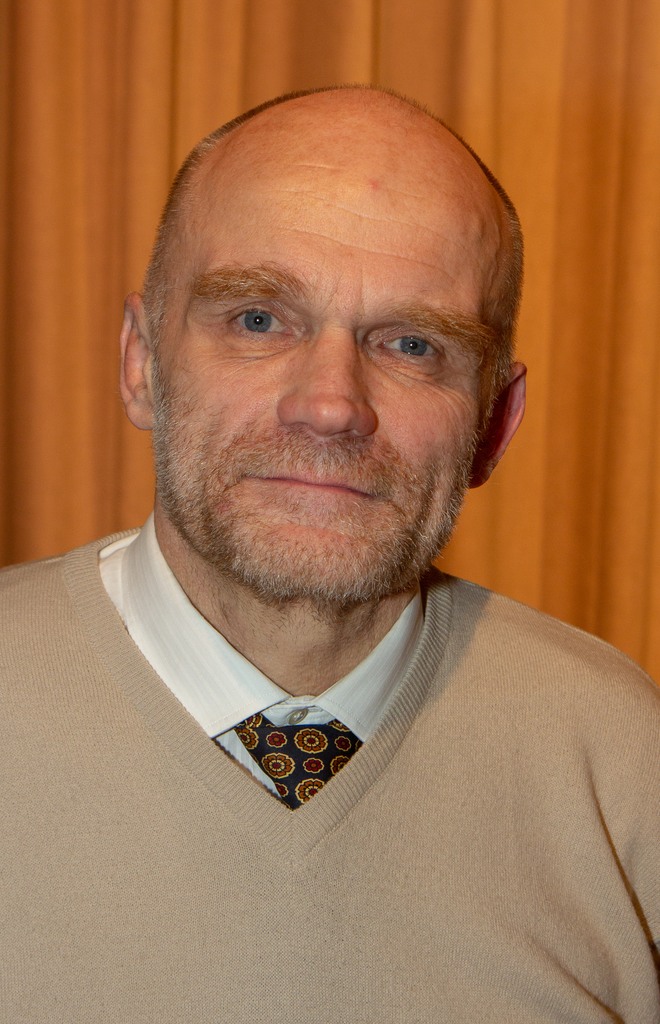
About Frédéric Petit
An engineer by training, with degrees in environment, history, and classical literature, Frédéric Petit has built a career at the crossroads of industry, European affairs, and public action.
After managing several companies in the energy and infrastructure sectors in France, Lithuania, Poland, Egypt, and more broadly in Central Europe, he holds management responsibilities within international groups such as Veolia, Dalkia, and Consolis. He then leads organizations bringing together several hundred collaborators and intervenes on issues related to energy, infrastructure, environment, and industrial development.
His international experience also leads him to carry out environmental expertise missions in Ukraine and Poland, as well as to be appointed Foreign Trade Advisor of France in Egypt and then in Poland.
Elected as a member of parliament in 2017, he represents French citizens established in Germany, Central Europe, and the Balkans in the National Assembly. His commitment focuses in particular on European affairs, parliamentary diplomacy, mediation, international relations, and sovereignty issues.
His career, combining economic responsibilities, field experience, and political commitment, feeds a singular reflection on European construction, the dialogue between civil societies, and the place of languages in international relations.