JLP Décryptage · In-depth interview
Joël Gautier“Freedom is a precious thing”
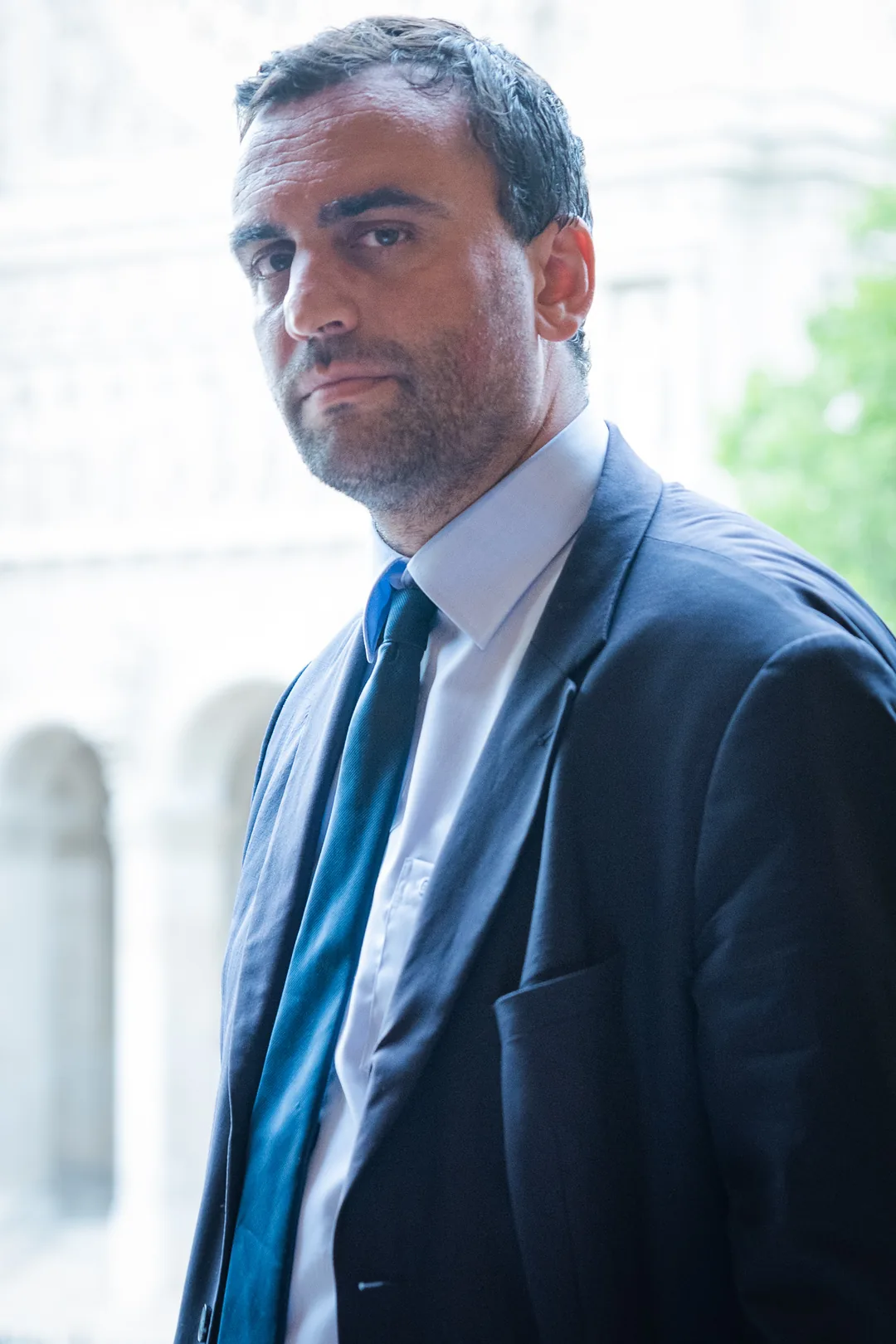
A member of the Paris Bar since 2007, Joël Gautier chose independence early in his career. His path spans fields that may initially seem far apart: litigation, defence institutions and chess. Yet the same question runs through them: how can sound decisions be made when power dynamics, uncertainty and human factors intersect? Active in the chess world, notably through Barreau Paris Échecs, the club he founded in 2018, he also represented grandmaster Étienne Bacrot in the dispute surrounding his exclusion from France’s national team in 2025. In this written interview with JLP Décryptage, Gautier reflects on the cost of professional freedom, the adversarial principle, changes in criminal procedure and the limitations of artificial intelligence. He also offers a personal perspective on leadership and on what chess can — and cannot — teach those who must make decisions.
A member of the Paris Bar since 2007, Joël Gautier chose independence early in his career. His path spans fields that may initially seem far apart: litigation, defence institutions and chess. Yet the same question runs through them: how can sound decisions be made when power dynamics, uncertainty and human factors intersect? Active in the chess world, notably through Barreau Paris Échecs, the club he founded in 2018, he also represented grandmaster Étienne Bacrot in the dispute surrounding his exclusion from France’s national team in 2025. In this written interview with JLP Décryptage, Gautier reflects on the cost of professional freedom, the adversarial principle, changes in criminal procedure and the limitations of artificial intelligence. He also offers a personal perspective on leadership and on what chess can — and cannot — teach those who must make decisions.
01 / 08
THE CHOICE OF INDEPENDENCE
JLPDécryptage
You were sworn in on 28 November 2007 and set up your own practice in 2008, after only a few months as an associate in criminal law. Nearly twenty years later, you still practise independently under your own name. Looking back, what did you gain — and perhaps reject — by choosing independence so early?
Joël Gautier
Setting up on my own eight months after being sworn in was a leap into the unknown, but, looking back, perhaps the best decision I have made in my career. In my first year, I spent a great deal of time on placements and gradually gained experience, which gave me a clear idea of how I wanted to approach the profession. When I had to choose between moving to another associate position and setting up independently, I had no hesitation. I discussed it with my father at the time, and he told me to trust myself.
Independence has a cost in terms of overheads and the potential risk of insecurity, but it offers so many possibilities that, in the end, the disadvantages amount to little: freedom is precious and allows us to broaden the realm of possibilities.
02 / 08
THE ADVERSARIAL PRINCIPLE IN THE PUBLIC ARENA
JLPDécryptage
You began doctoral research into debate in civil proceedings. Yet today reputations, responsibility — and sometimes even a form of guilt — can be established in the public arena before a judge has ruled. After nearly twenty years in litigation, do you still believe that a trial is where the adversarial principle can genuinely restore balance between the parties?
Joël Gautier
In theory, yes! When a trial considers both incriminating and exculpatory evidence, it can achieve what Paul Ricœur meant when he said justice should render ‘to each their due’. Resolving a dispute while respecting the adversarial principle is essential to the rule of law, and is a source of honour for those who administer justice. In practice, unfortunately, centrifugal forces lead us away from that principle. The pace of the media, and indeed of our lives, is governed by the tyranny of immediacy and a deep-seated tendency to oversimplify, without allowing everyone to put forward an opposing perspective. Yet for a judicial decision to be meaningful, all parties need to understand it, and their perspectives must be taken into account. More broadly, critical thinking is sometimes lacking in our society, and younger generations need to master the complex thinking so dear to the late Edgar Morin.
03 / 08
POLICE CUSTODY: LAW AND REALITY
JLPDécryptage
Since 1 July 2024, when someone in police custody requests a lawyer, they generally cannot be questioned about the alleged facts in the lawyer’s absence, except in cases of waiver or specially justified exceptions. In practice, has this reform genuinely changed the early hours of a criminal defence, or does the balance of power still lie elsewhere?
Joël Gautier
We need to remember where we came from before answering: lawyers were almost absent, reduced to the role of a ‘sandwich-board carrier’, present for just 30 minutes at the very beginning of police custody before the reform. Now lawyers assist their clients and have a defined period in which to reach the location before questioning can begin. It is progress, but access to important elements of the file, and even to the precise accusations, still needs improving. In my view, the reform is a welcome step forward for the fundamental rights of those facing prosecution, but it is also an invitation to change attitudes over time. Police investigations will increasingly become a matter of gathering evidence and assessing its quality before turning to interpretations and confessions. The lawyer’s presence should not be seen as a challenge to police work but as an invitation to keep improving the quality of investigations by hearing all sides in an adversarial process.
04 / 08
REWRITING THE CODE WITHOUT CHANGING THE LAW?
JLPDécryptage
The ordinance of 19 November 2025 rewrites the French Code of Criminal Procedure without intending to change the substantive law: a new structure and numbering system, with more than 4,000 provisions reorganised. As both a practitioner and a teacher, can the form of a code be transformed so profoundly without affecting its substance? At what point does ‘clarifying’ the law already begin to change it?
Joël Gautier
The general problem is constant reform and the restlessness with which legislators want to change everything without identifying why it is useful or taking time to analyse it. This legal instability mirrors the political instability in our country. Passing a new law in response to every newsworthy incident does not solve a problem; it communicates a message, which in today’s political discourse is sometimes the be-all and end-all. ‘Clarification’ is in reality an often unnecessary complication, as with the ordinance of 19 November. We would be better off with fewer laws that we make a greater effort to enforce!
05 / 08
AUTHORITY, HIERARCHY AND THE RIGHT TO DISAGREE
JLPDécryptage
Your career has taken you to the IHEDN, the citizen reserve attached to the Military Governor of Paris and the board of the Cercle National des Armées. Lawyers are trained to question, challenge and defend an independent position; military institutions also rely on hierarchy, mission and responsibility. How has exposure to both cultures changed the way you understand authority?
Joël Gautier
What I discovered in the military world, through some wonderful encounters, was above all the great open-mindedness of senior officers, which made me want to explore it further. I had an intellectual curiosity about defence, also connected to my family history: a great-grandfather who was a colonel, whom I never met. What I discovered along my journey, starting at the IHEDN and then as an elected member of the Cercle’s board, was a way of governing. After that essential period of discussion and listening, you must make a decision in order to move forward… even at the risk of being wrong!
I believe in this kind of open, vertical authority, which listens first, and I think the military has much to teach civilians about command.
It also has much to teach us about the moral strengths familiar to military personnel, which we must learn to develop collectively: that is the key to the success of many projects!
06 / 08
ARTIFICIAL INTELLIGENCE, EIGHT YEARS ON
JLPDécryptage
As early as 2018, you were interested in the place of artificial intelligence in justice. Today generative tools are transforming legal research and drafting. Which tasks can lawyers delegate to them without losing control of their reasoning, and what must remain fundamentally human in their relationship with clients?
Joël Gautier
Used well, artificial intelligence saves a tremendous amount of time on many tasks that used to take lawyers a great deal of effort. It is an excellent tool if properly managed, but it needs safeguards. Lawyers remain responsible for checking the legal consistency of their work, which cannot be entrusted entirely to AI. Lawyers must also have clear legal reasoning and be capable of assessing the avenues AI proposes. To my mind it is an enabler, but phrase questions differently and you always get different answers: it is therefore the legal professional who must be able to set the direction. As AI progresses, what will remain is the heart of our profession: the relationship with the client. In an increasingly conflictual society, the human element will be decisive. Alongside their ability to propose a clear legal path, lawyers will above all need training in that relationship. An older lawyer once told me: ‘The most important thing is to keep a firm hold on the client relationship’, and that is still true!
07 / 08
WHEN THE PACE OF JUSTICE CLASHES WITH SPORT
JLPDécryptage
You represented Étienne Bacrot when he challenged his exclusion from the French national chess team in 2025. The French National Olympic and Sports Committee identified shortcomings in the selection process, while the sporting calendar made effective redress especially difficult; Bacrot subsequently returned to the French team for the 2026 Olympiad, while administrative proceedings remained ongoing. Without discussing the pending proceedings, what did this case teach you about a particular challenge of sports law: competition never waits for the courts?
Joël Gautier
Yes. Without going into the still-pending proceedings, it was an interesting decision that identified several shortcomings but ultimately amounted to a recognition of the French National Olympic and Sports Committee’s powerlessness. Given the deadline, it could do little other than point out those failings, without actually changing the team selection. Even though the responsiveness of sports tribunals in this case deserves recognition, the slowness of the judicial process is clearly an important factor to assess in general, and particularly in competitive sport. Nevertheless, even lengthy litigation can shift the boundaries and thereby limit some of the injustices athletes may suffer.
08 / 08
WHAT CHESS DOES — AND DOES NOT — TEACH
JLPDécryptage
You have written about chess, led clubs, organised tournaments and delivered a 2021 lecture on ‘Napoleon as a chess player’. On the chessboard, every move immediately creates a new position and consequences to manage. In litigation, information is less complete, behaviour less predictable and the stakes often higher. What has chess really taught you about when to decide — and what has it never taught you?
Joël Gautier
The most interesting thing about chess is what it can contribute to practical life once you understand its essence. It can foster a particular mindset, for example the need to analyse before forming a plan, to think in terms of prophylaxis, and so on. Every situation creates a particular balance of power that must be understood, just as a player analyses a position by trying to identify its imbalances before devising a plan. In chess, the equation depends on our analytical abilities and what the opponent will play, within a defined balance of power: both opponents start with the same number of pieces. In judicial life, predictability is constantly challenged by the uncertainties of proceedings and by our relationships with clients. We must know how to operate in an uncertain world and choose accordingly. In principle, chess is always a useful decision-making aid because, in my view, the game encourages a sound mindset, but it is not enough: experience, human nature and maturity matter even more when making choices. If being good at chess were enough to make good decisions, every great chess player would succeed easily in everyday life — which is far from always being the case…
About Joël Gautier
Joël Gautier has been a member of the Paris Bar since 2007. After an initial period working in criminal and business law, he established his independent practice in 2008. His work notably includes litigation. He studied civil procedure and litigation at postgraduate level, pursued doctoral research into hearings and debate in civil proceedings, and has undertaken university teaching.
A committed chess enthusiast, he has chaired the disciplinary commission of the French Chess Federation and founded the Barreau Paris Échecs club in 2018. He has organised tournaments and contributed to discussions about the sport’s governance. In 2025, he represented grandmaster Étienne Bacrot in proceedings related to his omission from the French national team.
His background also includes involvement with the French Institute for Advanced Studies in National Defence (IHEDN), the citizen reserve and the Cercle National des Armées. These experiences inform his interest in leadership, decision-making and responsibility. Some positions are documented in professional biographies published at different times and should not all be read as confirmed current appointments.
