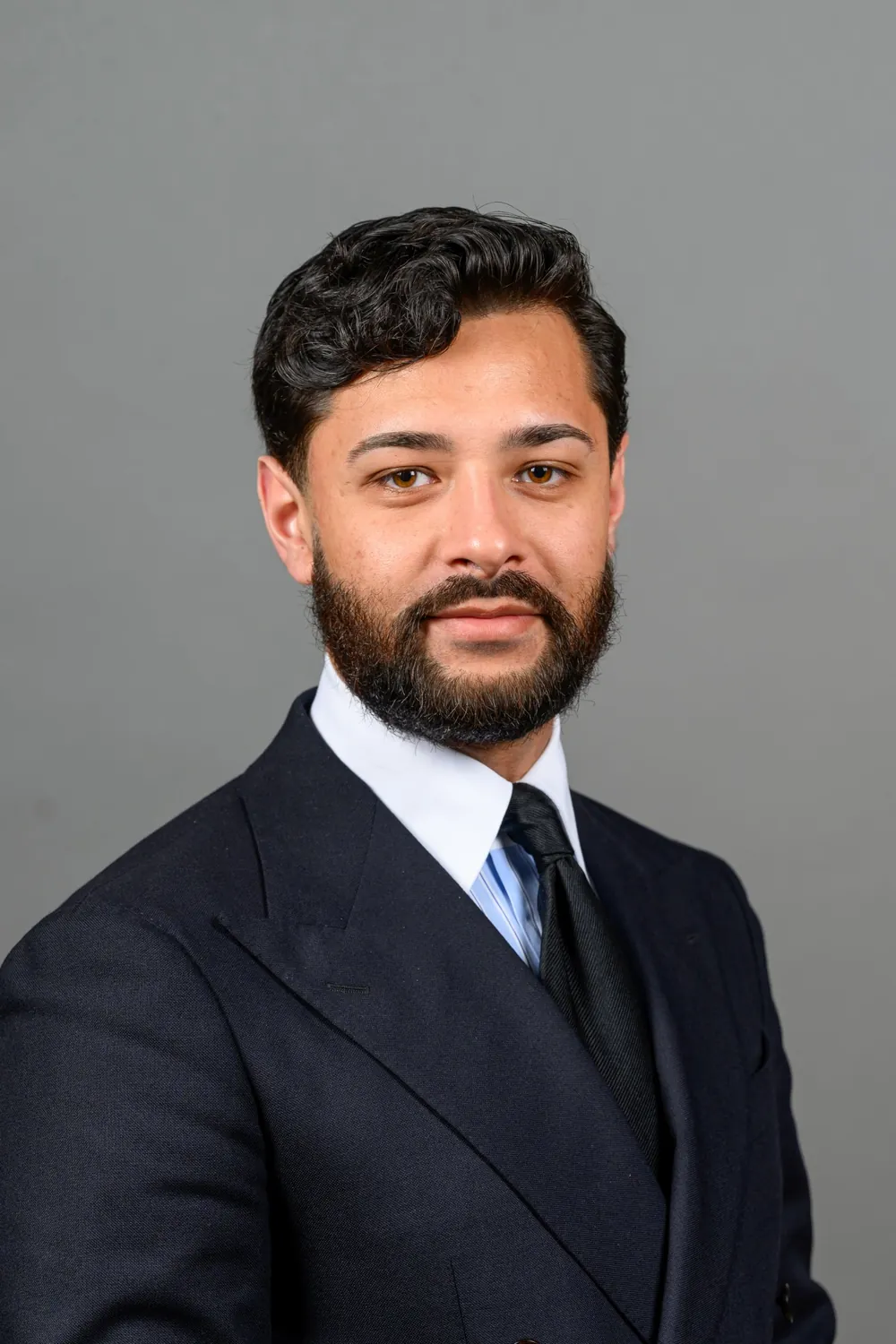
Editorial introduction
At a time when distrust of institutions raises questions about elected officials’ ability to reconnect with citizens, Valentin Michel advocates a conviction formed long before he joined Reims City Council: democratic participation cannot simply mean collecting proposals without explaining what happens to them.
His early involvement in Troyes’ Youth Municipal Council and then the Grand Est Regional Youth Council introduced him to both the possibilities and frustrations of civic engagement. His path subsequently led him to Sciences Po Strasbourg and to MP Xavier Albertini, for whom he has worked as a parliamentary assistant since 2024.
Elected in 2026, he now holds responsibility for local citizen participation and public consultation in Reims and also serves on the Greater Reims urban community council. These local responsibilities complement his daily experience of parliamentary work.
In this in-depth written interview with JLPDécryptage, Michel reflects on his early setbacks, his understanding of political commitment, the practical limits of consultation and the challenges facing representative democracy. One question runs throughout the conversation: how can citizens’ contributions be translated into decisions that are understandable, accountable and genuinely useful?
The interview
01 — FROM TROYES TO REIMS: YOUTH ENGAGEMENT
JLPDécryptage
You took part in the Troyes Youth Municipal Council and then the Grand Est Regional Youth Council before being elected to Reims City Council. Looking back, what experience most strongly shaped your understanding of young people's actual ability to influence public decisions? And what does your current mandate allow you to see differently?
Valentin Michel
What struck me most was a paradox. At both the Troyes Youth Municipal Council and the Grand Est Regional Youth Council, I saw us arrive with remarkable energy and innovative ideas, only to leave sometimes disappointed. These bodies have real value: they inspire vocations and, for those who do not come from culturally privileged backgrounds, they open doors to places, encounters and networks we would never otherwise have known. But they also raise hopes that their remit does not always allow them to fulfil. There was sometimes uncertainty about what we could or could not decide, what budget was available and why an idea had been rejected.
My mandate now shows me the other side: budgetary constraints, practical feasibility and the trade-offs elected representatives have to make. Those constraints are real. What was missing was a more thorough explanation of them, or a refusal to let us hope that a project on which we had spent hours working together would necessarily come to fruition. This has left me with a deep conviction: to have an influence, young people must enter the bodies where decisions are made as early as possible, and they must push open those doors. Any consultative body must also have a clearly defined remit, seek to avoid frustration and provide a reasoned response to every proposal, whether the answer is yes or no.
There is also a more personal memory. Sitting today on the city council alongside Johaïna Benchikh, whom I met on the Regional Youth Council and who had previously served on the Reims Youth Municipal Council, is a genuine source of pride. I am sincerely happy for her, given her commitment from such a young age. It shows that what I have just described can work if we give ourselves the means to make it happen.
02 — FAILURE AS A POLITICAL EDUCATION
JLPDécryptage
At 18, you founded Mouvement du Monde, before describing that first initiative yourself as a 'complete failure': you had realised that putting forward ideas was not enough to persuade people. What did that failure teach you that your studies and later commitments could not have taught you, and what mistake are you now determined not to repeat?
Valentin Michel
Mouvement du Monde taught me the principle of reality. At 18, I was convinced that a good idea would eventually prevail on its own, and that I could change the world alone through willpower and carefully considered ideas. I was wrong. My message was not sufficiently structured, mature or developed. I knew I was not ready, but I felt I needed to begin taking those steps in order to learn. I realised that an idea has to be embodied and expressed in terms of the lived experience of the people it addresses. You learn this through practice: seeing a meeting room remain empty, finding yourself alone, understanding why, learning from the consequences and finding ways to do better.
I learned that the most important thing is to bring people together. You can have the best ideas in the world, but if you cannot persuade others that they are right, nothing will change. So before making proposals, you have to approach things differently, starting by understanding the expectations, histories and feelings of those concerned. That is precisely what lies at the heart of my delegated responsibilities. Ideas remain, for me, the driving force of politics. My vision and convictions have not changed. I have simply changed the way I seek to advance them.
03 — FROM INDEPENDENCE TO WORKING WITH A GOVERNING MAJORITY
JLPDécryptage
With Ultimatum, you advocated an approach that identified with neither the right, the left nor the centre. You then chose to join the municipal list led by Arnaud Robinet. What changed in your understanding of collective action, and how do you preserve your independence of judgement when taking part in decisions made by a governing majority?
Valentin Michel
Ultimatum was based on an intuition I still hold: party labels should come second to the common good. In a just world, ideas come first and belong to no particular political camp; only their merits in a given context matter.
At municipal level, close to citizens, in what may be the finest elected office, my conception of political action remains the same.
The list led by Arnaud Robinet brings together people with different political sensibilities around a municipal programme. Joining it was a continuation of my approach: taking part and judging issues on their merits, where decisions are actually made.
I exercise my freedom of judgement before a decision is taken. When I disagree with a direction, I say so, because we have the opportunity to do that. This critical spirit is what moves things forward. While developing the new model for neighbourhood councils that will be proposed to the people of Reims, disagreements sometimes arose during our discussions. That did not prevent us from finding a fair consensus and producing worthwhile teamwork. On the contrary, it helped us get there. That is part of everyday life in any team, and it does not prevent me from thinking or speaking my mind.
04 — TURNING CITIZENS’ VOICES INTO CONCRETE FOLLOW-UP
JLPDécryptage
Your responsibilities cover local citizen participation and consultation within a municipal team where several elected officials work on these issues. Which actions fall under your personal responsibility and, beyond listening, how do you intend to ensure that residents' proposals receive a clear response and, where possible, influence decisions?
Valentin Michel
The Mayor has entrusted me with two projects. The first is to develop neighbourhood councils, which are mandatory in municipalities with more than 80,000 inhabitants, into a model better suited to our times. This work is being carried out with the deputy mayors responsible for different areas, who will lead them. The second is to develop other consultation formats so as to reach as many residents of Reims as possible.
As for what happens after residents have spoken, I believe two principles are needed. The first is to avoid frustration. I know this from experience, not only in youth bodies but also in adult participation forums, such as the government's States General of Information, in which I took part. We had high hopes and many good ideas. We left with a sense of disappointment.
So, to inspire citizens and give them a genuinely useful role, their responsibilities must be clearly defined and explained. In my view—and this is only my opinion—citizen consultation must take place within a clear framework and every proposal must receive a response. And if an objective has been set, both sides must respect it.
The second principle is that a reasoned 'no' is neither a disaster nor a sign of distrust. I am convinced that citizens can understand a refusal that is properly explained, provided everything has been clear from beginning to end.
05 — BRINGING CITIZENS’ VOICES INTO PARLIAMENT
JLPDécryptage
In 2024, you proposed holding regular public meetings so citizens could discuss bills before parliamentary scrutiny and potentially suggest amendments. Has your experience working with MP Xavier Albertini reinforced that conviction, or revealed the practical difficulties involved? Which specific obstacle now seems most decisive to you?
Valentin Michel
My experience has strengthened my conviction while showing me the difficulties. Co-creation is often beneficial, but it can take different forms. The mechanism I proposed in 2024 through the discussion group was one elected representatives could use, but it was intended to remain optional and temporary.
Co-creation also takes other, sometimes less far-reaching forms. An MP's work also involves consulting and meeting those affected by legislation and making judgements between competing considerations. Xavier Albertini carries out that work conscientiously.
Returning to my proposal, the main difficulties concern timing, which to me is the most decisive obstacle. Between a bill being tabled and the deadline for amendments, there are often only a few weeks, sometimes less under an accelerated procedure. Organising a representative meeting, drawing proposals from it and turning them into legally admissible amendments within that period is extremely difficult. There are also strict rules: a parliamentarian cannot table an amendment that creates a new public financial burden, which rules out many proposals from the outset.
The model can nevertheless still be used, but, as I said, it must be precisely framed so that participants understand its limits and frustration does not turn into disappointment.
06 — TWO ROLES, ONE REQUIREMENT FOR CLARITY
JLPDécryptage
You serve as a municipal councillor in Reims while also working in the constituency office of Xavier Albertini, who also sits on the city council. How do you distinguish your two roles, their resources and the people you deal with, so that residents know in what capacity you are acting and which decisions you are actually responsible for?
Valentin Michel
Having your employer as a colleague on the city council is an unusual situation, and we joked about it at first.
As a parliamentary assistant, I contribute proposals and help implement decisions. I support residents with administrative procedures, handle case files and prepare the MP's work, for which he alone bears responsibility.
As a delegated municipal councillor and community councillor, I am accountable for the work of my delegated portfolio to the Mayor and the council, as part of a team.
Resources are kept separate: those of the parliamentary constituency office serve the MP's mandate, while the City's resources serve the City. When a resident contacts me, I respond through whichever role is best placed to address the request.
It is a matter of organisation. Knowing the national level on one hand and the local level on the other is a genuine advantage.
07 — REPRESENTING THOSE WHO DO NOT VOTE
JLPDécryptage
In the second round of the March 2026 municipal elections in Reims, abstention reached 54.94% of registered voters. Without assuming why people abstained or questioning the election result, how can an elected official responsible for citizen participation reach those who stay away from voting and public meetings? What method would you like to try?
Valentin Michel
First and foremost, we must approach these issues with great humility. Second, we need to distinguish between the different reasons for abstention: dissatisfaction with the political options available, when voters feel no list or candidate meets their expectations; distrust of leaders, when abstaining often becomes a protest vote and therefore a political act; a sense of powerlessness, when voters believe that voting will change nothing; and finally, a lack of proximity to elected representatives, together with limited understanding of their roles and of what the local authority does. I do not claim to know which factor is most important in Reims, but we can address much of the problem.
Various changes are currently under discussion, so I do not wish to go into their technical details. Nevertheless, the programme's underlying philosophy is ever greater proximity. I believe that removing the barriers created by a lack of knowledge about local authorities and elected representatives can spark curiosity and ultimately interest. We must also put citizens at the forefront, enable them to develop their own projects, show empathy and give them reasoned, transparent answers.
That, I believe, is how we build a strong relationship of trust between institutions, elected representatives and citizens, including those who no longer vote.
08 — WHAT EVIDENCE SHOULD YOUR TERM BE JUDGED ON?
JLPDécryptage
You have advocated long-term policymaking and the right to make mistakes. If, at the end of your term, residents of Reims were to assess your work by something other than the number of meetings held or communications published, what three concrete results would you want to show them? And what evidence of failure would make you change your approach?
Valentin Michel
The first lesson of this early stage of my mandate, in citizen participation and more generally, is humility. Theory is always appealing, and reality does not always resemble what we imagined. Nevertheless, we must aim for the best.
I would like the proposals I have put forward to be judged by their method: a long-term policy, the right to make mistakes and, above all, the right to make adjustments. Generating citizens' interest is difficult. Whenever we innovate in our consultation formats, we will therefore need to learn from the results and make adjustments based on what we observe. Making a mistake is acceptable, provided we measure it and correct it.
I would like some of the Reims residents most distant from democratic life to have become involved by the end of the mandate, even on a small scale, and to have found that involvement worthwhile.
Finally, my greatest hope—and this is very personal—is that this participation will inspire vocations: that some people discover an interest in public affairs and one day consider becoming involved themselves.

About
About Valentin Michel
Valentin Michel has served as a Reims municipal councillor responsible for local citizen participation and public consultation since April 2026, and as a councillor for the Greater Reims urban community since March 2026. Since June 2024, he has also worked in the constituency office of French MP Xavier Albertini, a role confirmed by the French National Assembly’s official website.
His civic involvement began with the Troyes Youth Municipal Council and continued on the Grand Est Regional Youth Council from February 2022 to February 2024. He holds a master's degree in Public Careers and Action from Sciences Po Strasbourg. His earlier private-sector experience includes working as a technical sales manager at Studio 3 in Troyes (October 2021–February 2022) and as a production site manager at Millusion SA in Minusio, Switzerland (February–August 2021).
His career thus connects youth engagement, business, parliamentary work and municipal government. In Reims, he is involved in reshaping neighbourhood councils and developing new forms of public consultation, two projects discussed in this interview.
Fact-checking sources
- Assemblée nationale — https://www.assemblee-nationale.fr/dyn/deputes/PA794278
- Équipe du député Xavier Albertini — https://www.xavieralbertini.fr/lequipe
- Ministère de l’Intérieur, municipales 2026 — https://www.resultats-elections.interieur.gouv.fr/municipales2026/ensemble_geographique/44/51/51454/
- Parcours professionnel : informations LinkedIn communiquées par Valentin Michel / professional history supplied from LinkedIn.