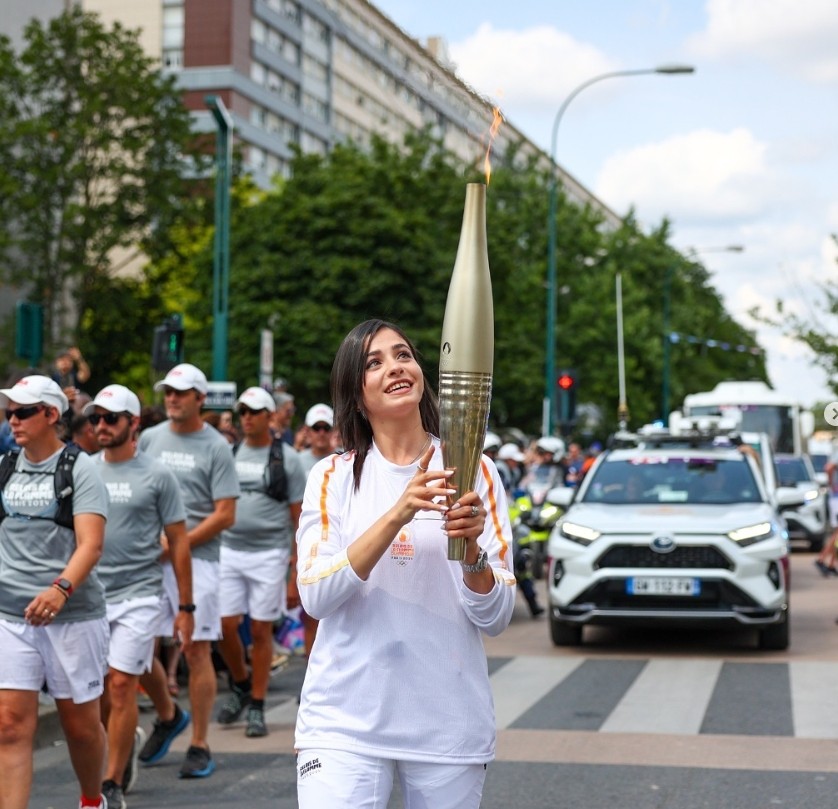
Version française
Été 2015. Un canot gonflable surchargé tombe en panne au milieu de la mer Égée. Parmi les passagers, une adolescente syrienne de dix-sept ans se jette à l'eau et pousse l'embarcation jusqu'aux côtes de Lesbos. Ce geste de survie, raconté, puis adapté au cinéma, n'est plus seulement un fait divers de l'histoire migratoire. Il est devenu le point de départ d'un phénomène éditorial, politique et humanitaire d'une ampleur rare.
Yusra Mardini n'est plus seulement une nageuse. Elle est devenue, en moins d'une décennie, l'une des figures les plus reconnues du plaidoyer en faveur des réfugiés. Pourtant, des centaines de milliers de personnes ont traversé la Méditerranée dans des conditions similaires, souvent dans une indifférence totale. Dès lors, une question s'impose, qui dépasse la seule biographie de l'athlète : comment une jeune réfugiée syrienne est-elle devenue, en l'espace de quelques années, l'un des symboles humanitaires les plus influents de notre époque ?
Ce décryptage ne revient pas sur les détails de la traversée ou sur le palmarès sportif. Il s'attache à décortiquer les mécanismes médiatiques, diplomatiques et sociologiques qui ont transformé un destin individuel en récit universel, révélant autant les dynamiques de notre système d'asile que notre besoin de figures fédératrices.
Au-delà du récit de l'exil, la résonance d'un profil singulier
Pour comprendre la trajectoire de Yusra Mardini, il faut d'abord analyser ce que son profil représente pour les sociétés d'accueil et les institutions internationales. Dans l'imaginaire collectif, le réfugié est souvent dépeint sous les traits d'une victime passive, anonyme et dépossédée de tout capital culturel. Yusra Mardini propose une tout autre figure. Issue d'une famille de la classe moyenne de Damas, sportive de haut niveau, anglophone et maîtrisant les codes de la communication internationale, elle incarne ce que la sociologie des migrations identifie comme une trajectoire singulière.
Dès 2017, elle-même identifie ce décalage de perception. Dans une interview accordée au HCR, elle explique : "I want to change people's perceptions of what a refugee is. [...] People think that refugees have nothing, that they know nothing or that they came just to take something. But a lot of refugees are doctors, a lot of them are engineers. We had to flee our homes. We came here because we wanted peace, because we couldn't take much more of war."
Cette phrase n'est pas anodine. Elle marque la naissance d'une prise de parole stratégique. Yusra Mardini devient le visage de ceux qui bousculent les clichés. Son histoire dépasse le simple récit de l'exil car elle offre aux opinions publiques une passerelle d'identification : on ne se projette pas seulement dans une victime, mais dans un individu à qui le destin a refusé sa chance. C'est cette capacité à transcender les archétypes qui va permettre aux grandes institutions de s'emparer de sa parole.
Le CIO et l'invention d'une diplomatie olympique
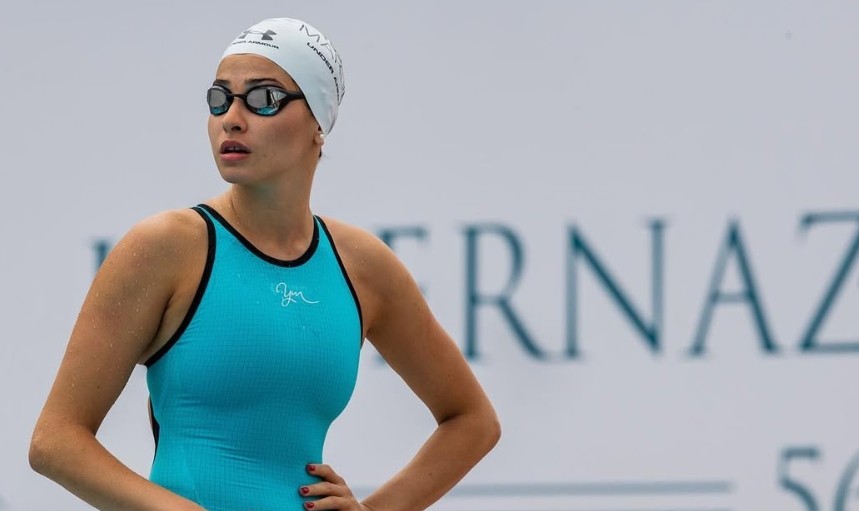
Le basculement du statut de survivante à celui de symbole mondial trouve son accélérateur dans les couloirs du Comité International Olympique (CIO). En 2016, face à une crise migratoire historique, le CIO cherche une réponse symbolique forte. La création de la première Équipe Olympique des Réfugiés pour les Jeux de Rio constitue une initiative diplomatique majeure du CIO. Yusra Mardini en est le porte-drapeau idéal.
Le sport, et particulièrement l'olympisme, offre une scène neutre, universelle et en apparence dépolitisée. En faisant nager Yusra sous la bannière à cinq anneaux, le CIO transforme une crise géopolitique complexe en une fable sportive universelle : celle du dépassement de soi.
Ce tournant olympique modifie irrémédiablement sa trajectoire. Comme elle l'analysera plus tard dans les colonnes d'ABC News en 2018 : "The Olympics were a turning point. I started to get a really strong voice and a lot of people were believing in what I'm doing. [...] I wanted to tell people that a refugee is not just a person who doesn't have money, but a person who fled their home because of violence."
L'olympisme lui fournit une tribune où la politique de l'asile est temporairement suspendue au profit de l'émotion du stade. Le CIO trouve en elle l'incarnation parfaite de sa vision inclusive du sport ; elle trouve dans l'olympisme un échappement à l'anonymat des camps. Cette convergence d'intérêts propulse son récit bien au-delà des pages « société » des journaux, lui offrant une caisse de résonance planétaire.
Le HCR et la professionnalisation de l'ambassade humanitaire
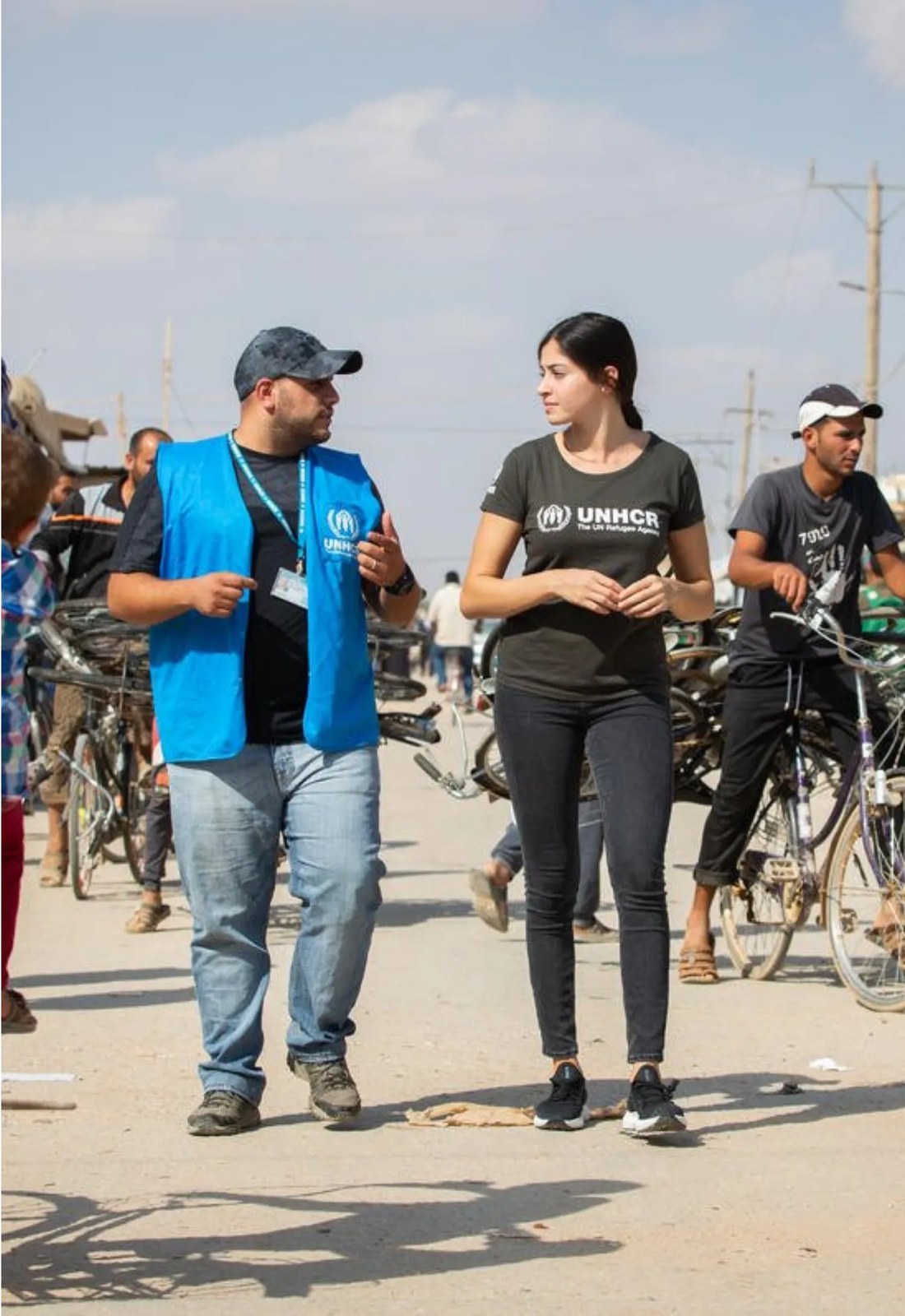
Si le CIO a fourni la scène, le Haut-Commissariat des Nations Unies pour les réfugiés (HCR) a fourni le cadre institutionnel. Nommée ambassadrice de bonne volonté, Yusra Mardini intègre le cercle restreint des porte-parole de l'agence. Son rôle ne consiste plus seulement à témoigner, mais à plaider, à participer à la mobilisation internationale et à influencer les agendas.
Le partenariat avec le HCR s'inscrit dans une stratégie de sensibilisation plus large où son témoignage occupe une place centrale. Cette collaboration se traduit par des initiatives concrètes, comme le projet « Welcome 66 » mené avec la marque horlogère Oris en octobre 2024, où son rapport intime à l'eau est mis à profit pour accompagner la résilience d'autres réfugiés. "The aim of the project is to get the participants into the water and take away their fear," explique-t-elle alors. "Going back to the water has given me courage to face new challenges."
L'institution humanitaire s'appuie sur cette trajectoire pour humaniser ses campagnes, transformant progressivement le trauma individuel en outil de résilience collective. Yusra Mardini n'est plus seulement la jeune fille qui a poussé le bateau ; elle devient celle qui aide les autres à remonter à la surface. Cette utilité narrative la rend indispensable aux yeux des bailleurs de fonds et des gouvernements.
Cette transition d'athlète à porte-parole internationale s'accompagne d'une évolution de son discours. Elle ne se contente plus d'inspirer ; elle analyse les failles du système. En avril 2025, dans un entretien accordé à Elle.com, elle confie sa vision d'une Syrie blessée et sa propre mutation : "The most important thing for people to know about Syria is that this country is in a state of pain. There's a lot of anger. There's a lot of asking, 'Why did the world turn their backs on us?' [...] How can I use my anger to actually make a difference?"
La puissance narrative : Netflix, TED et la presse globale

Aucun symbole mondial n'émerge sans une infrastructure médiatique puissante. L'histoire de Yusra Mardini coche toutes les cases du storytelling contemporain : une descente aux enfers, un acte héroïque, une renaissance par le sport. C'est un scénario qui trouve naturellement sa place sur les grands écrans et les plateformes de streaming.
La forte couverture médiatique de son parcours témoigne de la puissance narrative de son histoire et de sa capacité à incarner un enjeu global. La sortie du film The Swimmers de Netflix en 2022, suivie de multiples conférences TED et d'une couverture ininterrompue par la presse internationale, a généré une forte amplification médiatique internationale. Dans un flux d'informations souvent dominé par les crises, cette trajectoire offre une perspective qui résonne profondément avec le public.
En novembre 2022, sur Olympics.com, elle actera cette mutation définitive : "I feel like I've lived two lives. And more has happened in the past five years since I left Syria, than the first 17 put together. [...] Bringing hope to people is now way more important to me than winning the gold medal."
Les médias ne se contentent pas de relayer son histoire ; ils lui permettent de cristalliser les attentes d'une époque en quête de perspectives. Yusra Mardini devient une figure médiatique de premier ordre, incarnant une capacité de résilience qui offre un contrepoint nécessaire au flux continu des catastrophes.
Le paradoxe du symbole : l'invisibilité des autres
C'est ici que réside le cœur du décryptage. Pourquoi Yusra Mardini ? Et pourquoi pas les milliers d'autres ?
La construction d'un symbole mondial obéit à des critères de résonance très spécifiques. Pour qu'une histoire individuelle devienne universelle, il faut qu'elle puisse être facilement appropriée par le public cible. Il faut une éloquence, une maîtrise des codes de communication, et une capacité de résilience qui s'inscrit dans les schémas narratifs attendus par les sociétés d'accueil.
Des millions de réfugiés restent anonymes parce que leurs histoires ne trouvent pas la même caisse de résonance médiatique. Elles sont souvent plus complexes, plus longues, et marquées par des réalités qui s'éloignent des arcs narratifs classiques de l'héroïsme. Yusra Mardini, elle, a su incarner l'espoir et s'intégrer parfaitement dans l'écosystème médiatique international.
Pourtant, cette position de « super-symbole » porte une lourde charge psychologique, une réalité qu'elle n'hésite plus à nommer. En mars 2025, dans les colonnes de Country & Town House, elle lâche : "I have survivor's guilt, so daily I think how lucky I am to have clothes, food, a room." Le poids de l'exception est tel qu'elle projette déjà son action vers une échelle supérieure, l'article notant qu'elle est motivée par le prix Nobel de la paix : "I recognise that's an insane goal, so right now I'm just trying to figure out what my next steps are."
Ce témoignage révèle le poids écrasant de l'exception. Être un symbole mondial, c'est porter seul le poids de tous ceux qui sont restés dans l'ombre. C'est aussi, in fine, accepter de servir de preuve vivante que « tout est possible », ce qui offre aux systèmes politiques une figure positive sans nécessairement remettre en cause la structure globale de l'asile.
Être un symbole mondial, c'est porter seul le poids de tous ceux qui sont restés dans l'ombre.
Aujourd'hui, son discours a atteint une maturité politique remarquable. En mars 2026, dans Elle UK, elle appelle à une humanité basique, presque culinaire dans sa métaphore : "All I ask of people is to give them a chance. [...] When we're thinking about what we want to eat – Chinese, Italian, Syrian – we're not thinking about where it's coming from or if it's going to attack us, we're curious about trying something different. It's the same with humanity: just give people a chance to exist as human beings."
Et quelques mois plus tard, en juin 2026, dans Women's Health UK, elle recentre le débat sur les causes structurelles : "Refugees don't leave their countries because of any luxury the world can offer. It's because of violence and war, and it's because of oppression. When someone leaves their country, it's not because they want to, it's because they have to."
Conclusion
Décrypter le phénomène Yusra Mardini, c'est inévitablement se retrouver face à un miroir. La jeune nageuse de Damas n'est plus seulement le sujet de l'histoire ; elle en est le révélateur.
Son parcours met en lumière la manière dont le sport, les médias et les grandes organisations humanitaires convergent pour donner une résonance particulière à un destin individuel, l'élevant au rang de figure de proue.
Au fond, le parcours de Yusra Mardini raconte autant l'histoire d'une femme que celle des institutions, des médias et des sociétés qui ont fait de son destin un langage universel. C'est peut-être là que réside la véritable portée de son histoire.

A propos
Yusra Mardini est une ancienne nageuse syrienne, membre de l'Équipe olympique des réfugiés lors des Jeux de Rio 2016 et de Tokyo 2020. Réfugiée en Allemagne après avoir fui la guerre en Syrie en 2015, elle est devenue l'une des figures internationales les plus engagées en faveur des personnes déplacées.
Ambassadrice de bonne volonté du Haut-Commissariat des Nations unies pour les réfugiés (HCR) depuis 2017, fondatrice de la Yusra Mardini Foundation, conférencière et intervenante auprès d'institutions internationales, elle consacre aujourd'hui son action à la défense des réfugiés, à l'accès à l'éducation, au sport et à la reconstruction des parcours de vie.
Son histoire a inspiré le film The Swimmers (Netflix), tout en faisant d'elle une voix reconnue sur les questions humanitaires, le rôle du sport comme vecteur d'intégration et la perception des réfugiés dans les sociétés contemporaines.
English Version
Summer 2015. An overloaded inflatable dinghy breaks down in the middle of the Aegean Sea. Among the passengers, a seventeen-year-old Syrian teenager jumps into the water and pushes the vessel to the shores of Lesbos. This act of survival, recounted and later adapted for the screen, is no longer just a footnote in the history of migration. It has become the starting point of a rare editorial, political, and humanitarian phenomenon.
Yusra Mardini is no longer just a swimmer. In less than a decade, she has become one of the most recognized figures in refugee advocacy. Yet, hundreds of thousands of people have crossed the Mediterranean under similar conditions, often in total indifference. This raises a question that transcends the athlete's mere biography: how did a young Syrian refugee become, in the space of a few years, one of the most influential humanitarian symbols of our time?
This analysis does not revisit the details of the crossing or her sporting record. Instead, it seeks to unpack the media, diplomatic, and sociological mechanisms that transformed an individual destiny into a universal narrative, revealing as much about the dynamics of our asylum system as about our need for unifying figures.
Beyond the Narrative of Exile: The Resonance of a Singular Profile
To understand Mardini’s trajectory, one must first analyze what her profile represents to host societies and international institutions. In the collective imagination, the refugee is often depicted as a passive, anonymous victim stripped of all cultural capital. Mardini presents a very different figure. Hailing from a middle-class family in Damascus, a high-level athlete, an English speaker fluent in the codes of international communication, she embodies what the sociology of migration identifies as a singular trajectory.
As early as 2017, she herself identified this perceptual gap. In an interview with the UNHCR, she explained: "I want to change people's perceptions of what a refugee is. [...] People think that refugees have nothing, that they know nothing or that they came just to take something. But a lot of refugees are doctors, a lot of them are engineers. We had to flee our homes. We came here because we wanted peace, because we couldn't take much more of war."
This statement is not incidental. It marks the birth of a strategic voice. Mardini becomes the face of those who shatter clichés. Her story transcends the simple narrative of exile because it offers public opinion a bridge for identification: one projects oneself not just onto a victim, but onto an individual whom fate has denied her chance. It is this ability to transcend archetypes that allows major institutions to seize upon her voice.
The IOC and the Invention of Olympic Diplomacy
The shift from survivor to global symbol found its accelerator in the corridors of the International Olympic Committee (IOC). In 2016, faced with a historic migration crisis, the IOC sought a strong symbolic response. The creation of the first Refugee Olympic Team for the Rio Games constituted a major diplomatic initiative by the IOC. Yusra Mardini was its ideal flagbearer.
Sport, and Olympism in particular, offers a neutral, universal, and seemingly depoliticized stage. By having Mardini swim under the five-ring banner, the IOC transformed a complex geopolitical crisis into a universal sporting fable: that of self-transcendence.
This Olympic turning point irreversibly altered her trajectory. As she would later analyze in the pages of ABC News in 2018: "The Olympics were a turning point. I started to get a really strong voice and a lot of people were believing in what I'm doing. [...] I wanted to tell people that a refugee is not just a person who doesn't have money, but a person who fled their home because of violence."
Olympism provides her with a platform where asylum politics are temporarily suspended in favor of stadium emotion. The IOC finds in her the perfect embodiment of its inclusive vision of sport; she finds in Olympism an escape from the anonymity of the camps. This convergence of interests propels her narrative far beyond the "society" pages of newspapers, offering her a planetary resonance chamber.
The UNHCR and the Professionalization of the Humanitarian Ambassador
If the IOC provided the stage, the United Nations High Commissioner for Refugees (UNHCR) provided the institutional framework. Appointed as a Goodwill Ambassador, Mardini joins the restricted circle of the agency's spokespeople. Her role is no longer just to bear witness, but to advocate, to participate in international mobilization, and to influence agendas.
The partnership with the UNHCR is part of a broader awareness strategy where her testimony occupies a central place. This collaboration translates into concrete initiatives, such as the "Welcome 66" project undertaken with watchmaker Oris in October 2024, where her intimate relationship with water is leveraged to support the resilience of other refugees. "The aim of the project is to get the participants into the water and take away their fear," she explains at the time. "Going back to the water has given me courage to face new challenges."
The humanitarian institution relies on this trajectory to humanize its campaigns, progressively transforming individual trauma into a tool for collective resilience. Mardini is no longer just the young girl who pushed the boat; she becomes the one who helps others back to the surface. This narrative utility makes her indispensable in the eyes of donors and governments.
This transition from athlete to international spokesperson is accompanied by an evolution in her discourse. She no longer merely inspires; she analyzes the system's flaws. In April 2025, in an interview with Elle.com, she shares her vision of a wounded Syria and her own mutation: "The most important thing for people to know about Syria is that this country is in a state of pain. There's a lot of anger. There's a lot of asking, 'Why did the world turn their backs on us?' [...] How can I use my anger to actually make a difference?"
Narrative Power: Netflix, TED, and the Global Press
No global symbol emerges without a powerful media infrastructure. Mardini’s story checks all the boxes of contemporary storytelling: a descent into hell, a heroic act, a rebirth through sport. It is a scenario that naturally finds its place on the big screen and streaming platforms.
The extensive media coverage of her journey testifies to the narrative power of her story and its ability to embody a global issue. The release of the Netflix film The Swimmers in 2022, followed by multiple TED talks and uninterrupted coverage by the international press, generated strong international media amplification. In an information flow often dominated by crises, this trajectory offers a perspective that resonates deeply with the public.
In November 2022, on Olympics.com, she would seal this definitive mutation: "I feel like I've lived two lives. And more has happened in the past five years since I left Syria, than the first 17 put together. [...] Bringing hope to people is now way more important to me than winning the gold medal."
The media do not merely relay her story; they allow her to crystallize the expectations of an era in search of perspective. Mardini becomes a first-order media figure, embodying a capacity for resilience that offers a necessary counterpoint to the continuous flow of disasters.
The Paradox of the Symbol: The Invisibility of Others
This is where the heart of the analysis lies. Why Yusra Mardini? And why not the thousands of others?
The construction of a global symbol obeys very specific criteria of resonance. For an individual story to become universal, it must be easily appropriated by the target audience. It requires eloquence, a mastery of communication codes, and a capacity for resilience that fits into the narrative schemas expected by host societies.
Millions of refugees remain anonymous because their stories do not find the same media resonance. They are often more complex, longer, and marked by realities that stray from the classic narrative arcs of heroism. Mardini, on the other hand, managed to embody hope and integrate perfectly into the international media ecosystem.
Yet, this position of "super-symbol" carries a heavy psychological burden, a reality she no longer hesitates to name. In March 2025, in the pages of Country & Town House, she admits: "I have survivor's guilt, so daily I think how lucky I am to have clothes, food, a room." The weight of the exception is such that she is already projecting her action onto a higher scale, the article noting she is motivated by the Nobel Peace Prize: "I recognise that's an insane goal, so right now I'm just trying to figure out what my next steps are."
This testimony reveals the crushing weight of the exception. To be a global symbol is to carry alone the weight of all those who remained in the shadows. It is also, ultimately, to accept serving as living proof that "anything is possible," which offers political systems a positive figure without necessarily challenging the global structure of asylum.
To be a global symbol is to carry alone the weight of all those who remained in the shadows.
Today, her discourse has reached a remarkable political maturity. In March 2026, in Elle UK, she calls for a basic humanity, almost culinary in its metaphor: "All I ask of people is to give them a chance. [...] When we're thinking about what we want to eat – Chinese, Italian, Syrian – we're not thinking about where it's coming from or if it's going to attack us, we're curious about trying something different. It's the same with humanity: just give people a chance to exist as human beings."
And a few months later, in June 2026, in Women's Health UK, she refocuses the debate on structural causes: "Refugees don't leave their countries because of any luxury the world can offer. It's because of violence and war, and it's because of oppression. When someone leaves their country, it's not because they want to, it's because they have to."
Conclusion
Analyzing the Yusra Mardini phenomenon inevitably means looking into a mirror. The young swimmer from Damascus is no longer just the subject of the story; she is its revealer.
Her journey highlights the way in which sport, the media, and major humanitarian organizations converge to give particular resonance to an individual destiny, elevating it to the rank of flagship figure.
Ultimately, Yusra Mardini’s journey tells as much the story of a woman as it does that of the institutions, the media, and the societies that have turned her destiny into a universal language. Perhaps that is where the true significance of her story lies.
About
Yusra Mardini is a former Syrian Olympic swimmer who competed as a member of the Refugee Olympic Team at the Rio 2016 and Tokyo 2020 Olympic Games. After fleeing the war in Syria in 2015 and finding refuge in Germany, she became one of the world's most prominent advocates for displaced people.
Since 2017, she has served as a UNHCR Goodwill Ambassador, founded the Yusra Mardini Foundation, and regularly speaks at international institutions and global events. Through her work, she promotes refugee rights, access to education, the power of sport, and the rebuilding of lives affected by conflict and forced displacement.
Her extraordinary journey inspired the Netflix film The Swimmers and established her as an influential voice on humanitarian issues, the role of sport as a tool for inclusion, and the global perception of refugees.