Introduction
As La drogue au pouvoir is published by Éditions du Cerf on 17 September 2026, Benjamin Sire advances a deliberately unsettling thesis: for five centuries, narcotics have been not only a public-health, social and criminal issue, but also an instrument of power, financing and destabilisation in international affairs. A journalist and commentator, columnist at Franc-Tireur, editor-in-chief and co-founder of Les Électrons libres, Paris correspondent for TVA Nouvelles and vice-president of the Association française des grands reporters et correspondants, Sire says his investigation draws on reporting, travel, declassified documents and international reports. From the Opium Wars to the American opioid crisis, from the Contras to fentanyl and the rise of the DZ Mafia, his book seeks to connect very different episodes through one central question: what happens when states officially fight a market with which they may, under certain circumstances, also choose to come to terms? JLPDécryptage chose to question him specifically about the evidence, the different degrees of responsibility and the limits of this interpretive framework.

JLPdecryptage
Your book asks us to see drugs not only as a public-health or criminal problem, but as a force that has helped shape the course of history. What fact, archive or case led you to change the scale of your analysis - and was this thesis your starting point, or did it emerge from the investigation?
Benjamin SIRE
That shift in perspective did not come from a deliberate decision, even though the public-health dimension, to which I am very sensitive, and the criminal dimension were major factors. I did not change the scale of my analysis: this thesis, forged through reporting and travel in 'sensitive' areas, was actually the starting point of the book. It asserted itself over the course of my investigations - on Iran, the Sahel, China, the American opioid crisis and Beijing's role, the surge in the cocaine market - but also through the enormous body of documentation I worked with, including tons of declassified CIA reports and material from major international organisations such as the United Nations. Again and again, beneath the health and criminal issues, the same mechanism surfaced: substances capable of affecting the fate of nations and serving as a bargaining currency for powers seeking to do what their diplomacy and institutions could not openly admit. I eventually understood that drugs could not be reduced to a scourge fought by states. They were also a force with which states could come to terms and from which they could derive advantage, as numerous historical episodes show, from the Opium Wars to colonial Indochina and the Cold War.
What I had not anticipated was that the book would become so accusatory towards certain countries, particularly the United States and, at certain moments, France. The investigation did not merely confirm an a priori conviction; it strengthened it.
JLPdecryptage
The title La drogue au pouvoir can point to three realities: drugs as a source of economic and territorial power, as an instrument used by certain states, or as a force capable of penetrating institutions. Do these mechanisms reinforce one another, or is one of them the true driving force of the five centuries you trace?
Benjamin SIRE
These three interpretations do not contradict one another; they follow one another and ultimately combine. The role of drugs as a source of economic and territorial power opens the story, with Britain and then colonial France grounding part of their prosperity in a trade they prohibited elsewhere. Next comes the use of drugs as an instrument of states, handled under the table while official diplomacy keeps its hands clean, from the networks of the Golden Triangle to the financing of the Contras. The third reality, the most contemporary, appears when trafficking ceases to be a means and becomes an end in itself, when it shapes narco-states such as Iran or Venezuela and penetrates our institutions from below, as the new European mafias demonstrate. If I had to identify one main driving force, it would be the second: instrumentalisation by states. That is one of the book's recurring themes - the founding hypocrisy by which powers become hidden backers of a market they claim to be fighting. But this mechanism never operates alone. The economic power of trafficking finances its capacity for corruption, while state tolerance opens the doors of the legal economy and political systems. Each feeds the other. What is changing today is the balance of power. Drugs, long kept on a leash by states, are beginning to escape them and, sometimes, to govern them in return.
JLPdecryptage
From the Opium Wars to fentanyl, the substances, actors and balances of power have changed profoundly. What common mechanism did you find behind these very different historical situations - and in what circumstances does that thread, in your view, cease to be relevant?
Benjamin SIRE
The common mechanism is that, in geopolitical terms, drugs function as a variable instrument of adjustment. At each stage, a power tolerates or exploits a trade that it publicly condemns because a supposedly higher interest demands it, whether balancing trade, financing a covert operation or weakening a rival. Britain flooded China with opium to balance its accounts. One hundred and eighty years later, the pattern is almost reversed: China allows fentanyl precursors to flow towards America. In the book, I interpret this phenomenon in light of the memory of past humiliations and the commercial power struggle between the two countries. Between those two moments, the same logic recurs: a useful poison that one pretends to pursue.
That thread ceases to be relevant when trafficking escapes any state sponsor. When an organisation such as the DZ Mafia prospers on its own account, when synthetic drugs free themselves from the soil and seasons that once constrained drug trafficking, and when the market obeys nothing but demand and profitability, we leave classical geopolitics and enter something more diffuse. Drugs are no longer an instrument of power; they become a power in their own right. I am also wary of the opposite temptation - seeing the hand of a state everywhere. Some forms of trafficking are driven only by greed and by demand that no one has organised. One of the book's aims is precisely to distinguish what stems from strategy from what is simply a market left to itself.
JLPdecryptage
The presentation of your book describes states as the 'first accomplices' of the narcotics market. Yet an openly adopted government policy, a covert intelligence operation, tolerance granted to an ally and the failure of a regulator do not entail the same degree of responsibility. How do you distinguish between these situations, and at what point do you use the word 'complicity'?
Benjamin SIRE
An openly adopted policy is the most straightforward form, almost an acknowledged one, when a state turns trafficking into a mechanism of its power or survival, as with the Opium Monopoly in Indochina or the parallel economy of the Iranian regime. A covert operation by an intelligence service belongs to another category: raison d'État placing itself above the law, when the CIA turns a blind eye to the opium trade of its proxies in Asia or to cocaine linked to the financing of the Contras and other movements. Tolerating an inconvenient ally - for example, protecting the drug-trafficking brother of an Afghan president - reflects an even looser calculation. Regulatory failure, finally, is different again, because it may amount only to blindness or incompetence.
The word complicity is not justified in all these cases. I reserve it for the point at which two conditions coincide: knowledge of the trafficking and a decision to let it prosper in order to derive some benefit from it. Mere failure, however culpable, remains below that threshold as long as no advantage is being sought. Beyond that point, however, we enter into full complicity. In my view, Project Cassandra provides the clearest example: several former investigators and officials accused the Obama administration of slowing certain actions targeting Hezbollah-linked criminal networks so as not to jeopardise negotiations over Iran's nuclear programme - an interpretation disputed by former officials from that administration. In my view, this kind of trade-off had disastrous consequences and still resonates in the context that preceded the horrors perpetrated by Hamas on 7 October 2023.
JLPdecryptage
The book's presentation mentions CIA special operations, an area in which established facts have long coexisted with speculative narratives. Of the cases you studied, which provides, in your view, the strongest evidence of a link between a US operation and drug trafficking - and how far does that evidence allow us to go without extrapolating?
Benjamin SIRE
On these issues, the book draws in particular - and who has studied this field without doing so? - on the remarkable work of Alfred McCoy. His investigations and books are relentless and extraordinarily well sourced; they also contain a great many powerful testimonies. They have repeatedly been attacked by the US administration and its supporters despite the evidence they present. That is fair enough. But since then, many declassified files and reports I have examined have supported his conclusions.
The strongest case remains Nicaragua and the Contras, because it does not rest on assumptions or on McCoy's work alone, but on official documents. In 1989, the Senate investigation led by John Kerry established that traffickers had participated in supplying the Contras and that the State Department had paid funds to companies linked to narcotics traffickers, some of whom had already come to the attention of the justice system.
Those elements establish payments to actors connected to trafficking and the tolerance some of them received. They do not, however, demonstrate that the CIA knowingly organised the flooding of American neighbourhoods with crack cocaine to finance its secret war. This is precisely where extrapolation must be avoided. Gary Webb's work opened a legitimate debate about the effects in the United States of cocaine networks connected to the Contras. His death in 2004 was officially ruled a suicide by the Sacramento County coroner, although it subsequently generated many conjectures. As for the rest, because everything cannot be revealed here, I encourage readers to discover the full sequence of events and the processes behind them as I explain them in the book...
JLPdecryptage
The American opioid crisis first developed through medical prescriptions before being fuelled by heroin and then illicit fentanyl. What does this trajectory reveal about the distribution of power and responsibility between pharmaceutical companies, prescribers, regulators and criminal networks?
Benjamin SIRE
At the outset, this was indeed an issue with nothing geopolitical about it - before it became one. It begins with Purdue Pharma's commercial launch of OxyContin in 1996, promoted as less likely to lead to addiction and abuse than other opioids, a claim that would later be seriously challenged. What followed was an extraordinarily aggressive persuasion campaign that installed the painkiller in doctors' offices across some of the most vulnerable regions and turned pain management into an enormous business. Doctors prescribed, often in good faith, and millions of patients became caught up in the process. When legal access tightened, dependency drove people towards traffickers and the street, but also towards other substances: first heroin, then fentanyl, as well as other diverted or illicitly manufactured opioids. Mexican cartels took over, responding to a demand that the US healthcare system had helped create, while chemical precursors originating notably in China fed the clandestine production of fentanyl.
The chain of responsibility then becomes clear. A pharmaceutical company - heavily penalised since then, it must be said - bears the initial responsibility for misleading people about the risks of its product. The regulator bears responsibility for inadequate oversight, a form of complicity by omission that allowed one molecule to reshape the health of a country. Prescribers occupy an ambiguous position, at once instruments and victims of a commercial narrative. Criminal networks come only later, downstream, prospering in an environment already conducive to addiction and profoundly harmful.
JLPdecryptage
Investigations into the DZ Mafia describe an organisation that would no longer be limited to selling narcotics: international money laundering, property investments, commercial companies, nominees and support from members of regulated professions. At what point does a trafficking network become a mafia system capable of embedding itself in the legal economy and challenging the state over the long term?
Benjamin SIRE
That is the history of every mafia: they need to become respectable and institutionalised, but above all to merge the proceeds of trafficking into the legal economy - property, shell companies or fictitious import-export businesses - in order to extract greater profits. A trafficking network remains fragile as long as it merely sells a product. Like mafias before it, going back to the Sicilian Mafia, and like today's Mocro Maffia in the Netherlands, the Calabrian 'Ndrangheta, the Vory v zakone from the post-Soviet space and many others, the emerging DZ Mafia illustrates this transition. A 2025 judicial note that I cite in the book estimates that more than half of its financial flows pass through Algerian offshore accounts disguised as agricultural or textile transactions. At the same time, investigations have documented patterns of intimidation targeting elected officials and justice personnel, attempted corruption, the continuation of criminal activity from prison, and laundering mechanisms involving nominees, businesses, international transfer networks and property.
Three conditions, once combined, mark the tipping point: financial roots in the legal economy, capture of part of the public apparatus, and the existence of a sanctuary beyond reach. For the DZ Mafia, Algeria can play that role for certain profiles, particularly when wanted individuals hold Algerian nationality and therefore cannot be extradited to France under the bilateral extradition convention. Judicial and security cooperation between Algiers and Paris has, however, recently resumed.
His background
About Benjamin Sire
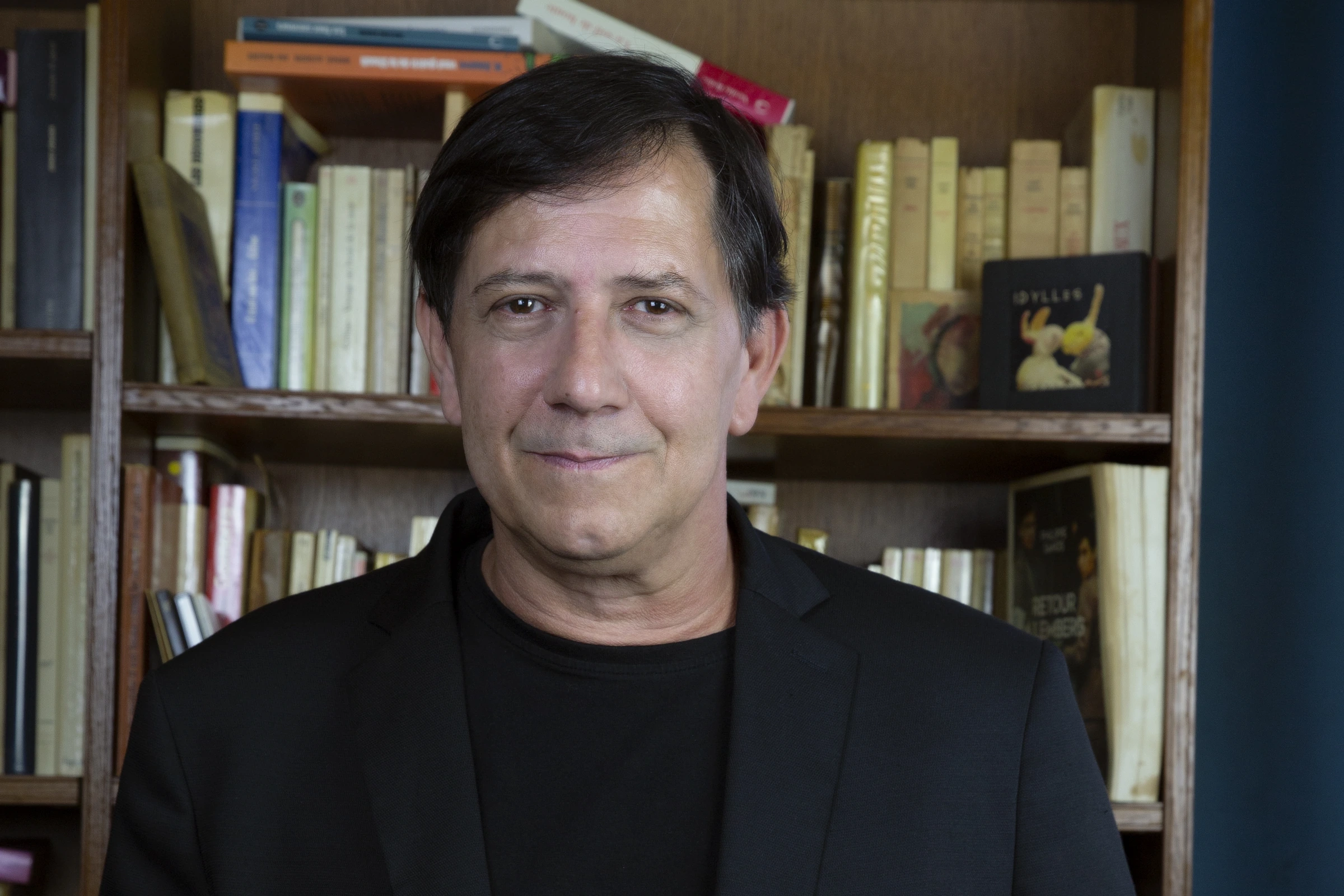
Benjamin Sire is a journalist, commentator, author and musician. He is editor-in-chief and co-founder of Les Électrons libres, a media outlet focused in particular on science, innovation and debates surrounding progress, and a columnist at the French weekly Franc-Tireur. He also works as the Paris correspondent for Quebec-based TVA Nouvelles. Alongside his journalistic work, he serves as vice-president of the Association française des grands reporters et correspondants (AFGRC).
His career has also been shaped by artistic creation: formerly involved in theatre, he is a composer, sound engineer and music producer under the name E-Riser. This dual editorial and artistic trajectory informs work that spans political commentary, geopolitics, culture and reflection on contemporary change.
On 17 September 2026, Éditions du Cerf publishes La drogue au pouvoir - Cinq siècles de relations incestueuses entre drogue et géopolitique. The book explores the historical links between drug trafficking, state strategy, wars, intelligence services, public-health crises and organised crime, from the Opium Wars to contemporary criminal networks.