Introduction
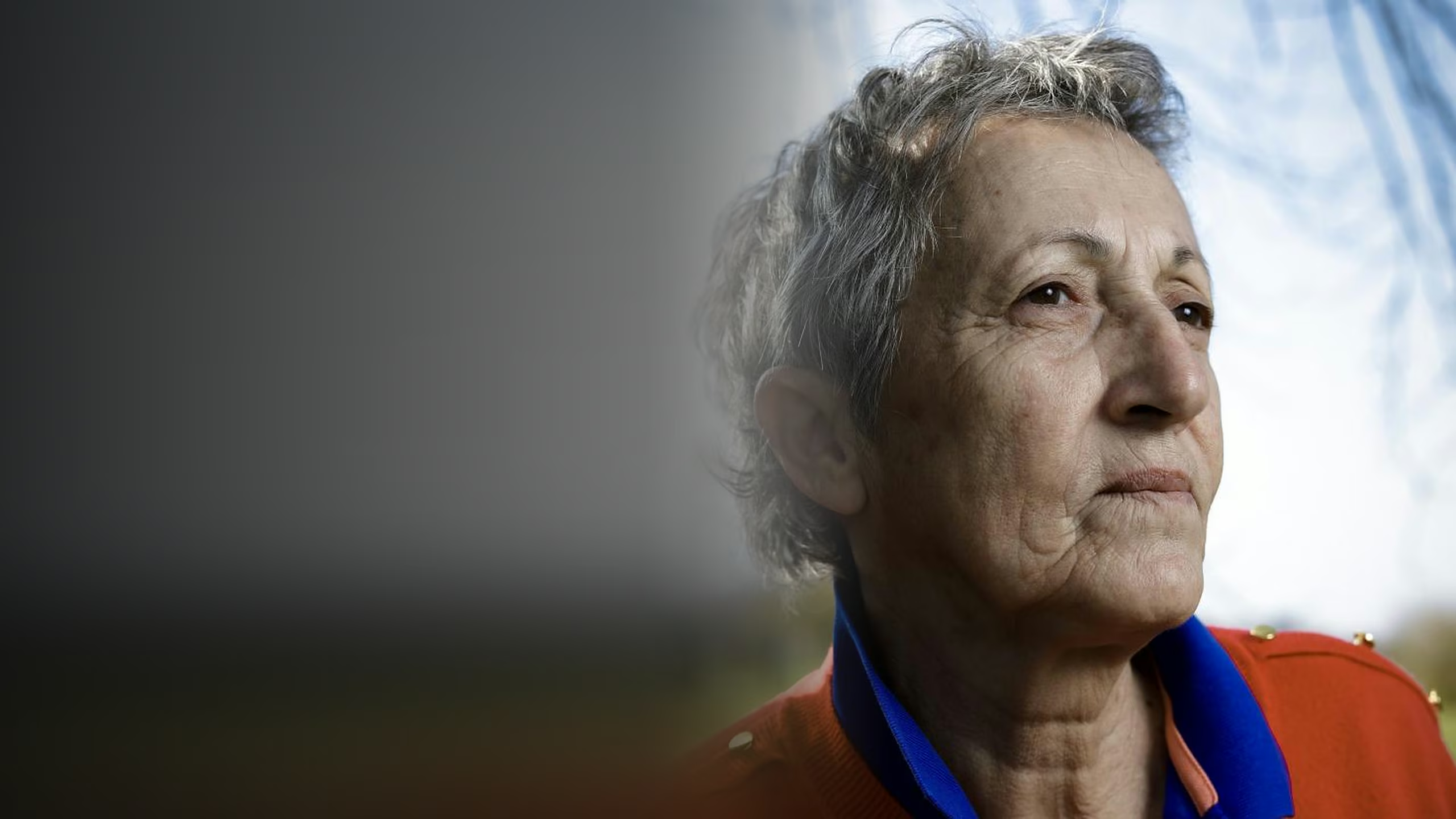
In 1978, Brigitte Simon arrived at Roland-Garros on the back of an exceptional run of confidence. After winning on clay in Nice, Monte-Carlo and Naples, the French player received a wild card into the main draw, defeated No. 10 seed Florența Mihai in the opening round and continued all the way to the semi-finals. At 22, she became one of the tournament’s great surprises before losing to eventual champion Virginia Ruzici. That season took her to world No. 36, and she would remain France’s No. 1 player from 1978 to 1981. Yet this interview is about more than remembering a sporting achievement. It connects two eras within the same life. The player who once had to manage pressure largely on her own later moved through coaching, sports management and several career changes before returning to tennis through mental-performance work. Breathing, visualisation, routines, feedback and the relationship with defeat are now tools she passes on — tools that were almost absent from her own environment as a player. Across eight questions, Brigitte Simon looks back on Roland-Garros 1978, the economics of women’s tennis, life after elite sport, intergenerational transmission and one central question: what remains of a career when results are no longer the only measure of success?
JLPDécryptage
In 1978, you entered Roland-Garros on a wild card and reached the semi-finals, notably defeating No. 10 seed Florența Mihai. At a time when support structures for French women players were still very limited, what enabled you to go so far?
Brigitte Simon
I was full of confidence that year. I had won Nice, Monte-Carlo and Naples just beforehand, all on clay. Drawing Florența Mihai in the first round was no gift, but mentally I knew I could beat her. And quite often, it is better to face a seeded player in the first round than later in the tournament. The match was very tough, but that victory opened up the draw for me and I believed in my chances all the way. In the end, I would say that I had prepared myself mentally to go deep into the tournament.
JLPDécryptage
You opened a tennis shop in Caen the same year as that semi-final, and then left the professional tour at only 27. When you described women’s tennis at the time as the “fifth wheel on the wagon”, were you describing a sudden decision to leave, or a gradual realisation that the profession would not allow you to build a sustainable future?
Brigitte Simon
Opening the tennis shop in Caen was more of an opportunity than a long-term career choice. In 1978, my priority was still my playing career, and reaching a Roland-Garros semi-final makes you want to carry on, even though our training conditions and support were limited. Financially, it was difficult. The Federation did not contribute to our travel and accommodation costs, except for the Fed Cup. As for ending my career, I met my future husband in 1978, and the desire to start a family eventually felt like the obvious choice.
JLPDécryptage
After your playing career, you worked in real estate, wine sales and the management of a Power Plate centre before returning to mental-performance coaching. What did those experiences teach you about both the difficulty and the freedom of reinventing yourself after elite sport?
Brigitte Simon
After my playing career, I first became a coach and then sports director at Tennis Club de Caen for around ten years. The constant turnover of club presidents and a toxic working atmosphere eventually pushed me to resign. I was angry with the tennis world and no longer wanted to work in it. That is why I turned professionally to other fields, without much success. Those different experiences allowed me to develop other skills. It is always enriching to step outside your comfort zone and take on new challenges.
JLPDécryptage
Today you work with players on the mental side of performance, whereas this kind of preparation was almost absent from your sporting environment in 1978. If you could speak to the 22-year-old player you were before that semi-final, what would you teach her that nobody knew how to teach you at the time?
Brigitte Simon
This is my favourite question. I have often said that if I had possessed the experience I now pass on in mental preparation, I would probably have been better prepared for that semi-final and therefore performed better. I would teach her to use breathing as a crucial tool for concentration and for analysing any situation during a match. I would teach her to visualise every match before playing it, either as a spectator or as an actor in the film of her potential victory. I would teach her the importance of feedback, which can only really be done when you are well supported. I would teach her to prepare for every match with the same routine and the same seriousness, regardless of the opponent. I would teach her to reduce the importance she gives to either defeat or victory — and to keep going back to the work, again and again.
JLPDécryptage
You have described your Roland-Garros semi-final as a moment when the magnitude of the occasion inhibited you. In your current work, how do you explain to a player what mental preparation can genuinely help them control — and what may always remain beyond their control?
Brigitte Simon
Mental preparation can help you manage precisely that fear which can paralyse you when the stakes are high, although it is never a miracle cure. You can start a match very well and then suddenly the momentum changes — so what do you do? Those are the moments when you have to open your treasure chest. Mental preparation cannot be improvised. It has to be trained just as much as the physical or technical side. It is a path you have to travel.
JLPDécryptage
You have said that you received the equivalent of €5,000 for reaching the semi-finals and witnessed enormous pay disparities between women and men. In your view, has the progress made since then solved the structural problem, or has it mainly shifted it towards lower-ranked and less visible players?
Brigitte Simon
There has been enormous progress. Women today can earn a very good living. But the structural problem remains for hundreds of male and female players trying to break into the professional circuit. I believe the money is poorly distributed, and without support from federations it is very difficult to finance the beginning of a career.
JLPDécryptage
You coached at Tennis Club de Caen and later in Paimpol before working on the mental side with players of very different levels. What can your generation still pass on unchanged to young players, and what can no longer be transferred because tennis has changed so profoundly?
Brigitte Simon
I think my generation still has a great deal to pass on. The underlying mechanisms of training and performance remain the same, even though attitudes have changed — and not always for the better. The mental dimension is becoming more and more present and unavoidable, but the fundamentals have not changed, and we sometimes tend to forget them. Physical preparation has progressed enormously since my time and has become much more specifically adapted to the needs of tennis players. And even if experience only illuminates the road already travelled, what we have lived through, the difficulties we faced and our own journey give credibility to what we say to the younger generation and can help them save time in pursuing their own goals.
JLPDécryptage
At 22, success could be measured by a ranking, a title or a Grand Slam semi-final. After elite sport, career changes, coaching and passing on your experience, how do you recognise today that a life trajectory has truly been successful?
Brigitte Simon
From my point of view, a trajectory is successful when you have gone as far as you possibly could with yourself, your abilities and your potential — with no regrets.
Background
About Brigitte Simon
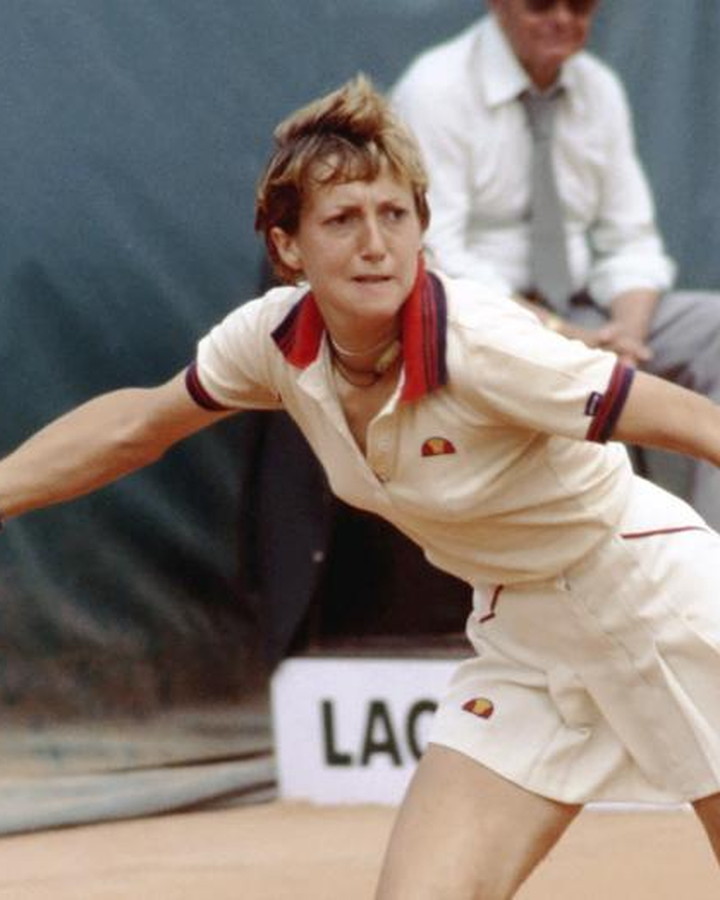
Born in Caen in 1956, Brigitte Simon-Glinel is a former French professional tennis player. She reached the high point of her career in 1978: after clay-court victories in Nice, Monte-Carlo and Naples, she advanced to the semi-finals of Roland-Garros, where her run was ended by eventual champion Virginia Ruzici. That same year she reached world No. 36. Simon was France’s No. 1 player from 1978 to 1981 and won the French national championship three times, in 1976, 1978 and 1980. She also represented France in the Federation Cup. After her playing career, she became a coach and then sports director at Tennis Club de Caen for around a decade. Following several professional experiences outside tennis, she returned to the sport through mental-performance coaching. Her approach draws in particular on breathing, visualisation, routines, feedback and pressure management. One thread therefore connects the two halves of her sporting life: turning the experience of elite competition into practical tools for progress and transmission.
Website: brigittesimonuncerveaupourgagner.com