Interview
Gaspard Gantzer
When narrative collides with reality
Communication, power and a crisis of trust: what can narrative still achieve when it collides with reality?
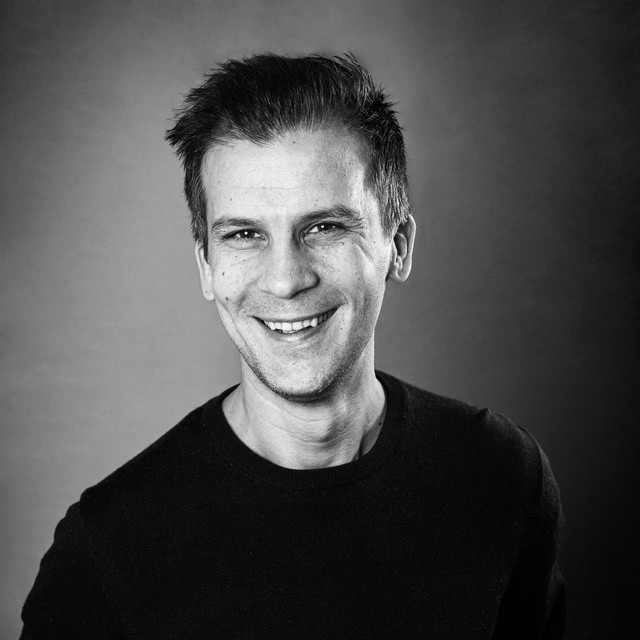
In a society crossed by crises and distrust, what can political communication still do when the narrative collides with reality? It is around this question that this interview with Gaspard Gantzer is structured. Former communication advisor to François Hollande at the Élysée, entrepreneur, teacher, and founder of Gantzer Agency, he has observed from the inside the transformations of public speech.
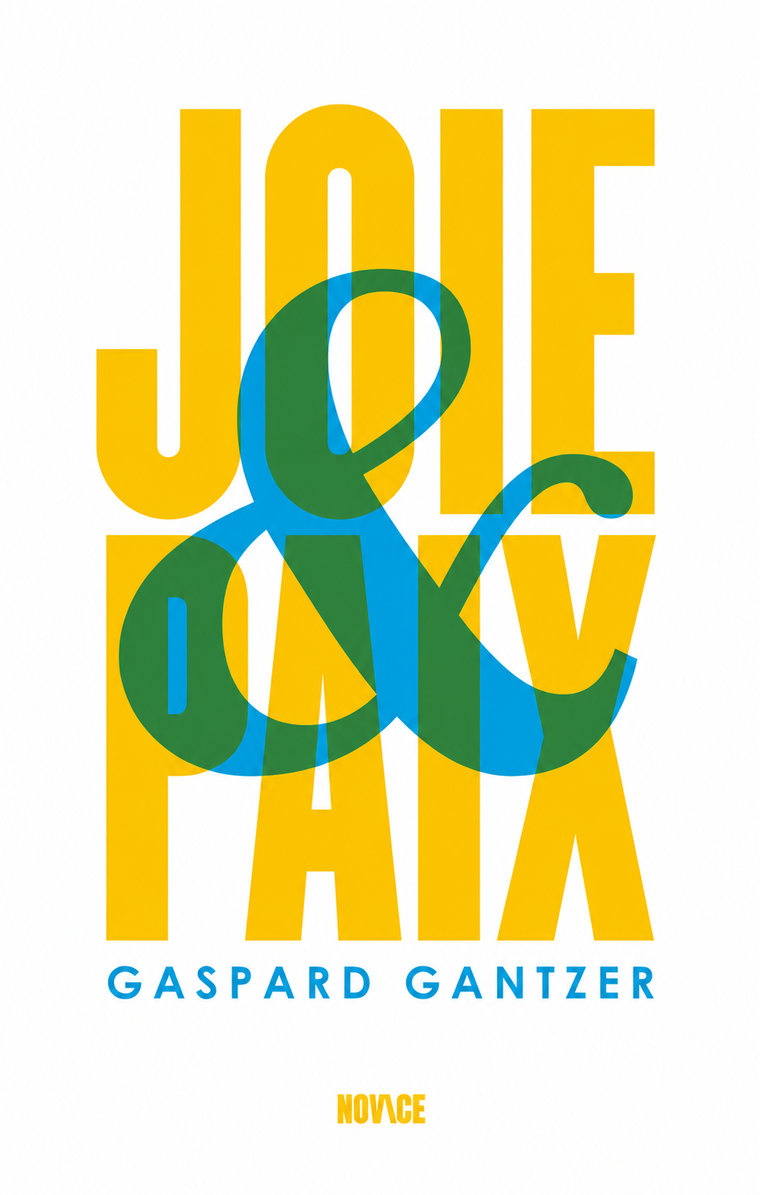
On the occasion of the publication of his latest essay, Joy & Peace (Joie & Paix), published in 2026 by Éditions Novice, he reflects on the exercise of power, crisis communication, and the necessity, sometimes, of choosing silence. How far does the advisor's loyalty extend? What responsibility falls on the communicator when the problem no longer lies in the narrative, but in reality itself?
From his time at the top of the State to his own electoral experience, Gaspard Gantzer explores these tensions through the seven questions that follow.
LEARNING ABOUT POWER
 JLPDÉCRYPTAGE.COM
Your trajectory has led you from the central administration to the Paris City Hall, then to the Quai d’Orsay and the Élysée. Among these different experiences, which one has most profoundly transformed your representation of power? What have you discovered, in direct contact with those who decide, about the gap between institutional authority, the real capacity to act, and the perception that communication can produce of it?
All these experiences have counted. Each in its own way. I learned audacity with Christophe Girard, politics with Bertrand Delanoë, the sense of the State with Laurent Fabius, and the greatness of France with François Hollande. I had the incredible luck of working with extraordinary leaders, with very strong personalities, who were all hard workers, honest, human, generous. This is rare in the political field. I have the impression of having been particularly spoiled by life.
I retained many things from that era, but undoubtedly above all that politics only makes sense if it is at the service of citizens, if it has ambition, and if it rests on values. Communication is only a tool, at the service of politics.
WHEN THE PROBLEM IS NO LONGER THE NARRATIVE
JLPDÉCRYPTAGE.COM
At the Élysée, you worked during a five-year term confronted with successive political, social, security, and economic crises. How does a communication advisor recognize the moment when the problem no longer lies in the way a policy is explained, but in the policy itself? What does he then owe to the president he advises, to his function, and to his own lucidity?
At the Élysée, I always stayed in my place. François Hollande had been elected by millions of French people. I was only his collaborator. My role was to help him, by putting his action into words and images. I always told him what I thought. I was in harmony with him on the substance. There are only very rare moments where I might have had divergences, but I keep them to myself, out of loyalty.
SPEAKING, DEFERRING, OR REMAINING SILENT
JLPDÉCRYPTAGE.COM
You have stated that "too much speech kills speech". Yet, the contemporary functioning of media and social networks requires public officials to react almost immediately to every event. By what criteria should a leader decide to speak, to defer their response, or to remain silent? Can silence still constitute a strategy of responsibility without being interpreted as a weakness or a confession?
I think the form of the great podium speech has aged. It must remain exceptional. Citizens' attention span has decreased. This is a fact. We must get used to it, and express ourselves differently, through images in particular. It is possible to say many things with few words. The shortest speeches are often the best. Look, for example: Martin Luther King's "I have a dream" lasts only a few minutes.
One must know how to remain silent when one has nothing to say. One must choose silence when circumstances impose it. During the great march of January 11, 2015, in tribute to the victims of Charlie Hebdo and the Hyper Cacher, and to the three murdered police officers, François Hollande did not speak. He was right.
However, I do not believe that silence can be a permanent strategy. Doing politics means speaking. Being mute makes no sense when one is president. It is ineffective and contemptuous.

“I prefer shadow to light, influence to power, freedom to authority.”
THE ERA OF PERMANENT CRISES
JLPDÉCRYPTAGE.COM
You stated in 2024 that we had entered "the era of permanent crises" and that more than half of your agency's missions concerned crisis communication. When the crisis ceases to be exceptional to become an almost ordinary state, does crisis communication not risk transforming into the permanent management of anxiety? How can we restore rationality without minimizing the fear, anger, or harms actually suffered?
We have indeed entered the era of permanent crises. This summer, for example, we must face at the same time fires, heatwaves, several wars, an economic crisis... We must know how to deal with them, as we go along, because it is the priority for citizens, but at the same time never lose sight of the country's transformation, because the challenges are significant – demographic transition, adaptation to climate change, technological revolution of AI, new world order – and call for new responses, which can only be deployed in the long term.
MAKING JOY CREDIBLE
JLPDÉCRYPTAGE.COM
In "Joy & Peace" (Joie & Paix), you propose to rehabilitate joy as a political force capable of reopening a collective horizon. How to distinguish this joy from a communication optimism that would give the feeling of covering up the difficulties of the present? In a society marked by distrust, on what concrete transformations and what proofs should a political proposal rely so that the joy it carries is perceived as credible rather than artificial?
Joy is not the opposite of seriousness or lucidity. It is a way of being and doing politics. It is the only way to win people over, on substance as well as on form. It gives back hope, even expectation. It is not about laughing constantly or dreaming, but about smiling and showing that it is possible to get through it, if we all work together. The key to joy is that it is collective. One is rarely happy alone.
FROM ADVISOR TO CANDIDATE
JLPDÉCRYPTAGE.COM
By running in the 2020 municipal elections, you went from the position of the one who advises and builds a strategy to that of the one who personally exposes themselves to the judgment of voters. What did the candidate you were discover about the reception of a political message that the experienced communicator could not entirely know? Did the fact of not being elected change your way of evaluating today the credibility and viability of a strategy?
I was very happy to be a candidate, because I love Paris, just like the Parisians, but I think I am a better advisor than a candidate. I prefer shadow to light, influence to power, freedom to authority.
I have a lot of admiration for those who confront universal suffrage. It is a beautiful exercise in humility. One learns compromises, sometimes renunciations.
THE COMMUNICATOR'S RED LINE
JLPDÉCRYPTAGE.COM
Your agency claims to want to "install its clients' narratives durably in people's minds". In your practice, what distinguishes a narrative that clarifies and makes a complex reality intelligible from a narrative that seeks to substitute itself for it? Have you defined precise criteria that would lead you to refuse a mission that is nevertheless lawful, particularly when a client wishes to defend a version of events incompatible with the facts, the public interest, or your own convictions?
I cannot advise someone I do not respect, whose values and relationship to the world I do not share. It is a human question more than a professional one. I do not reject anyone in principle, but I generally feel quite quickly if I will be able to help someone.
About Gaspard Gantzer
Gaspard Gantzer is a French senior civil servant, communicator, author, and teacher. A graduate of Sciences Po and the École nationale d’administration, he began his career at the Ministry of Labor, before joining the Centre national de la cinématographie, the Paris City Hall, and then the Ministry of Foreign Affairs.
From 2014 to 2017, he served at the Presidency of the Republic as advisor in charge of relations with the press and head of the communication pole for François Hollande. After leaving the Élysée, he co-founded the agency 2017, then created GANTZER in 2019, a structure specializing in strategy, communication, and crisis management.
In parallel, he teaches political and institutional communication at Sciences Po, HEC Paris, and ESSEC Executive Education. He also appears in the media, notably on RTL, France Culture, franceinfo, France 5, T18, and in Vanity Fair. Since 2024, he has sat on the board of directors of the Grand Paris Express Endowment Fund.
Author of several essays devoted to power and political life, he has published La politique est un sport de combat, Nous autres Parisiens, Êtes-vous encore de gauche ?, and, in 2026, Joy & Peace (Joie & Paix) at Éditions Novice.