Introduction
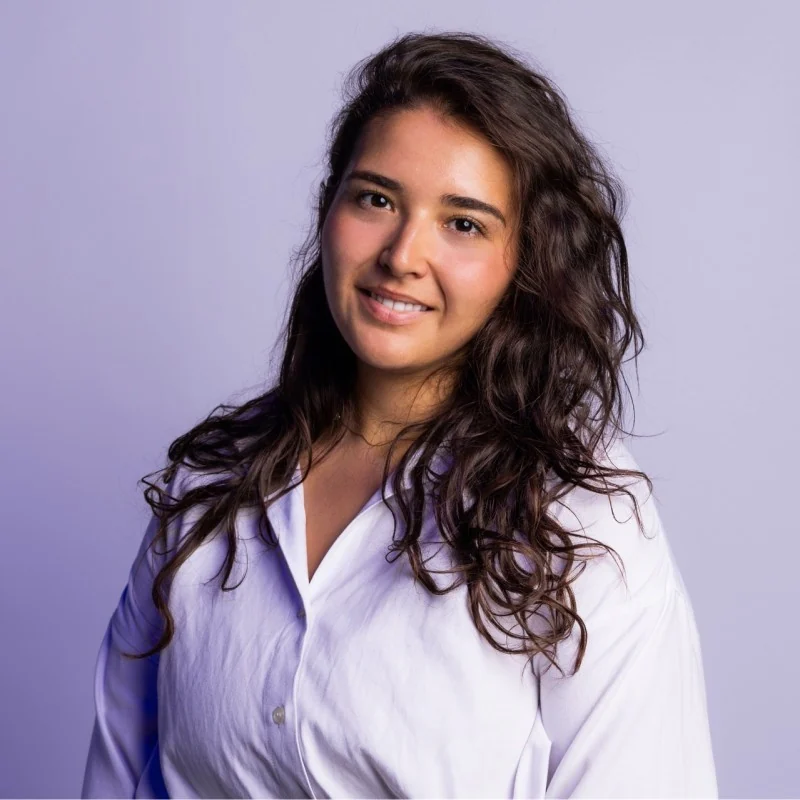
In France, individual success is often held up as proof that determination alone can overcome social disadvantage. Inès Ahaggan offers a more demanding perspective.
Raised in a working-class neighbourhood of Bordeaux, she followed an educational path that eventually led her to HEC Paris's Grande École programme. Along the way, she encountered barriers that never appear on a bank statement: unfamiliar social codes, unequal access to information, limited professional networks and the struggle to feel that she belonged.
Supported by the INFINITE programme, she gained experience in public institutions before joining L’Oréal, where she worked on global diversity, equity and inclusion issues. Since June 2026, she has served as Chief of Staff at Elsee.Care, a company working to make health and wellbeing expenses more accessible. Her involvement with HEC for Women also reflects her commitment to equality and representation.
In this in-depth interview with JLPDécryptage, she challenges the limits of meritocracy, rejects the idea that exceptional individual achievements justify systemic inequalities, and argues for a society in which opportunities are far less determined by social background.

The interview
The invisible barriers to success
JLPDécryptage : You have spoken about how extremely limited your purchasing power was during your first year in Paris, while emphasising that money was only one barrier among many. Looking back, which obstacles were the hardest to identify precisely because they never appeared on a bank statement: social codes, information, networks, a sense of legitimacy, or something else?
Inès Ahaggan :
I would say the first invisible barrier is information. When you grow up without people around you who understand prestigious institutions, companies, competitive entrance examinations or the support schemes available, you do not always even know which doors exist, let alone how to open them. I remember that when I first started studying in Paris, there were so many things that seemed obvious to other people but were absolutely not obvious to me. I could work extremely hard, get good grades and have ambition, yet still have no idea what the next step was supposed to be. Sometimes the difficulty was not even doing something, but knowing what to do.
Then there are the unwritten rules. Knowing how to behave in an interview, how to speak to someone very senior, how to ask for help or how to talk about your background without playing it down… These things seem natural when you have learnt them from an early age, but the reality is very different.
And then there is the question of feeling that you belong. When you enter environments that nothing in your family history or early background seemed to prepare you for, you can almost feel that you have to prove even more strongly that you deserve to be there. This also manifests itself in microaggressions, sometimes very subtle ones: a comment about your background, surprise at your level of education, a question about “how you managed to get there”, or a way of implicitly suggesting that something does not quite add up, that you must be hiding something. I remember an evening at a friend's house: her older brother's friend spent the entire evening questioning me, trying to dissect what in my personal history could possibly have led me to HEC. Looking back, it was subtly violent, because I found myself having to answer questions I had never even asked myself. I felt like a laboratory rat, thrown back into that sense of survival in a world that was not supposed to be mine. Taken individually, these little signals may seem insignificant. But their accumulation has a real impact on how you perceive yourself and how confidently you dare to take your place afterwards. That is also why I prefer to talk about equality of opportunities rather than simply equality of chances. Having theoretical access to an opportunity does not mean being equally equipped to seize it. Luck plays only a minor role; everything comes down to probabilities and life trajectories. Without repeating the familiar lesson on social reproduction, let us simply say that it is easier to imagine yourself in a leadership position when your parents already hold such positions.
Money, that big word beginning with a little M, obviously matters enormously. In my own life, the lack of it led me to experiences that were as bewildering as they were extraordinary. The student jobs I started far too young, just to afford a cinema ticket with my school friends — all of that involved moments that were extremely difficult, both physically and mentally. But cultural capital, information, role models you can identify with, social codes and the people you can call when you do not know what to do matter just as much. And ultimately, perhaps that is the most important thing: sometimes a single person can change the course of someone's life simply by showing them a door they did not even know could be opened.
The trap of meritocracy
JLPDécryptage : The segment of Clique in which you appeared raised the question: “If you want it badly enough, can you achieve it?” Your journey could easily be presented as proof of that idea. Is that precisely the danger: turning a handful of individual success stories into evidence that the system is fair, when they may equally demonstrate everything that had to be overcome to succeed?
Inès Ahaggan :
Yes. And I genuinely believe we need to move beyond the idea that a few exceptional journeys are enough to prove that the system works. We are also tired of being turned into fantasies. Fantasies of meritocracy. Of becoming the example people bring up to say: “Look, she started there and she succeeded, so if you want it badly enough, you can do it.” Personally, I would put it differently: “When you know you can, you want to.” Because before you can want something, you first need to know that it is within reach. When nobody around you has attended a prestigious institution, worked in certain sectors or held certain positions, it becomes much harder to imagine yourself in those environments.
The OECD has shown that social mobility remains relatively low in France and that social background continues to weigh heavily on people's life trajectories. So when someone tells me, “You are proof that the system works,” I am more inclined to reply: “No, perhaps I am proof that some people can overcome these barriers. But the real question is: why do these barriers still exist?” Meritocracy becomes dangerous when it turns an exception into a general rule, implying that everyone else simply has not worked hard enough. Yet determination alone is not enough when starting points are profoundly unequal. I do not want my journey to be used to say: “If she managed it, you can too.” I would rather it prompted people to say: “If she had to overcome so many barriers to get there, let us ask ourselves how we can ensure that future generations encounter fewer of them.”
I am deeply committed to an approach rooted in peace. We can want to change the system without resorting to confrontation, because we are all part of that system and we can all contribute to improving it. The real objective is not to produce a few spectacular success stories, but to make such achievements increasingly less exceptional.
INFINITE: beyond financial support
JLPDécryptage : INFINITE has offered you more than financial assistance: the programme combines funding, mentoring, guidance and access to a network. If everything except the money were removed, do you think the impact would be comparable? In other words, when it comes to equality of opportunity, how much inequality genuinely stems from financial resources, and how much from access to social codes and relationships?
Inès Ahaggan :
No, I do not think the impact would be comparable. Financial assistance allows you to cross a threshold. Guidance teaches you how to open the door, walk through it and, above all, understand what happens once you are inside.
Money meets essential needs: paying for accommodation, funding your education, travelling, eating properly or accepting an opportunity without financial anxiety. But a network provides access to informal information, advice and recommendations. Mentoring changes the way you imagine your own future.
That is why the most effective programmes combine these dimensions: providing the means without the knowledge is insufficient; providing the knowledge without the means is equally insufficient.
But I would also like to turn the question around. People from less privileged backgrounds are often asked to “catch up” by adapting to the system. Should we not also question institutions, recruiters and businesses about how they distribute opportunities? If we constantly demand that the most vulnerable improve themselves without questioning the mechanisms that create inequality, we are missing part of the problem. It is a collective responsibility: every one of us is capable of sharing a contact, offering advice or creating an opportunity for someone else.
HEC Paris: opening doors is not enough
JLPDécryptage : You entered HEC Paris's Grande École programme through the admissions process for applicants with prior higher-education qualifications. Once inside such a selective institution, what did you come to understand about selection that you could not have perceived from the outside? Which mechanisms genuinely open doors, and which barriers may continue to exist even after those doors have been crossed?
Inès Ahaggan :
My experience at HEC was, first and foremost, a discovery of the richness of an entire ecosystem: the diversity of courses, student associations, conferences and encounters with business leaders and alumni. Even a simple conversation at an after-work event can open up an entirely new perspective. The alumni network provides access to professional environments you could never have imagined reaching, allowing you simply to think: “Oh, so it is possible.” I also appreciated the genuine support provided by the administration on matters relating to equality of opportunity.
However, once inside, you realise that not everyone seizes opportunities in the same way. It depends on personality, self-confidence and curiosity, but also on what you already know. We should therefore avoid setting up a simplistic opposition between “those who know” and “those who do not”; the reality is much more nuanced.
The real question is how to help everyone build the resources they need to make the most of what is available. An ecosystem like this does not simply provide a degree: it offers an immense field of exploration.
L’Oréal: diversity beyond the metrics
JLPDécryptage : Your career has also led you to work on diversity, equity and inclusion at L’Oréal. When you move from personally experiencing inequality to addressing it within a major organisation, how does your perspective on these policies change? And at what point can we consider that a diversity policy is genuinely transforming people's trajectories rather than simply measuring indicators?
Inès Ahaggan :
What changed my perspective most at L’Oréal was moving from a personal, isolated experience to an international and intercultural understanding of these issues. In a global organisation, you realise that realities differ completely from one country or culture to another, which makes it impossible to apply a single definition of diversity everywhere.
I also came to understand that DE&I is not simply a matter of communications or human resources, but of governance: who makes the decisions? Which objectives are monitored? How are talented individuals promoted? Indicators are essential for measuring progress, but a figure only has value if you try to understand what lies behind it. If a particular population is underrepresented in a position, why is that? Is it a recruitment issue, a management issue or a question of how potential is perceived?
I became far less obsessed with the question of “how many?” and much more interested in “why?” A diversity policy becomes genuinely effective when it does more than count people: when it enables each individual to imagine a future for themselves, progress and gain access to the same levels of responsibility.
Turning exceptional achievements into collective change
JLPDécryptage : Equal opportunity programmes face a paradox: when they enable a small number of individuals to enter the most selective institutions, those journeys naturally become examples of success. How can we prevent the exception from becoming a justification for the system — “if she managed it, everyone can” — and ensure that these programmes also change the rules that create inequality in the first place?
Inès Ahaggan :
We need to accept that we can tell stories of success without telling only the successful part of the story. If I am presented simply as a young woman who succeeded despite the obstacles, the narrative becomes individualistic and simplistic: she worked hard, she persevered, end of story.
Yet what really matters is everything behind that achievement: the people who helped me, the support mechanisms, and all those who were just as talented but never encountered the right opportunity. There are “Inèses” everywhere. I am not special; I simply met the right people at the right time.
The role of these programmes should not be to manufacture a few success stories to ease people's consciences, but to make opportunities visible and accessible on a much wider scale. That means acting earlier on educational guidance, information, internships and networks, and evaluating these programmes according to the real changes they produce in people's life trajectories. If we can work together in a spirit of peace and collective responsibility, we will eventually reach a point where there are so many “Inèses” that nobody will even speak of exceptions any more.
HEC for Women: do all women have the same opportunities?
JLPDécryptage : Your involvement with HEC for Women adds another dimension to this discussion. Can we genuinely talk about equality among women without taking into account differences in social background, cultural capital or access to networks? In other words, is there a risk that genuine progress towards gender equality primarily benefits women who were already best placed to seize opportunities?
Inès Ahaggan :
Yes, we must remember that women do not all follow the same paths. A woman with a strong network, financial security and a family background in higher education does not experience her journey in the same way as a student who has to work alongside her studies to finance her education.
But that should certainly not lead us to set women against one another; on the contrary, it is an opportunity to build greater solidarity. That is precisely the value of a space such as HEC for Women: discussing ambition and leadership while recognising the diversity of women's lived experiences.
The challenge is to offer a wider range of role models, demonstrating that there are a thousand different ways to be an ambitious woman. The objective is not to decide which women “deserve” to reach the top, but to ensure that each has the information, resources and confidence needed to choose her own path.
How should we measure genuine equality of opportunity?
JLPDécryptage : If, ten years from now, you wanted to assess objectively whether equality of opportunity had genuinely improved in French higher education, which indicator would you examine first? The social composition of elite institutions, social mobility after graduation, student debt, access to networks, or something less obvious? And what result would make you say: “This time, the system really has changed”?
Inès Ahaggan :
I would look first at social mobility, rather than simply diversity at the point of admission. You can improve the social mix within an institution without permanently changing people's destinies. The real question is whether entering a prestigious institution leads to lasting improvements in the life prospects of a student from a working-class background, and whether their social origins cease to determine their trajectory ten years later. I would examine several indicators together: social background at admission, access to first jobs, student debt, earnings and access to positions of responsibility. But the most powerful indicator remains the ability to pass opportunities on to others. Someone whose own trajectory changes often becomes the person who opens the door for someone else: social mobility then becomes a virtuous circle.
If, ten years from now, social background were a much weaker predictor of access to selective institutions and leadership positions, then yes, we could say that the system had changed. Equality of opportunity should not be an exceptional lottery, but a sufficiently stable reality for everyone to look towards the future and say: “I do not yet know how far I will go, but I know I have the right to try.”

About
About Inès Ahaggan
Inès Ahaggan is a student on the Grande École programme at HEC Paris, which she entered through the admissions route for candidates with prior higher-education qualifications. Raised in a working-class neighbourhood of Bordeaux, she has built a path combining higher education, professional experience and a sustained commitment to equal opportunities.
Supported by INFINITE, a programme founded by entrepreneur Alexandre Mars, she advocates an approach to social mobility that goes beyond financial assistance to include mentoring, access to information and professional networks.
Her professional experience includes a project management role at SNCF Réseau (2019–2020), followed by a position as a project officer at the French Ministry of Health (2020–2021). In 2022, she worked as a Scrum Master at Desjardins in Montreal, Canada, before joining the French Ministry of Solidarity in 2023–2024.
She subsequently worked as a Global DEI Data Analyst at L’Oréal (2024–2025), gaining experience in international diversity, equity and inclusion initiatives.
Since June 2026, she has served as Chief of Staff at Elsee.Care, a HealthTech company working to improve the financial accessibility of health and wellbeing products and services.
Involved in community and voluntary initiatives since her teenage years, she has also served as co-president of HEC for Women. Through her work and public contributions, she engages with questions surrounding meritocracy, diversity, women's opportunities and the mechanisms that perpetuate social inequality.
LinkedIn — Inès Ahaggan