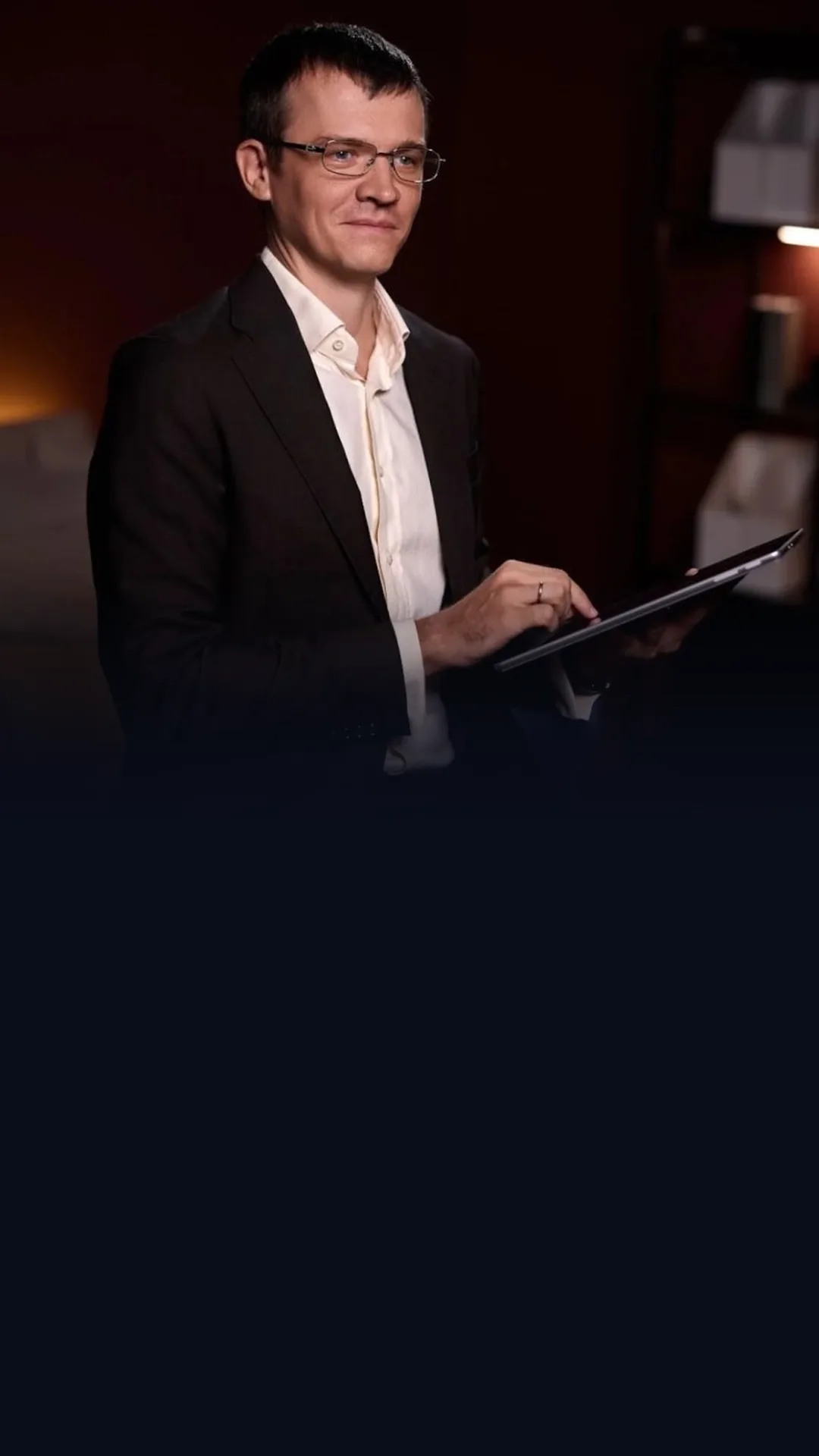
Grand interview — JLP Décryptage
KIRILL PATYRYKINWhen geopolitics rewrites marine insurance
Introduction
A vessel can cross a conflict zone without suffering physical damage and still become part of a major insurance crisis. In a global trading system dependent on a handful of strategic waterways, exposure no longer begins and ends with storms, collisions or shipwrecks. Sanctions, blockades, logistical disruption and the withdrawal of reinsurance capacity are redrawing the boundaries of coverage.
Leading Surety Marine, Kirill Patyrykin has witnessed this transformation from within the industry. Working in insurance since 2008, with a background spanning claims management and executive positions in specialist businesses, he also examines the intersection of geopolitics, underwriting and artificial intelligence.
In this Grand Interview for JLP Décryptage, he challenges the idea that exceptionally high premiums amount to accurate risk assessment. From the Strait of Hormuz to the Middle Corridor, from parametric insurance to onboard sensors, his argument is consistent: make better use of data without outsourcing professional judgment, accountability or the understanding of human behaviour to algorithms.
THE INTERVIEW
SYSTEMIC RISK
JLPDécryptage
In your September 2026 interview with Trend, you recalled that war and strike rates were around 0.1-0.2% when you entered the industry, whereas some high-risk exposures can now exceed 20% per annum. At the same time, you argued that disruption at a single strategic waterway can affect vessels, cargoes, energy supplies and financing simultaneously. Has marine underwriting therefore moved from pricing individual voyages to pricing systemic geopolitical concentration - and what does a conventional war-risk premium still fail to capture?
 Kirill Patyrykin
A 20% annualized war rate (or 1–2% for a single 7-day transit) is not a refined statistical model for “systemic concentration.” It is a capitulation price—a panic-induced put option priced when underwriters realize their quantitative tools have failed.
Marine underwriting has attempted to move toward pricing systemic geopolitical concentration, but structurally, the market is caught halfway.
Historically, voyage underwriting was actuarial. Rate was a function of Ship age, Crew skills, Route History, etc.
Today, a single missile, sea drone, or regulatory decree at the Bab-el-Mandeb, Hormuz, or the Taiwan Strait instantaneously re-prices cargo, hull, energy markets, and reinsurance capacity globally.
However, charging 20% per annum isn’t true “concentration pricing.” True concentration pricing requires real-time cross-class aggregate modeling across marine, aviation, trade credit, and political risk. Because marine syndicates still underwrite in departmental silos, they aren’t actually pricing systemic concentration—they are simply applying a heavy spot-surcharge to compensate for unquantifiable variance.
A modern Ultra Large Container Vessel doesn’t need to be blown up to cause a payout. If a waterway is blocked or a port is blockaded, 50 intact ships trapped for 12 months trigger a Constructive Total Loss (CTL) under standard war clauses. The insurer pays out 100% of the hull values on undamaged ships while millions in capital remain frozen in legal and reinsurance limbo.
Marine underwriting has recognized that systemic geopolitical concentration is the primary driver of loss, but its pricing mechanisms are still primitive emergency surcharges rather than true systemic models. It continues to mistake high premiums for correct risk management, leaving trillions in cross-class contagion and capital immobilization completely unpriced.
VOYAGE RISK
JLPDécryptage
You have described modern voyage underwriting as an assessment not only of the vessel itself, but also of its route, ownership, condition, claims history, crew standards, AIS data, sanctions exposure and verified security intelligence. In an environment where the risk profile can change within hours, how should an underwriter distinguish between information that merely informs the initial price and information that should materially change the decision to continue covering the voyage?
Kirill Patyrykin
To give an immediate blueprint for your question I’d recommend building a master framework to filter ingestion information (stemming from systemic risks) vs intervention information (stemming from asymmetric risks).
Example of systemic risk: ship speed and course altering, turning off AIS even if it triggers additional investigation, does not automatically invalidate cover. It most commonly signals localized operational hazard, managed via pre-agreed “Held Covered” clauses and variable APs.
A change in beneficial ownership, flag registry, or crew management during a voyage introduces friction, but is absorbed by static policy warranties unless it breaches hard contracted out lines.
Information that prompts a coverage cancellation or refusal to insure a transit must meet three criteria: Systemic Correlation, Sovereign Intervention, or Financial Capacity Withdrawal.
Capacity Collapse (The 72-Hour Trigger): As seen during the March 2026 Hormuz crisis, when capacity providers issue a 72-hour Notice of Cancellation to direct underwriters, the primary insurer’s risk model changes instantly. The decision to pull cover is not driven by the ship’s condition, but by the sudden evaporation of the insurer’s own balance-sheet protection.
Sovereign Legal Ban: Information revealing that a vessel has drawn a direct sovereign threat, such as a specific designation, a sudden restrictions listing, or a national flag state prohibiting transit through a chokepoint, immediately voids the underlying legality of the voyage. Underwriting ceases because the risk transitions from fortuitous loss to inevitable seizure.
Kinetic Escalation Beyond Private Capacity: When conflict escalates from non-state harassment (e.g. piracy) to state-sponsored offensive blockades or anti-ship ballistic deployments, private insurance hits its structural ceiling. At this threshold when risk cannot be priced, the coverage is terminated.
DISRUPTION COVER
JLPDécryptage
You have identified one of the major weaknesses of today’s global trade insurance model: a company can suffer severe financial consequences from rerouting, detention, port restrictions or navigation interference even when no insured physical damage has occurred. Should the industry develop a new generation of disruption cover, or would extending traditional cargo and hull policies too far begin to insure ordinary commercial volatility rather than insurable risk? Where should that boundary be drawn?
Kirill Patyrykin
In our opinion if insurers cover the financial loss of taking a longer route (e.g., sailing around Africa instead of through the Red Sea), they stop being underwriters and start functioning as hedge funds subsidizing trade inefficiency.
Disruption cover must never be an extension of standard hull or cargo indemnity. Extending existing policies to absorb non-physical delay transforms insurers into guarantors of macro-economic efficiency, destroying capital balance sheets during supply chain shifts.
The industry must draw the line at Parametric Sovereign Closure. Covering only objective, time-bound corridor blockades via fixed daily caps, while leaving trade friction, tariff shifts, and longer transit costs firmly on the balance sheets of shipowners, charterers, and commodity traders.
Extending traditional Hull & Machinery or Cargo policies to cover pure economic loss creates massive moral hazard and indefinite claims adjustment battles. The industry should not stretch traditional indemnity policies, however. Instead, possible solution is Structured Parametric Disruption Cover. Such a policy would have paid a strictly pre-agreed daily amount (e.g., $50,000/day for a maximum of 30 days) if a specific transit corridor is physically blocked or closed by military decree, akin to a Loss of Hire cover, but without subjective claim assessment. Cover avoids evaluating actual lost profits or indirect supply chain impacts, preventing standard market price swings from creeping into the loss calculation.
But still, trade fragmentation breaks traditional insurance indemnity. If a syndicate writes disruption cover for a vessel detained by a hostile trade bloc, structural failures occur. The insurer cannot recover salvage or subrogate rights in courts controlled by an opposing trade bloc. But even if the claim is valid, international financial clearinghouses (US/EU payment gateways) will block the transfer of funds if the underlying vessel, cargo, or route touches a sanctioned jurisdiction.
MIDDLE CORRIDOR
JLPDécryptage
On the Middle Corridor, you have stressed that the real insurance challenge lies not simply in moving cargo along an alternative route, but in maintaining continuity of cover across temporary storage, transhipment, different carriers and jurisdictions. From an underwriting perspective, what is today the weakest link in that chain - and what would have to change before the corridor could support insurance capacity at significantly greater scale?
Kirill Patyrykin
The weakest link on the Middle Corridor is not rail derailment or maritime weather, it is the intermodal liability gap during bottlenecks. When high-worth cargo moves from Chinese rail through Kazakhstan, sits for weeks at Kuryk or Aktau port awaiting scarce vessel capacity, crosses the Caspian Sea to Baku, and travels through Georgian rail to Europe, it crosses three fundamentally incompatible liability regimes.
If a cargo container arrives in Rotterdam with $1 million in water or impact damage, it presents a Concealed Loss.
The Kazakh rail operator blames the Caspian ferry operator; the ferry operator points to port storage; the Georgian rail operator claims the damage occurred in Central Asia. Because rail liability under traditional Eurasian frameworks (like SMGS) is capped at minimal amounts per kilogram, the underwriter pays a total loss to the cargo owner but recovers virtually zero from the negligent carrier.
What must change to scale capacity:
1.Standardized through Bill of Lading
2.Dynamic IoT telemetry as the legal arbiter of cargo handoff
3.Hard aggregation caps on Caspian staging ports
AI & HUMAN JUDGMENT
JLPDécryptage
You expect large language models to become increasingly useful for document review, organising risk information and detecting inconsistencies, while insisting that explainability, data quality and human responsibility must remain central. In marine underwriting, what is the one decision that should never become a purely algorithmic decision - even if the technology eventually becomes statistically better than the human underwriter at predicting losses?
Kirill Patyrykin
Algorithms (such as LLM) predict loss based on historical artifacts, how ships like this perform in weather like that. This works for fortuitous losses (accidents). It fails for moral hazard (deliberate acts). An LLM sees a clean vessel inspection log, top-tier classification certificates, and proper AIS records. A veteran underwriter recognizes that the beneficial owner behind a complex web of offshore shell companies is severely overleveraged, charter rates in their sector just collapsed, and the vessel’s debt service exceeds its operating cash flow. An algorithm operates on rigid binary logic and contractual boundaries. When a major $50 million loss occurs in a legal gray area, a purely algorithmic system denies the claim based on policy terms. Lastly, you cannot subpoena a neural network. Capital allocation requires a human legal entity to take full responsibility for the risk being introduced to global trade.
The one decision that must never become algorithmic is the decision to accept the character of the insured. AI can calculate the probability of a wave breaking a hatch cover; only a human underwriter can evaluate whether the shipowner will choose to sink their own vessel when balance-sheet insolvency strikes.
SPEED VS DEPTH
JLPDécryptage
Surety Marine presents itself as combining digital processes, flexibility and rapid decision-making, while your own comments on complex risks emphasise individual assessment, technical depth and the need to explain underwriting decisions clearly to clients. What part of the underwriting process do you deliberately refuse to accelerate - and where can speed actually become a source of poorer risk selection rather than competitive advantage?
Kirill Patyrykin
In wholesale marine brokering, speed is often used as a weapon against the underwriter.
A broker holding a high-risk, distressed, or poorly managed account will deliberately broadcast it across digital platforms to find the fastest, most automated underwriting desk. If our digital process quotes in 15 minutes while the thorough, technical underwriter takes 48 hours to uncover hidden structural flaws or debt strain, we will win 100% of the bad business. Speed without deep technical friction turns your balance sheet into the market’s dumping ground for adverse selection.
This is why two critical phases must remain slow and deliberate:
1.Manuscripting non-standard policy wording
2.Root-cause audits (Evaluating complex fleets, mega-project cargo, or pioneering green-propulsion assets requires analyzing the underlying human and structural system—management turnover, debt service pressure, and operating culture, which cannot be compressed into a digital checklist).
Still consultative risk engineering remains a pillar. Instead of issuing a blind “no” or an unviable price, underwriters present a clear diagnostic: “We will not bind this fleet at present crew rotation schedules, but if you implement real-time engine telemetry monitoring and upgrade bridge management standards, we will grant coverage and share the risk with you”. This approach transitions the relationship from a commoditized annual price negotiation into a long-horizon advisory partnership, stripping price-sensitivity away from competitors who compete solely on speed.
LIVE RISK DATA
JLPDécryptage
You foresee a growing role for satellite data, vessel tracking, onboard sensors and continuous compliance monitoring. If insurers increasingly observe risk in near real time rather than only at the moment of underwriting, does that fundamentally change their role? At what point does better visibility create not only better pricing, but a responsibility to alert the insured when the risk materially deteriorates?
Kirill Patyrykin
We wish to present a Risk-as-a-Service model, where the insurer would have been more focused on risk prevention and would have shared such vision with the clients, but the Duty of Care paradox can strike back.
The moment an underwriter advertises real-time monitoring and proactive hazard alerting, maritime lawyers will attempt to shift the legal burden of seamanship from the vessel’s master to the insurer.
Situation: Imagine an insurer’s satellite telemetry shows a vessel heading directly into a severe storm or drifting toward a shallow bank. The insurer’s system fails to send an alert at 3:00 AM due to a software lag, and the vessel runs aground. The shipowner’s legal team argues that by offering real-time monitoring, the insurer assumed an operational duty of care. They claim the insurer’s failure to notify was the proximate cause of the grounding.
But it’s a perfect selection instrument. Real-time observation fundamentally changes the legal status of the contract mid-voyage. For example, rather than canceling the policy outright, the contract applies an immediate, pre-agreed Additional Premium or elevates the deductible for the duration of the breach. The owner is notified instantly: “You are currently operating outside standard parameters; your deductible is doubled until speed/telemetry normalizes”. How a shipowner responds to telemetry insights reveals their true operational culture. An owner who acts immediately on a predictive maintenance alert is a low-moral-hazard risk. An owner who ignores alerts, tampers with AIS transponders, or disputes sensor accuracy is signaling operational distress.
RISK DOCTRINE
JLPDécryptage
A recurring theme in your recent analysis is that the risks a business faces are not the same thing as the losses its insurance policy actually covers. In an era of chokepoints, sanctions screening, multimodal rerouting and increasingly continuous risk monitoring, what is the most dangerous assumption that shipowners, cargo owners and financiers still make about insurance - and what should replace it?
Kirill Patyrykin
The most dangerous assumption shipowners, cargo owners, and financiers make today is that their losses will fall neatly into traditional, mutually exclusive contractual buckets: either covered Piracy (a criminal act by non-state actors) or indemnified War (a formal kinetic action between sovereign states). Market participants assume that because they hold a policy containing 18th- and 19th-century legal definitions, a western syndicate or P&I club will eventually adjust the claim and write a check.
The belief that 200-year-old Lloyd’s legal definitions will protect balance sheets against 21st-century state-sanctioned privateering is a fatal structural blind spot. When states weaponize shipping and insurers respond with 7-day cancellations, commercial insurance stops being a stabilizer and becomes the catalyst for supply-chain freeze. The market must transition from subjective legal indemnity to sovereign-backed, telemetry-driven parametric risk execution.
Financiers and owners must recognize that commercial P&I and Hull War policies are temporary, operational instruments that operate only during peace and low-level friction.
EDITOR’S NOTE — This interview was conducted in writing in English. French translation by JLP Décryptage. The analyses, examples and interpretations of insurance terms expressed by Kirill Patyrykin reflect his professional views. Coverage, claims and cancellation terms depend on the policy wording and applicable law.

ABOUT KIRILL PATYRYKIN
Kirill Patyrykin is Co-Founder and Director of Surety Marine, a company based in Nevis in the Caribbean, where he has served since April 2026. Specialising in marine insurance, financial sureties and risk management, Surety Marine combines tailored underwriting with digital assessment tools and continuous monitoring of exposures. Its aim is to prevent incidents as well as compensate for losses.
His insurance career began in 2008 in Vladivostok, handling claims at RIMSCO. He subsequently specialised in marine insurance at Kapital Insurance and Pomosch Insurance before moving into broking at GLINSO. Between 2015 and 2017, at Selecta Insurance Company, his positions included Chief Marine Underwriter and Deputy CEO for Overseas Business.
Entrepreneurship and insurance have remained closely connected throughout his career. He was Co-Founder and Managing Director of Sun Re from 2013 to 2022, followed by Sun Marine & Trading Management from 2022 to 2026, working across complex insurance and reinsurance risks. Since 2025, he has also been Co-Founder of Kvilon, a venture focused on applying artificial intelligence to insurance operations. This combination of hands-on underwriting and business leadership informs his perspective on geopolitical pressures, the evolution of risk assessment and the continuing role of human judgement in an increasingly automated industry.