Introduction
A food surplus can exist in one country while a deficit persists in another, without the two meeting. Between them, the problem is not only agricultural: supply, need, financing, logistics capacity, compliance requirements and settlement must all converge. Global food trade may therefore have resources, data and strategies, yet still fail at the decisive point: execution.
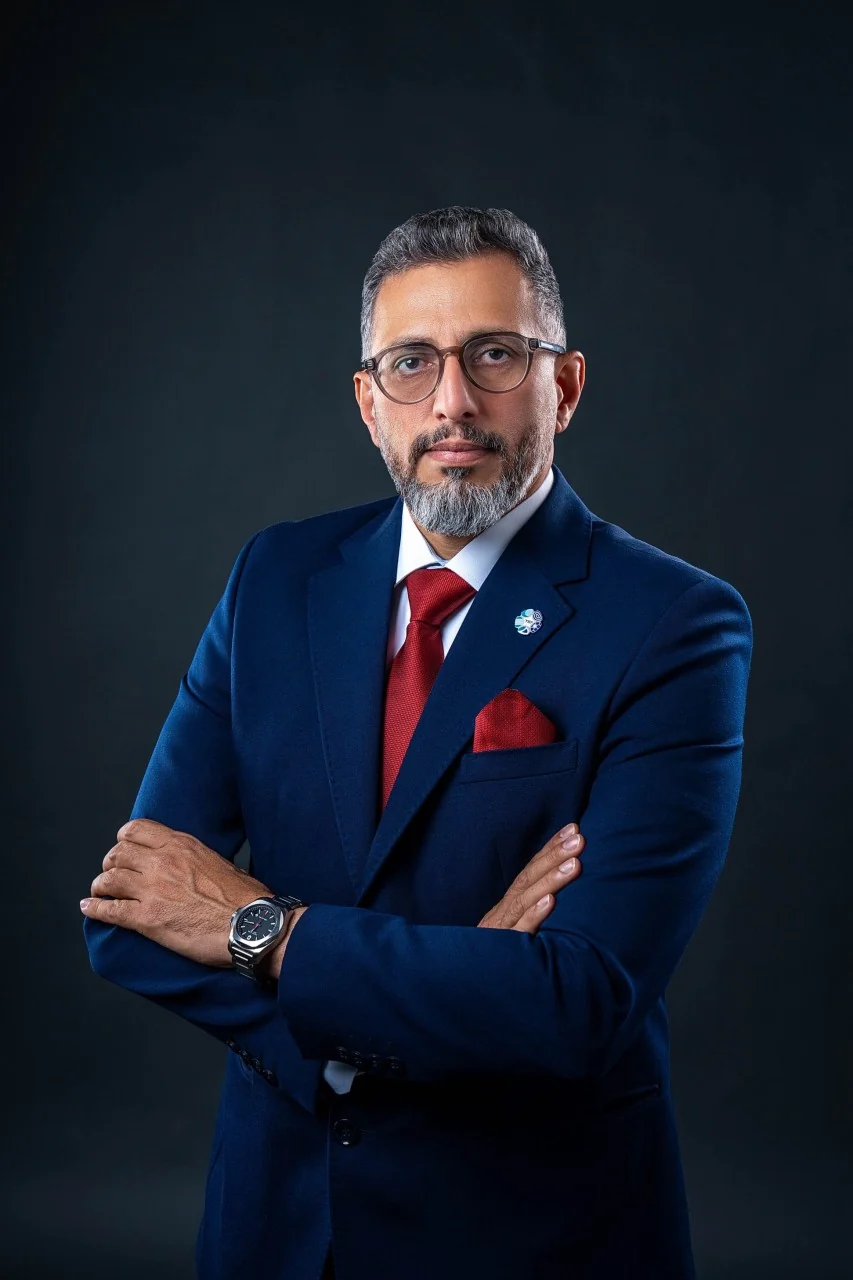
This is the gap T57 intends to close. Its founder and chairman, Afzal Hussain Mohammed Nakheeb, sums it up in one phrase: “strategy without execution.” In his view, producers, governments, banks and logistics operators exist, but remain confined within systems that communicate poorly. T57 says it aims to become the digital execution layer connecting verified supply with verified demand, then coordinating the transaction through to the physical movement of goods.
The interview nevertheless requires a clear separation between the announced architecture and what is already demonstrable. Afzal Hussain Mohammed Nakheeb says that a pilot is active in five countries and that 34 real shipments have passed through the ecosystem. He distinguishes these operations from engagements spanning 67 countries and more than 150 memoranda of understanding or letters of intent: “an MoU is not a transaction.” Commercial launch is announced for February or March 2027. T57 therefore appears not as a fully deployed global infrastructure, but as an emerging system whose first flows must still become recurring, measurable and reproducible at scale.
The project’s strategic significance lies in this potential scale-up. Infrastructure capable of connecting the food needs of several states, assessing counterparties and contributing to the allocation of flows could become an infrastructure of power. T57 advocates a national or federated architecture that, according to its chairman, would allow sovereign data to remain in its country of origin. But he also acknowledges that artificial intelligence has not yet demonstrated autonomous and measurable physical allocation at scale, and that a complete system for independent algorithm auditing has not yet been deployed.
The contradiction is therefore central: how can fragmentation be resolved without creating a new point of concentration? The targets announced for 2028 — 11 to 17 active markets, roughly 40,000 active subscribers and a revenue run-rate of around $127 million — primarily set out an economic trajectory. But on their own, they will not be enough to demonstrate T57’s impact on food trade itself: volumes moved, lead times reduced, waste avoided or producers connected. The eight questions therefore seek to determine whether T57 is already building a genuine execution layer for international food trade, or whether it currently possesses only the architecture and early signals of a system that still has to be proven at scale.
Question 01
JLPdecryptage
During your work with the Islamic Organization for Food Security (IOFS), a specialized institution of the 57-member Organization of Islamic Cooperation (OIC), you described encountering what you called “strategy without execution” — a gap between policy ambition and operational delivery. T57 emerged from that diagnosis. But the global food system is not short of platforms, strategies, or declarations. What is the specific structural failure — not the symptom, but the root mechanism — that convinced you that an entirely new digital infrastructure was necessary rather than better execution of existing ones?
Afzal Hussain Mohammed Nakheeb
We produce enough food in the world. That's not the problem. The problem is that a surplus in one country and a deficit in another don't automatically connect. A producer with grain and a government that needs grain can sit on opposite sides of a gap that has nothing to do with production.
I call it “strategy without execution” because I kept watching the same pattern across the countries and institutions I was working with. A country signs a food-security strategy, a producer has supply, a bank has capital, a logistics company has capacity, and none of it moves, because each of those sits in its own silo. An MoU doesn't move a tonne of wheat. A marketplace listing doesn't finance a shipment. A logistics platform doesn't verify a buyer's creditworthiness. Somebody still has to connect verified supply to verified demand, arrange the financing, handle the logistics, clear compliance, and settle the trade. That connective layer is what was missing.
That's the specific gap T57 is built to close. Not another strategy document, but the execution infrastructure underneath the ones that already exist.
FROM ARCHITECTURE TO OPERATION
JLPdecryptage
T57 was pre-launched in 2023 during the OIC Ministerial Conference and IOFS General Assembly in Doha. Al Mukarramah, the group behind T57, had previously signed an MoU with the IOFS covering areas including agricultural zones, distribution hubs, contract farming, logistics and market access. T57 describes its architecture as an AI-native ecosystem unifying trade, finance, logistics and traceability, with “real-time surplus-deficit signals” and national food systems functioning as “live dashboards.” Against that stated architecture, which components are today operational at scale — meaning they are processing live transactions, moving physical commodities or governing actual trade flows — and which remain at the institutional-cooperation or proof-of-concept stage?
Afzal Hussain Mohammed Nakheeb
I'd rather be precise about this than impressive about it.
Right now we have a live pilot running across five countries, and 34 shipments have actually gone through the ecosystem: real transactions, real commodities moved, not simulations. Alongside that we have relationships across 67 countries and more than 150 MoUs and LOIs tied to the broader T57 ecosystem.
Those are two different things and I don't like collapsing them into one number. An MoU is an agreement. A shipment is proof. The five-country pilot matters because it's where we're stress-testing the whole chain, sourcing, verification, transaction coordination, physical movement, in the real world, not on a slide.
The next phase is scaling what's been validated in that pilot into more markets and corridors. Commercial launch is planned for February or March 2027. So today T57 is an operationally emerging platform with a working pilot and proven shipments, not a fully live global ecosystem. I'd rather say that plainly than let the architecture description imply more than it currently is.
THE GOVERNMENT PARTNERSHIPS
JLPdecryptage
Your public profiles cite “70+ Government Partnerships.” The term “partnership” covers a wide spectrum — from a signed Memorandum of Understanding to an integrated national procurement system. Could you walk us through the taxonomy of these seventy relationships? Specifically: how many are MoUs or Letters of Intent, how many have progressed to pilot projects with defined metrics, and how many have reached the stage where a government agency is using T57 infrastructure to execute a food-trade or procurement decision?
Afzal Hussain Mohammed Nakheeb
I'd split this into two numbers rather than one, because combining them would overstate things.
We have engagement across 67 countries: governments, institutions, producers, trade bodies, companies. Separately, we have more than 150 MoUs and LOIs across the ecosystem. Those aren't the same measure. The 67 is the breadth of the network. The 150-plus represents formalised cooperation, interest or commercial intent across the broader T57 ecosystem, and even within that group the maturity varies a lot. Some are institutional relationships, some are commercial leads, some are moving toward pilots, and a smaller number are closer to actual transaction activity.
An MoU is not a transaction. I've said that internally more times than I can count, and I'll say it here too.
What actually matters is conversion: how many of those relationships turn into verified supply, verified demand, financed and executed contracts, and eventually recurring trade. So rather than round everything up into “70+ government partnerships,” I'd rather give you the honest 67-country and 150-plus-MoU numbers and let the execution data prove what they're worth over time.
ARTIFICIAL INTELLIGENCE
JLPdecryptage
Your platform claims to use AI/ML to generate real-time surplus and deficit data, optimize trade matching, and transform national food systems into operational dashboards. These are ambitious claims in a sector where smallholder farmers in many target markets still operate largely offline and where data quality remains the primary bottleneck. Where, specifically, does T57's AI currently produce a measurable, verifiable output — not a forecast or a recommendation, but a decision or allocation that has altered a physical outcome in the food chain? And for markets where ground-level data is scarce, what is your method for closing the input gap before asserting the output?
Afzal Hussain Mohammed Nakheeb
I won't claim the AI has already independently caused a measurable allocation of commodities at scale. That would be overstating where we are.
What we're building is different from a standard forecasting tool. A conventional system tells you “Country X is likely to face a wheat shortage.” What we want is for the system to eventually say something closer to this: this country has a verified requirement of this quantity and spec, these producers can plausibly meet it, the supply is verified, the route is viable, the financing works, compliance is satisfied, execute. That's the gap between food intelligence and food-trade execution, and we're still building toward the execution end of it.
On the data problem, you're right that smallholder-heavy markets are exactly where ground data gets thin, and I don't think the answer is telling the model to fill in the blanks. We layer verification instead: producer-reported data, partner and institutional datasets, trade records, remote sensing where it's useful, and human or institutional verification when the primary data isn't good enough. The rule we hold to is simple. The system should know when it's uncertain and ask for more verification rather than manufacture confidence from weak inputs, especially on something with the stakes of food security.
GEOPOLITICS
JLPdecryptage
T57 is a Saudi-based platform emerging at a time when Saudi Arabia is placing increasing emphasis on technology, trade resilience and food security. The Gulf states remain highly dependent on imported food, while the Strait of Hormuz concentrates geopolitical risk. A unified digital infrastructure that sits between sovereign governments and their food supplies carries inherent strategic weight. How do you address the concern that such a platform could itself become a structural vulnerability for importing nations — and why should a government in sub-Saharan Africa or South Asia trust its food-security data to an infrastructure governed from the Gulf rather than domestically?
Afzal Hussain Mohammed Nakheeb
Yes. If we built it wrong, T57 could absolutely become a strategic vulnerability itself. Any infrastructure that becomes critical to food security creates concentration risk, and I don't want to replace today's fragmented system with a new single point of failure that happens to be called T57.
So the design principle is distributed trust, not centralized dependency. A government shouldn't have to give up control of its food data just to participate. National data and sovereign intelligence stay under the jurisdiction and permissions of whoever owns them. T57 connects systems. It doesn't own them.
Which gets to the second half of your question: why should a government in sub-Saharan Africa or South Asia trust infrastructure sitting in the Gulf? Honestly, it shouldn't trust us just because of geography. Trust gets earned through governance, technical safeguards, contractual protections, and behavior over time, not by where the servers happen to sit. The Gulf gives us a useful position between Asia, Africa and Europe, with strong ties into trade, logistics and capital. But location shouldn't determine who controls another country's data. If a government can't get a straight answer from us on where its data is, who can access it, and what we're allowed to do with it, then we haven't earned that trust yet.
DATA AND SOVEREIGNTY
JLPdecryptage
If T57 succeeds at the scale you envisage, its infrastructure could process or provide access to data on national production, import dependency, pricing, logistics routes and financing flows across dozens of countries. Your platform uses AI/ML for predictive analytics, blockchain for traceability and a “club model” with continuous KYC/KYB. Who owns that data? Who audits the algorithms that rank creditworthiness or predict surplus and deficit? And if a government decides tomorrow that its national food data should not leave its borders, can T57 operate as a federated node, or does the model require centralization to function?
Afzal Hussain Mohammed Nakheeb
T57 shouldn't own data just because it passes through our infrastructure. The rights stay with the party that has the applicable legal rights to the data, whether that's a government, a company, or a producer, under applicable law and whatever contract governs the relationship. Our job is the infrastructure and intelligence layer on top, not data ownership underneath.
For sovereign data specifically, the architecture has to support keeping it in-country. If a government needs sensitive information to stay within its borders, T57 needs to be able to run that through national or federated infrastructure rather than forcing everything into one central system. Participating in a global trade network shouldn't mean a country's raw data has to leave the country.
On algorithm auditing, I want to be honest that the governance principle and the current maturity of implementation aren't the same thing yet. We believe decisions on creditworthiness, allocation, or food-security prioritization need to be auditable and independently reviewable, and that's where we're building toward. I'm not going to claim we already have a fully deployed third-party audit regime running, because we don't, and I'd rather say that than overstate it. But the line we won't cross is letting AI become an unaccountable authority over decisions that governments and institutions should be accountable for.
THE FALSIFIABILITY TEST
JLPdecryptage
T57's stated ambition is to reduce pre-consumer food waste and improve predictability in global food trade by 2035. Those are important objectives, but they are also abstract. Let us make them falsifiable. If an independent auditor were to assess T57 in August 2028, what three specific, quantifiable metrics would you accept as proof of success or failure? I am asking for numbers — tonnes traced, dollars saved, days reduced, farmers onboarded — not narratives. And if T57 has not hit those thresholds by then, what would that tell us about the model?
Afzal Hussain Mohammed Nakheeb
I'll give you honest numbers on what I can commit to today, and I'll also tell you where I can't yet, rather than inventing precision I don't have.
On the business side, our 2028 targets are 11 to 17 active markets, roughly 40,000 active subscribers, and around $127 million in revenue run-rate. Those are targets, not results we've already hit, and I want to be clear about that distinction. I'd stand behind an auditor checking us against those three numbers in 2028.
But you asked for tonnes traced, dollars saved, days reduced, farmers onboarded, and I'm not going to hand you numbers for those today that I can't defend. We don't have them yet, and I'd rather say that than manufacture a figure to sound more convincing. What I can tell you is that those are exactly the right questions, and they're the metrics that actually prove whether T57 changed anything. Markets, subscribers and revenue tell you the business is real. Tonnes moved, waste avoided, cycle time cut and producers connected tell you whether food is actually reaching people more efficiently, and that's the harder, more important number.
So my honest answer is this: by 2028 I expect to have the business metrics validated, and I expect to be able to report real figures on trade volume, producers onboarded and cycle-time reduction from the markets where we're live. If we can't produce those numbers by then, with sourcing you can check, that's a fair sign the model isn't working the way I believe it will.
HORIZON 2035
JLPdecryptage
If T57 achieves everything you envision, the global food trade in 2035 will not simply be faster or more transparent — it will be structurally different. Describe that structure. Specifically: who will have gained leverage, who will have lost it, and what architectural safeguards would prevent the “AI-native food ecosystem” you are building from replicating the very concentration it claims to solve — replacing the oligopoly of the ABCD commodity traders with the oligopoly of a single digital infrastructure?
Afzal Hussain Mohammed Nakheeb
The goal is to shift leverage toward producers and importing governments, away from whoever currently benefits from the information gap between them.
A smallholder producer today is often several steps removed from the buyer. They don't know where the demand is, what spec is wanted, what the market will pay, or what financing exists. On the other side, an importing government can have a real strategic need without visibility into global supply. T57 is meant to close that gap. Producers get market visibility and access, governments get planning certainty, and intermediaries get paid for the value they actually add: financing, logistics, risk management, local knowledge, instead of just sitting on information other people don't have.
The harder question is what stops T57 from becoming that same chokepoint under a different name. The answer has to be structural. Open, documented APIs. Non-exclusive participation. Data portability. Governments and companies connecting their own systems instead of being forced to replace them. Contractual protection against lock-in. Nobody should have to abandon their existing infrastructure to use T57.
We're not trying to own the food-trade ecosystem. We're trying to make it work better. So by 2035, I don't want T57 described as the company that controls global food trade. I want it described as the infrastructure that made global food trade more transparent, more executable, and more resilient.

Background
About Afzal Hussain Mohammed Nakheeb
Afzal Hussain Mohammed Nakheeb is the Founder, Chairman and Head of Strategy of T57, which he has led since May 2023. He has also been Founder and Chairman of Al Mukarramah since 2020 and Chairman of AMK Holding – The Royal Private Office since January 2025. His professional career has developed at the intersection of trade, operations, agriculture and food security, primarily across India, the United Arab Emirates and Saudi Arabia.
After an initial role in the family-owned mining company Fursan Group, he held a range of distribution and retail positions at Choithrams, Transmed, Jubilant Retail and Saudi Brothers Commercial Co. He later served in several leadership roles in Madinah, notably at Namaa Al Munawara, AlMunawara Innovation Labs and BMPC. These experiences led him to work on SME development, market access, distribution chains, sustainable agriculture and the promotion of local production. He also founded Ajwati, a company specializing in food products made from the Ajwa date, and advised Azka Farms until 2025.
He holds a Bachelor of Commerce from Bangalore University and an MBA in Retail Management, Sales and Distribution from the National Institute of Business Management. He supplemented this academic background with several executive education programs. In 2016, he completed programs focused on retail leadership and strategy at Harvard Business School and Babson College. In 2017, four Stanford University programs covered strategic execution, change management, project portfolio management and leadership. In 2018, he completed a Babson College program devoted to strategies for exponential company growth.