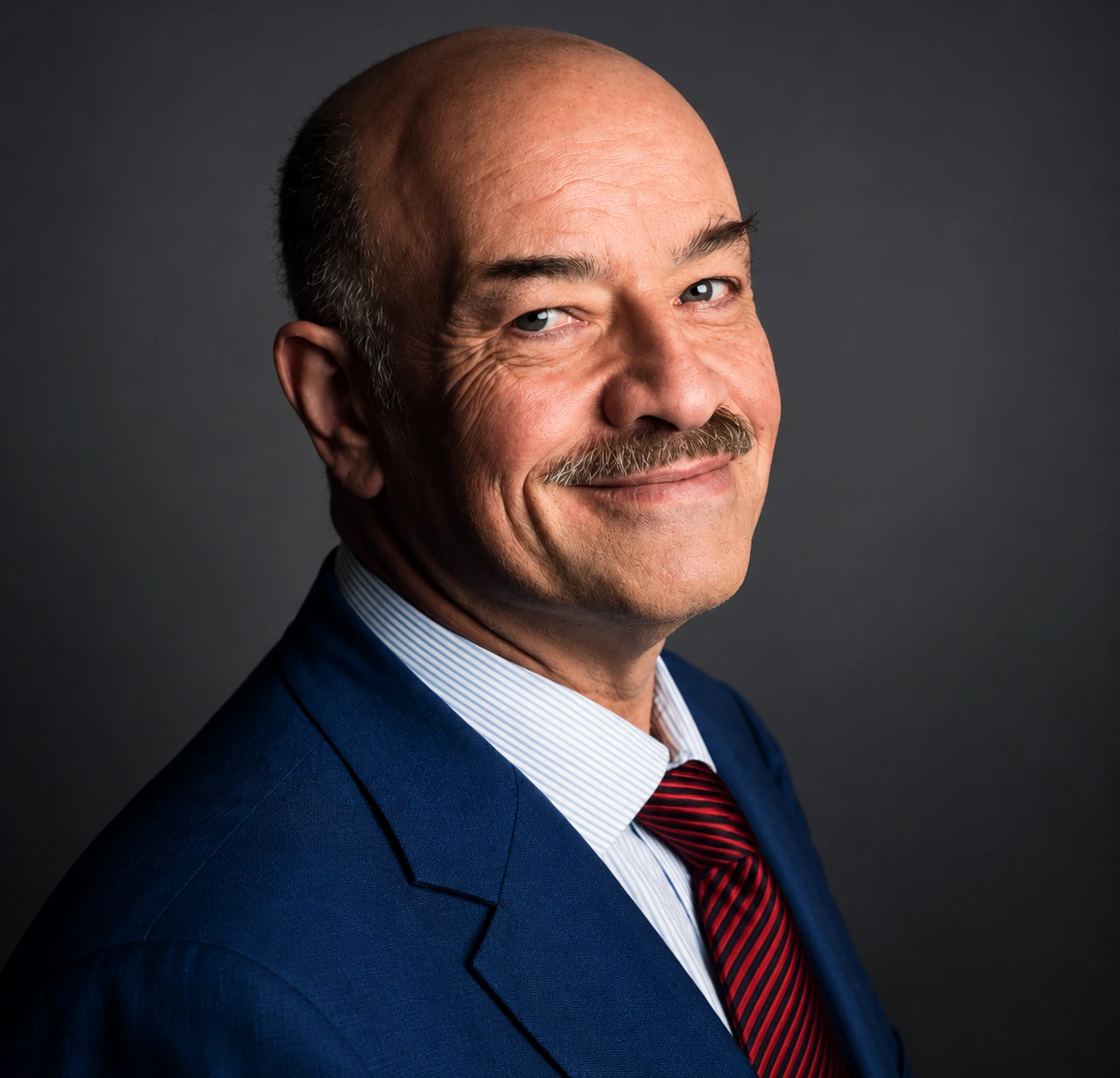
The interview
01
Anticipating the unpredictable
In security and intelligence circles, some threats are never truly surprising. They develop slowly, visibly, documented and sometimes even theorised. Yet Western democracies often seem to react only once the breaking point has already been reached. For Alain Bauer, this chronic difficulty in anticipating events is not merely a technical problem. It reflects a deeply rooted culture of denial.
JLP Décryptage
You have worked on risk anticipation for public and private institutions. Today, which major threat do you believe is still underestimated by French decision-makers despite signals that are already clearly visible?
Alain Bauer
“Almost all of them are underestimated. What is often dealt with in a rational but accounting-based way — ‘bean counting’ — in the Anglo-Saxon world, where reality is not denied but the cost of prevention is weighed against the cost of repair, the French approach is often one of denial: ‘it is not going to happen’, then ‘it is not going to happen to us’. Until what was predictable happens and panic forces a reaction. Late, very late or too late.”
02
The State facing new criminal structures
Drug trafficking can no longer be reduced to traditional organised crime. In several European territories, forms of parallel authority are gradually emerging, combining territorial control, underground economies and violence as a source of rent. Alain Bauer nevertheless believes that loss of control is not inevitable.
JLP Décryptage
Do you believe the French State still retains a genuine capacity for control in the face of certain highly structured forms of crime, or are we gradually witnessing a loss of authority in certain territories and sectors?
Alain Bauer
“Yes. Any State that truly wants to act can.”
JLP Décryptage
Drug trafficking now appears to structure a genuine parallel economy with its own territorial, financial and human logic. Are we still dealing with traditional organised crime, or with a form of parallel authority that holds certain territories through rent and violence?
Alain Bauer
“It is a criminological classic, from Carbine and Spirito in France to Al Capone in the United States. But for the first time on our territory, a proto-cartel, a proto-mafia — the DZ — has managed to establish and entrench itself beyond its ‘natural’ territory and take control, through brutal conquests or franchise agreements, of complete corridors including medium-sized towns and not only suburbs.”
03
Diffuse radicalisation and new violent trajectories
The pyramidal structures of terrorism have given way to much more fragmented, rapid and unpredictable forms. Social networks now accelerate the move to action while simultaneously dissolving former ideological frameworks.
JLP Décryptage
Are radicalisation phenomena now evolving towards more diffuse and unpredictable forms, particularly through online communities, fragmented individual trajectories or networks of disaffiliation?
Alain Bauer
“To a large extent, yes. Hyperterrorism has largely been eradicated. But the acceleration of moves to action through social networks, the younger age of criminal and jihadist actors, and more improvised methods of attack indicate that a ‘revolution in terrorist and criminal affairs’ is developing.”
04
When crime adopts everyday technologies
Civilian drones, automation, artificial intelligence and cybercrime: tools once reserved for States or specialised organisations are becoming progressively accessible to far more diffuse networks.
JLP Décryptage
Do artificial intelligence and automation technologies, in your view, change the very nature of certain forms of crime, or do they merely accelerate old mechanisms? In either case, what concrete example best illustrates this phenomenon in your experience?
Alain Bauer
“They are already having an impact.”
Alain Bauer
“The use of drones is now an established fact.”
Alain Bauer
“Cybercrime is expanding rapidly.”
Alain Bauer
“A ‘Mythos’ of criminality would probably constitute a tipping point.”
05
A fragmented global security landscape
The emergence of a multipolar world is also reshaping forms of conflict. Digital tools now circulate between States, private groups, criminal networks and cyber mercenaries, progressively blurring traditional boundaries of power.
JLP Décryptage
The competing rise of the United States, China and Russia in technological, information and strategic fields is accompanied by an apparent fragmentation of the European response. Does this disunity, in your view, create concrete security vulnerabilities that State actors or transnational networks may already be exploiting?
Alain Bauer
“The dispersal of the tools revealed and ‘stolen’ by Edward Snowden, together with the Russian State’s outsourcing to digital mercenaries, has revealed the scale of the dispersal and proliferation of offensive capabilities among criminal organisations and the weakness of State responses, particularly in the West.”
06
“There is no such thing as a feeling of insecurity”
For decades, the French security debate has been structured around a permanent opposition between perception and statistical reality. Alain Bauer firmly rejects that distinction.
JLP Décryptage
How do you explain the fact that feelings of insecurity are increasing in some areas while crime indicators remain relatively stable? Do you see this as an effect of media dynamics and digital virality, or as realities on the ground that traditional statistics still fail to capture?
Alain Bauer
“There is no such thing as a ‘feeling of insecurity’.”
Alain Bauer
“This propaganda term was invented to deny reality: a climate of physical violence rising sharply after several centuries in which public space, particularly urban space, had been progressively civilised. This reversal of trend, very noticeable in France for around fifteen years, has created deep concern among citizens, who are asking for greater tranquillity, safety and public security. There is no shortage of tools to confirm these realities, but denial remains widespread.”
07
The fundamental misconception
JLP Décryptage
Finally, what do you see as the main misconception or most widely held belief in the French public debate today on security and crime?
Alain Bauer
“That it does not exist and that nothing can be done about it.”
His background
About — Alain Bauer
Professor Emeritus of Criminology at the Conservatoire national des arts et métiers (Cnam), Alain Bauer is a permanent member of Cnam’s Security & Defence team. He is also an associate professor at Fudan University in Shanghai, a Senior Research Fellow at the Center on Terrorism at John Jay College of Criminal Justice in New York, and director of the Police and Criminal Sciences Chair within the Security Management MBA of the French Gendarmerie’s Military Academy. His work has focused on organised crime, terrorism, intelligence, cyber threats, public security and the contemporary transformation of conflict.
His recent publishing activity reflects this breadth. In 2026, Trump, le pouvoir des mots analyses Donald Trump’s linguistic and persuasive strategy; Une autre histoire du crime offers a historical journey through criminality, from ancient societies to cybercrime; and Intrigues à l’ONU continues the spy series Une mission de l’agence Mozart, launched in 2025 with Opération Zelensky and Menace sur Taïwan and followed by Conspiration au Vatican. La Vérité sur le système Epstein examines the case as an international criminal system, focusing on protection networks and mechanisms of impunity. In autumn 2026, Sauver nos enfants. Le livre noir de la pédocriminalité en France is due to extend that work through an investigation into failures to protect minors across several institutions.
Across essays, works of criminology and geopolitical fiction, Bauer returns to the same underlying issue: how do societies identify threats, how do institutions respond to them, and why do some warnings remain without effect for so long?

Alain Bauer with a selection of his recent books