
International interview
“Our role is not to preserve this legacy like a museum”
Bianca SennaCEO, Senna Brands, niece of Ayrton Senna Ewerton FuliniVice President, Ayrton Senna Institute
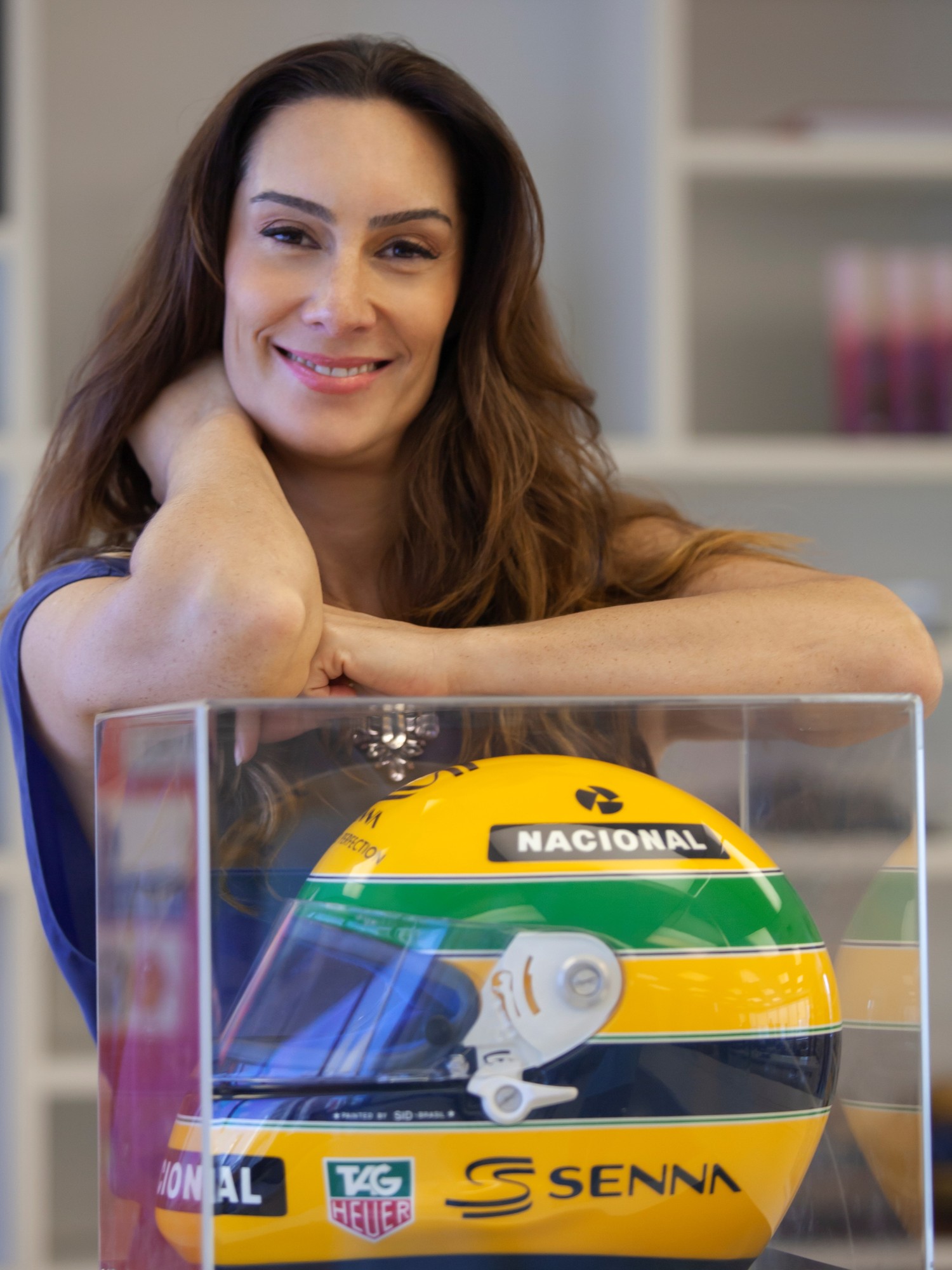 Bianca Senna, CEO of Senna Brands. Senna Brands
On May 1, 1994, Brazil declared three days of national mourning. Millions converged on São Paulo for a farewell on a scale the country ordinarily reserves for its major political figures. Ayrton Senna was thirty-four. Nothing in the usual logic of sporting deaths prepared anyone for what followed. And yet, more than thirty years later, with an entire generation that never watched a single one of his races live, his name still holds a place in Brazilian culture that very few historical figures can claim.
It is worth trying to understand why. Senna does not occupy Brazil’s sporting memory the way a record or a tally of victories might. He occupies a place in how the country thinks about itself. In the years he raced, Brazil’s collective self-esteem was fragile. Senna raised the national flag on the highest step of the podium, Sunday after Sunday, and that repeated gesture said something that reached well beyond sport: a Brazilian could stand against the world, win, and remain entirely himself. Once that idea settles into a collective consciousness, it does not fade easily.
But memory, however vivid, does not in itself amount to a legacy. Many admired figures eventually dissolve into nostalgia, reduced to archival footage and a slowly dulling emotion. What sets the Senna case apart is the decision, taken very early, to convert that memory into structured action. Founded by Viviane Senna mere months after her brother’s death, the Ayrton Senna Institute reached the threshold of 40 million educational engagements with children and young people across Brazil in 2026. More than thirty-one years of work in every Brazilian state, in over 3,300 municipalities. The method is not charitable in any conventional sense: teacher training, the strengthening of pedagogical practice, systematic collaboration with public education networks. The Institute does not celebrate a memory. It acts on the very conditions in which children learn.
Alongside this, another imperative has asserted itself, more delicate still: transmitting to those who lived through none of it. Under the leadership of Bianca Senna, Senna Brands has built an ecosystem present in more than 70 countries, uniting over 60 partner brands and deploying audiovisual content, experiences, products, and digital worlds to the point of making Senna the first racing driver to have an exclusive map in Minecraft. In the United States, six out of ten Gen Z young people maintain, according to Senna Brands, some form of connection with him. The series Senna, released on Netflix in 2024, was among the most watched in over 50 countries. The question this enterprise raises is less commercial than it appears: how do you speak about a man to those who never heard an engine roar on a Sunday morning, without betraying what he stood for, without reducing his name to a mere selling point?
That is the question, among others, we put to Bianca Senna, CEO of Senna Brands and niece of Ayrton Senna, and to Ewerton Fulini, Vice President of the Ayrton Senna Institute. The first carries responsibility for the identity, strategy, and global transmission of the Senna name. The second embodies the educational, institutional, and social dimension of this legacy the one that transforms individual inspiration into a concrete lever for public policy.
What is at stake here touches on something broader than a sporting destiny. It concerns what remains of a person after death, the moral responsibility of those who carry their image, and the perpetually unstable line between transmission and exploitation. And it concerns the rare possibility that a memory born on a racing circuit might, thirty years later, help widen the educational horizons of millions of children and young people.
I
In Brazil, the death of Ayrton Senna on May 1, 1994, triggered three days of national mourning and drew millions to the streets of São Paulo for his funeral — an event on a scale ordinarily reserved for the country’s great political and cultural figures. More than thirty years have passed. An entire generation has never watched a single one of his races. How do you explain that his presence remains so vivid in the Brazilian collective memory? What allows a Formula 1 driver to occupy, even today, a place in the national imagination comparable to that of Brazil’s great historical figures?
 Bianca SennaCEO, Senna Brands, niece of Ayrton Senna
Ayrton embodied the idea that a Brazilian could compete on equal terms with the rest of the world and win, without giving up who he was. On that first of May, we lost a national symbol, and I grasped the full scale of it in that very moment, watching how people were overcome. More than thirty years on, Ayrton’s values and mindset remain relevant because they are timeless. And also because they continue to reach people through so many different channels: experiences, products, tributes. This work of keeping the memory alive through the Senna and Senninha brands and through the Ayrton Senna Institute transforms that legacy into inspiration and purpose.
Ayrton Senna was often described as the symbol of a winning Brazil, capable of standing out on the international stage despite the country’s structural challenges. Today, in a context marked by deep social inequalities and intense political polarization, how does Senna’s legacy speak to contemporary national identity? Does his image still represent a Brazil united around excellence, merit, and determination, or has it come to symbolize an ideal the country is still striving to reach?
Bianca SennaCEO, Senna Brands, niece of Ayrton SennaAyrton possessed qualities that inspire us as individuals. Pushing past your limits, striving to become the best version of yourself, doing good, having courage these are values that apply to every one of us, regardless of who we are. It is a call to believe in our own potential and to awaken the hero that exists within each of us. Ayrton raised Brazil’s flag on the highest step of the podium at a time when the country’s self-esteem was fragile. That left a profound mark, and it remains to this day a symbol that it is possible to believe in your dreams.
Ayrton embodied the idea that a Brazilian could compete on equal terms with the rest of the world and win, without giving up who he was.
Bianca Senna

II
Founded by Viviane Senna just months after her brother’s death, the Ayrton Senna Institute has already reached more than 36 million children and young people across Brazil. Faced with the persistent challenges of Brazilian public education, the Institute opted for a systemic approach built on teacher training and the refinement of pedagogical practice. How does this strategy reflect the vision Ayrton Senna held of education as an instrument of social transformation and a means of reducing inequality?
Ewerton FuliniVice President, Ayrton Senna InstituteFirst, an update: in 2026, the Institute reached the milestone of 40 million educational engagements with children and young people in Brazil. This work is the translation of Ayrton Senna’s legacy not merely as memory, but as a concrete strategy for social transformation. His trajectory showed that talent can exist anywhere, but it needs to find opportunities in order to develop. In education, that means refusing to accept that a child’s background should determine their future.
That is why we develop evidence-based educational solutions and work in partnership with public education networks, strengthening teachers, school leaders, and pedagogical practices. The teacher holds a central role in this strategy, because it is the teacher who transforms knowledge into learning and who, day after day, expands the possibilities for every student. By working systemically with municipal and state education authorities, we ensure that good practices are not confined to a single school or a small group of students but reach entire networks. Over more than thirty-one years, we have been present in every Brazilian state and in more than 3,300 municipalities, accumulating over 40 million educational engagements with children and young people.
That is how Ayrton’s legacy comes to life: by creating the conditions for millions of students to develop their potential, and by contributing to a country in which opportunities are less determined by social inequality.
Brazil remains one of the most unequal countries in the world, where access to quality education still depends heavily on the territory in which a child is born and grows up. The Ayrton Senna Institute has chosen to focus its work primarily on the country’s most vulnerable regions. How has Senna’s legacy been mobilized to build a genuine project of social justice through education? And to what extent do the results observed in partner municipalities demonstrate the capacity of a public figure, even after death, to inspire a lasting movement of collective transformation?
Ewerton FuliniVice President, Ayrton Senna InstituteIn education, social justice means ensuring that the place where a child is born does not determine how far they can go. Although Brazil has made progress in universalizing access to basic education, profound learning gaps persist between regions, municipalities, and social groups.
That is precisely why the Institute concentrates its work on public networks and territories facing the greatest challenges. Our premise is that vulnerability must never mean low expectations: every child and every young person can learn, provided they have access to the right opportunities and conditions.
Over the course of our work, dozens of partner municipalities have achieved systemic transformations in their education networks. Cities that once ranked among the lowest on educational indicators have risen to the top, becoming national benchmarks. Cases such as Sobral, Licínio de Almeida, and Coruripe, among others, show that it is possible to consistently change the trajectory of an entire network.
These results are not the product of isolated action. They occur when education becomes a political priority, when leaders work with targets and evidence, when teachers receive training and support, and when pedagogical practices reach every school in the network. Transformation then ceases to benefit only a few classrooms or a few students and becomes part of the municipality’s educational culture and policy.
Ayrton Senna remains a powerful source of inspiration, but the strength of his legacy lies precisely in its ability to mobilize thousands of people around a shared cause. When that inspiration is converted into knowledge, public policy, well-prepared teachers, and concrete learning, an individual legacy begins to drive a collective and enduring movement of social transformation.
In education, social justice means ensuring that the place where a child is born does not determine how far they can go.
Ewerton Fulini
In France, the comedian Coluche left behind the "Restos du Cœur," a major social institution that helps more than a million people every year. In Brazil, the Ayrton Senna Institute has become a national reference in public education and in developing the competencies of new generations. These two legacies, born of public figures who died tragically, have followed very different paths. How does Senna Brands view this comparison? Can Ayrton Senna’s legacy be understood, above all, as a long-term project aimed at transforming society through education?
Ewerton FuliniVice President, Ayrton Senna InstituteThe comparison should be understood with respect for the particularities of each trajectory. Both Coluche and Ayrton Senna demonstrate how admiration for a public figure can be transformed into social mobilization and continue to produce impact long after their death.
These are legacies that respond to different challenges and adopt distinct models of action. In the case of Ayrton Senna, his story, his values, and his capacity to inspire generations found in education a long-term social expression. Rather than limiting itself to preserving his sporting memory, his legacy has contributed to addressing one of the structural causes of Brazilian inequality.
For Senna Brands, the strength of this legacy lies precisely in its ability to remain current and mobilizing. In the work of the Ayrton Senna Institute, it comes to life through solutions that strengthen public education, expand opportunities, and help children and young people develop their full potential.
In that sense, Ayrton’s legacy can indeed be understood as a long-term project: a permanent commitment to turning inspiration into opportunities, and opportunities into real impact for society.
III
Today, many Brazilian teenagers were born years after Ayrton Senna’s death. They never experienced the emotion of Grand Prix Sundays that held the entire country in front of the television, but they discover his story through documentaries, series, video games, and the work of the Ayrton Senna Institute itself. How does this new generation perceive a figure they never saw compete? And what is Senna Brands’ responsibility in ensuring that this transmission remains faithful to the values of commitment, excellence, and social responsibility that defined Senna’s trajectory?
Bianca SennaCEO, Senna Brands, niece of Ayrton SennaIt falls to Senna Brands to sustain and expand the points of contact between fans of every generation and Ayrton Senna’s trajectory and values. We do this through a global business platform built on product licensing, experiences, events, and tributes. For us, it is a joy to see young people "discovering" Ayrton Senna. In the United States, for example, six out of ten Gen Z young people maintain some form of connection with him whether by watching old races, following him on social media, or engaging with official products and initiatives.
Audiovisual content plays a very significant role in this. The series Senna, released on Netflix in 2024, was among the most watched in more than 50 countries. And 85 percent of the American audience said they wanted to learn more about him after watching it. Another project that illustrates this well is Minecraft: Senna is the first racing driver to have an exclusive map in the game. We have access from 150 different countries.
All of this work remains faithful to Ayrton’s values, and our responsibility at Senna Brands is enormous: every product, every partnership, every piece of content must pass through the same filter does this genuinely represent commitment, excellence, and social responsibility, or is it simply using his image to sell something? We would rather turn down a partnership than accept something that empties that meaning of its substance.
Under Bianca Senna’s leadership, Senna Brands has developed a global ecosystem bringing together partners such as Tag Heuer, McLaren, Ducati, LEGO, and ASICS. A portion of the revenue generated helps fund the work of the Ayrton Senna Institute, creating a direct link between economic development and social impact. In your view, how does this model redefine the responsibility of a company entrusted with preserving a cultural legacy? And how do you reconcile the global expansion of a brand with the need to preserve the authenticity of the message it represents?
Bianca SennaCEO, Senna Brands, niece of Ayrton SennaThis model positions us as a global business platform that is currently present directly in more than 70 countries, with a portfolio of over 60 partner brands across a wide range of segments including the ones you mentioned. The curation process is extremely rigorous and involves criteria of synergy and purpose. And the logic of this ecosystem provides for a share of the royalties generated by brand activities to be transferred by Senna Brands to the Institute.
Over the past six years, Senna Brands has grown eightfold. We are pursuing our global expansion strategy, targeting new territories and new audiences, in order to reach ever more people with Ayrton’s values. In the end, we are not selling a product: we are conveying a mindset, a timeless symbol.
Ayrton’s legacy has never depended on any particular media format.
Bianca Senna
Few public figures who have been gone for more than thirty years continue to exert such a profound influence on a nation’s collective imagination. Ayrton Senna has become far more than a racing champion: today he is a cultural, educational, and social reference for millions of Brazilians. How do you see the future of this legacy in a world where new generations build their references through media, habits, and values very different from those of the 1990s? Does Senna’s legacy still have the capacity to inspire Brazil in a lasting way and to reach new generations on an international scale?
Bianca SennaCEO, Senna Brands, niece of Ayrton SennaAyrton’s legacy has never depended on any particular media format. It is built on human connection. It evokes an inner calling and a desire to be the heroes of our own story. That awakens something that crosses generations. Today, people discover Ayrton through streaming, social media, games, or through the Institute’s work in schools. The channel changes, but the message is very strong and enduring.
Formula 1 has grown considerably in recent years. Current drivers regard Ayrton as the ultimate reference point, and the sport itself ranks him among the greatest of all time. In other words, Senna is the idol of many young people’s idols. That too is a contemporary factor of identification and helps awaken even greater interest.
Our role at Senna Brands is not to preserve this legacy like a museum. We want to keep translating Senna’s values into the language of each generation, wherever that generation may be. As long as there is someone, somewhere in the world, trying to be better than they were yesterday, Ayrton’s legacy will have a reason to keep living.

About
More than thirty years after Ayrton Senna’s passing, his legacy continues to radiate far beyond the Formula 1 circuits. Today, it is expressed through two complementary institutions: Senna Brands, which oversees the international development and transmission of his identity, and the Ayrton Senna Institute, which translates his values into concrete action in the service of public education in Brazil.
At the helm of Senna Brands, Bianca Senna, Ayrton Senna’s niece, leads the global strategy for the family brand. Under her leadership, the organization is now present in more than 70 countries and unites over 60 partner brands. A portion of the revenue generated by this ecosystem directly funds the work of the Ayrton Senna Institute. Her role is to keep this legacy alive for new generations while safeguarding the authenticity, the rigor, and the values that shaped the trajectory of the three-time Formula 1 World Champion.
Alongside Bianca Senna, Ewerton Fulini, Vice President of the Ayrton Senna Institute, carries the educational and social dimension of this commitment. For over three decades, the Institute has developed, in partnership with public education networks, solutions grounded in research, teacher training, and the improvement of pedagogical practices. In 2026, it crossed the threshold of 40 million educational engagements with children and young people in Brazil, maintaining a presence in every state in the country and in more than 3,300 municipalities.
In this interview with JLP Décryptage, Bianca Senna and Ewerton Fulini reflect on the singular place Ayrton Senna still occupies in the Brazilian collective imagination, the challenges of transmitting a global legacy, and how a sporting memory can, across generations, become a powerful lever for inspiration, responsibility, and educational transformation.
Photo credits
- Bianca Senna, CEO of Senna Brands. Senna Brands
- Bianca Senna. Senna Brands
- Ewerton Fulini, Vice President of the Ayrton Senna Institute. Instituto Ayrton Senna
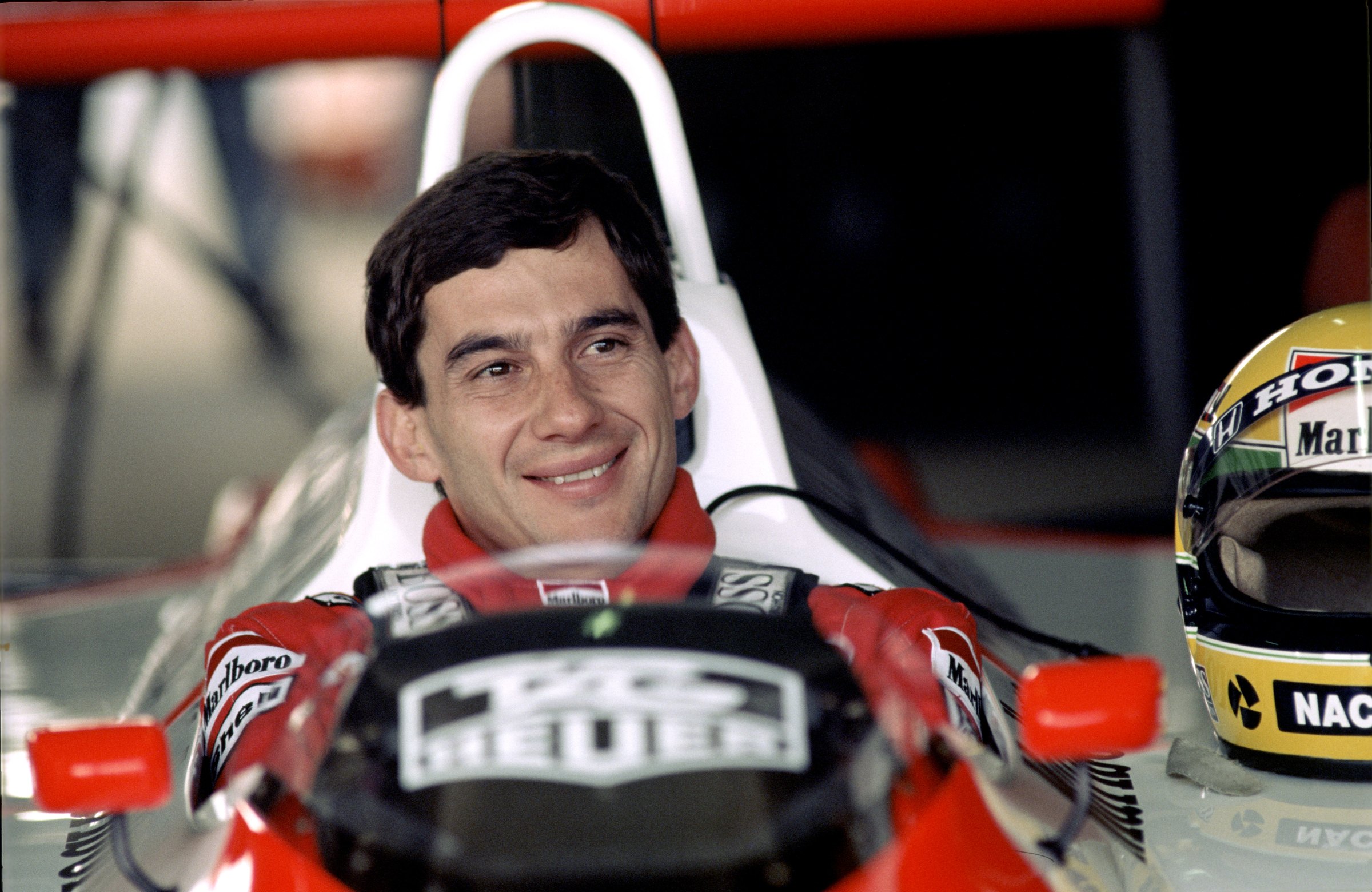
- Ayrton Senna at the wheel of his McLaren. [crédit à compléter]
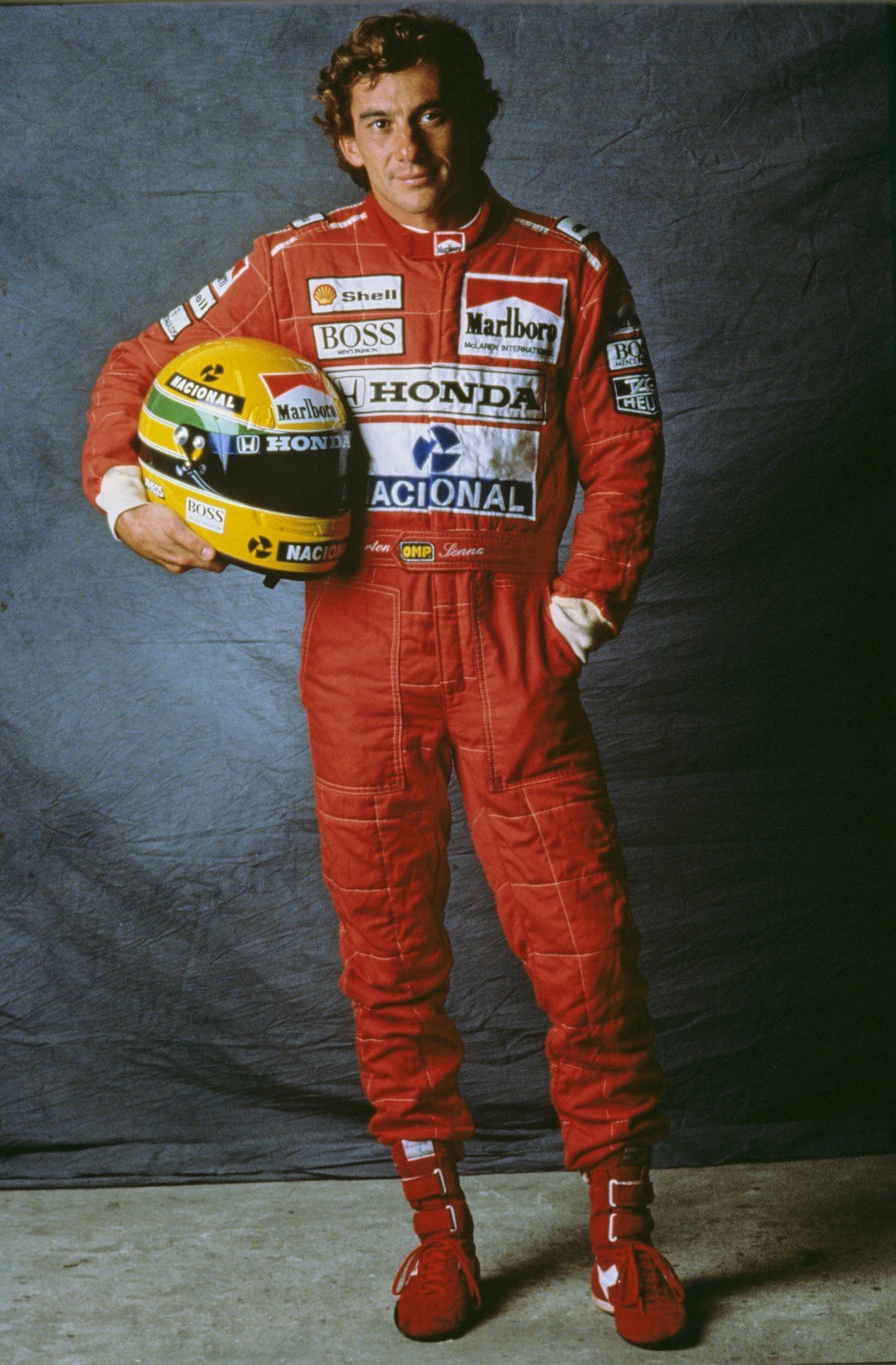
- Ayrton Senna. [crédit à compléter]
- Senna emblem. Senna Brands