Introduction
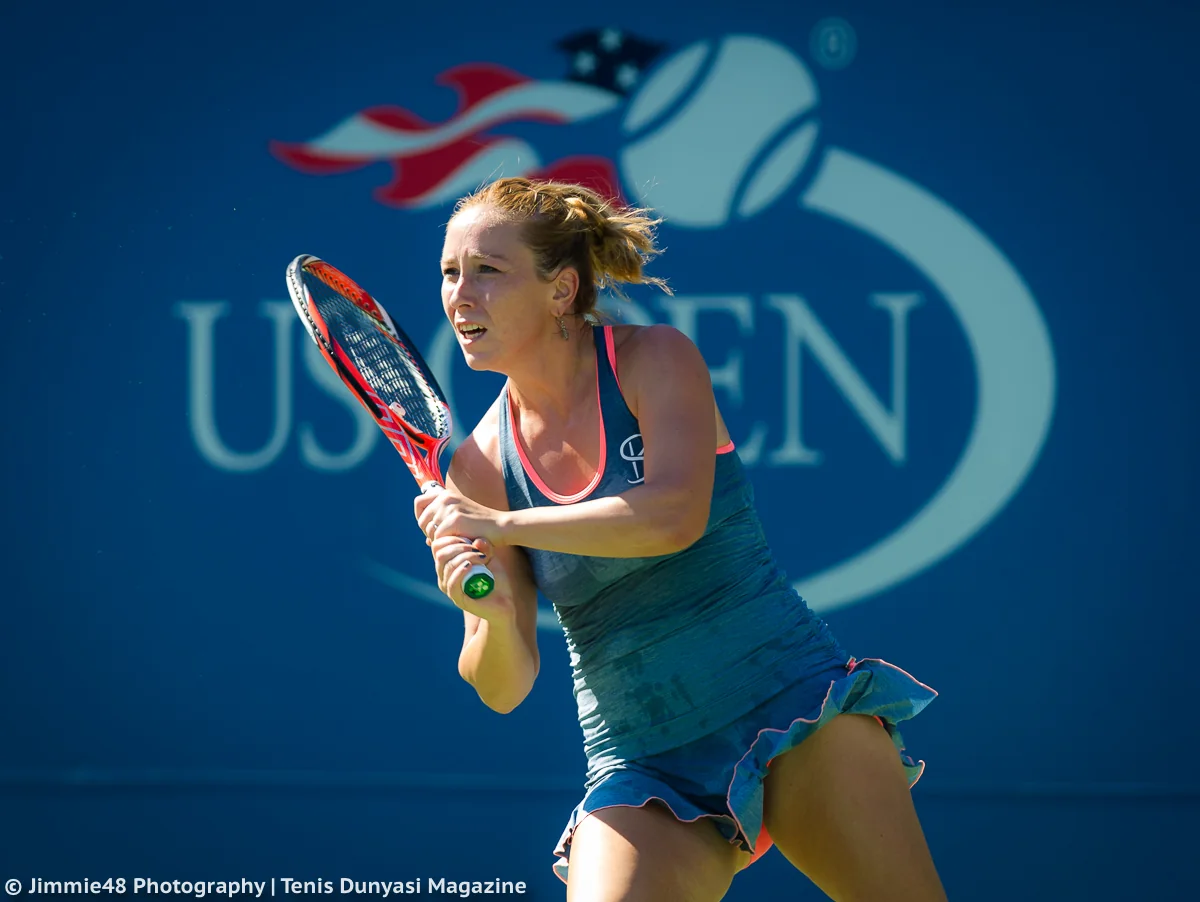
In November 2025, aged 36, Sofia Shapatava won the W35 tournament in Antalya. It was a victory that spoke to the perseverance of a Georgian player whose career reaches far beyond results. A former world No. 186 in singles who competed in the main draw at Roland-Garros in 2014, she knows the realities of a tour where expenses, isolation and a lack of support can weigh as heavily as the opposition.
In March 2020, she launched a petition calling for financial assistance for players hit hard by the suspension of competition. Elected to the ITF Women's Player Panel for the 2022–2025 terms, she then gained an insider's view of how tennis is governed — and where its limitations lie. Through SoTi Management, which she founded in 2022, she now aims to give younger athletes the guidance and resources she herself lacked.
In this interview, Sofia Shapatava discusses the personal sacrifices behind her career, persistent inequalities in tennis, the challenges facing Georgian players and a definition of success that goes well beyond rankings.

Grand interview
JLPDÉCRYPTAGE
In November 2025, aged 36, you won the W35 tournament in Antalya, nearly two decades after beginning your professional career. What continues to drive you to compete at this level, and how has your understanding of success, ambition and sacrifice changed since your early years on the tour?
Sofia Shapatava
What continues to drive me in tennis is the fact that it is a sport where you never stop growing. Your goals may change, your priorities may shift, but there is always something new to learn and something to improve. Tennis is my life, and I know I will always play, in one way or another. As long as I step onto the court, I will keep challenging myself to become better. I also believe in leading by example. I want to stay fit, disciplined and committed to the same standards I encourage young players to follow. I believe that if I ask something of others, I should be willing to demand the same of myself. My goals and priorities may have changed over the years, but one thing never will: the tennis court is and always will be, my home.
JLPDÉCRYPTAGE
In March 2020, you launched a petition calling for financial support for lower-ranked tennis players during the pandemic. Six years later, having also experienced the sport from within its governing structures, what has genuinely improved for players outside the world's elite, and which fundamental inequalities remain unresolved?
Sofia Shapatava
Yes, I did. And unfortunately, I also faced a significant wave of negativity, first and foremost from my fellow athletes. I received far more criticism than support.
Nevertheless, I believe in speaking your mind and standing up for what you believe in, so I kept going. And at the end the players did receive some aid.
There are actually more improvements happening behind the scenes than people might realize. We have seen a slight increase in prize money distribution, and while it is still far from perfect, it is a step in the right direction.
Hospitality has also been introduced at certain ITF World Tennis Tour events at the $75K-$100K level and there are ongoing projects aimed at improving conditions for players. Unfortunately not as many as needed. It also is not purely dependent on ITF, all the organisations have to unite in order to make a change.
There also should be people who are willing to speak up.
I love this sport, and I hope to continue contributing to making it better for the next generation of players.
JLPDÉCRYPTAGE
You served on the ITF Women's Player Panel from 2022 to 2025, representing the interests of professional players. Looking back on those four years, where do you believe player representation achieved meaningful progress, and what did the experience teach you about the limits of influence within international tennis governance?
Sofia Shapatava
I learned a great deal through the meetings and discussions. I genuinely enjoyed working alongside other tennis players, hearing different perspectives, and exchanging ideas.
What made this experience particularly valuable was the opportunity to see the tennis tour from a completely different angle, not just through the eyes of a player. It gave me a broader understanding of how the system works, the challenges behind certain decisions, and the complexity of making changes. Some of my own perspectives shifted along the way. I was also disappointed in many topics, but regardless this was an amazing experience.
I believe the knowledge and experience I gained have been incredibly valuable and continue to help me in my work today, especially when it comes to guiding and supporting other players.
JLPDÉCRYPTAGE
You have spoken openly about the difficulties of pursuing a professional tennis career in Georgia, particularly the lack of financial support and opportunities. If you were given the responsibility of designing a development programme for the next generation of Georgian players, what would you change first to ensure that talent, rather than financial circumstances, determines their chances of success?
Sofia Shapatava
This is a difficult question. At the end of the day, building a strong talent development program requires substantial financial resources.
Many European tennis federations benefit from major sponsorship agreements with companies, which allow them to establish development teams, support promising young players, and provide the necessary resources for their growth.
Georgia is a relatively small country, and naturally, attracting that level of financial support is much more challenging. The opportunities and resources available are simply not the same as in larger countries with stronger financial backing.
I believe there is talent in Georgia, but talent alone is not enough. Without proper financial support, a structured development system and long-term investment, it becomes much harder for young players to reach their full potential.
Needless to say I disapprove of level of coaching and amount of coaches for our country. The quality is simply not there and it would take tremendous work to change that.
JLPDÉCRYPTAGE
Throughout your career, you have experienced the challenges of managing tournament schedules, international travel, training arrangements and limited budgets largely on your own. How did those experiences shape the creation of SoTi Management, and what specific problems are you determined to solve for athletes that you believe traditional management structures have too often overlooked?
Sofia Shapatava
My own career is a perfect example of how you can build something out of almost nothing. I started traveling to tournaments with just $100 in my pocket and eventually, I made it to Grand Slams entirely through my own efforts.
But that journey came at a price. It took a toll on my mental health, my personal life and required enormous sacrifices. I had to figure out almost everything on my own, learning through trial and error, making mistakes, and spending far too much time and energy on things that could have been handled differently if I had proper guidance.
That experience is exactly what inspired me to create SoTi Management. My goal has always been to use the knowledge, experience and connections I have built over the years to make the journey easier for other players.
I want young athletes to have access to the guidance and support I didn't have, to avoid unnecessary mistakes, make smarter decisions and focus more of their energy on actually developing as players.
I know from personal experience that you can succeed with very little, but I also know how much easier that journey could be with the right people by your side.
JLPDÉCRYPTAGE
SoTi Management brings together tennis consultancy, physical preparation, nutrition, travel planning and mental coaching. Beyond the individual services, what is your broader philosophy of athlete development, and how do you measure success when a player's long-term well-being and financial sustainability may be just as important as their ranking?
Sofia Shapatava
Throughout my career, my understanding of success and my priorities have changed.
I have come to realize that success means something different to every individual. What I consider success may not be what someone else considers success, and that is perfectly fine.
At the end of the day, I believe the ultimate goal should be to feel content with yourself, to be healthy, happy, and at peace with the choices you have made.
Of course, goals, achievements, and ambitions are important, but they should not come at the expense of your well-being.
Rankings, titles, and achievements may define certain moments in your career, but they should never define your worth as a person. The rest is just numbers.
JLPDÉCRYPTAGE
As you continue developing SoTi Management, you are actively seeking new partnerships and opportunities for collaboration. Which types of organisations or partners would be most valuable to your long-term vision, what could SoTi offer them in return, and what would you ideally like the company to have achieved over the next three to five years?
Sofia Shapatava
SoTi's strategy is simple, as simple as it can be. In fact, it is the same philosophy I try to follow in my own life: support as many people as possible, grow together and learn from one another.
We collaborate with different organizations, companies and individuals, but there is one standard I never compromise on: I have to genuinely believe in the project and the people behind it.
I will never promote, recommend, or sell something I don't personally believe in. For me, trust and authenticity are far more important than short-term financial opportunities, even if they are big.
My goal is to build meaningful partnerships where everyone benefits, develops and contributes something valuable.
I believe that if you focus on creating real value for others, success will follow naturally.
JLPDÉCRYPTAGE
Your journey has taken you from the professional tennis circuit to representing fellow players and building your own management company. Looking ten or twenty years ahead, what lasting contribution would you most like to make to the sport, and what would you hope a young Georgian player could achieve because of opportunities that did not exist when you began your own career?
Sofia Shapatava
I have never been someone who likes making long-term plans and that hasn't changed.
What matters most to me, both personally and professionally, is staying true to my values, remaining honest and knowing that I have contributed to as many meaningful projects as possible.
I want SoTi Management to continue growing through genuine relationships, valuable collaborations and opportunities that make a real difference.
Most importantly, I hope to keep creating opportunities for young players who are looking for guidance, support and someone who believes in them.
I don't necessarily need to know where I will be in five or ten years. What matters to me is knowing that, along the way, I have made a positive difference in someone's journey, stayed true to myself, and never sold out my values for financial gain.

About
About Sofia Shapatava
- Professional player
- ITF Women’s Player Panel 2022–2025
- Founder of SoTi Management
Georgian professional tennis player Sofia Shapatava has competed on the international circuit since the 2000s. She reached career-high WTA rankings of world No. 186 in singles and No. 132 in doubles. In 2014, she appeared in the main draw at Roland-Garros, and in November 2025 she won the ITF W35 event in Antalya. She has also represented Georgia in international team competition, including the Fed Cup, now known as the Billie Jean King Cup.
Beyond competing, Shapatava has advocated for professional players. She launched a petition calling for support for lower-ranked athletes during the 2020 pandemic and served on the ITF Women's Player Panel from 2022 to 2025.
The founder and CEO of SoTi Management since 2022, she provides guidance to athletes across tennis coaching, physical preparation, nutrition and tournament planning. Her professional profile also lists a law degree obtained in 2022 and several fitness and nutrition qualifications awarded in 2020. Her approach combines first-hand experience of elite sport with a commitment to making the path easier for emerging players.
Sources and fact-checking
Éléments biographiques vérifiés au 19 octobre 2026. Les diplômes et la date de fondation de SoTi Management sont repris du profil professionnel communiqué par l’interviewée, sans vérification indépendante des certificats. / Background checked as at 19 October 2026. Degree details and SoTi Management’s founding date are drawn from the interviewee’s professional profile and the certificates have not been independently verified.
- WTA — Sofia Shapatava, player profile and career statistics
https://www.wtatennis.com/players/312623/sofia-shapatava/stats - WTA — Grand Slam record (Roland-Garros 2014)
https://www.wtatennis.com/players/312623/sofia-shapatava/record - ITF — Women’s Player Panel, roll of honour (2022–2025)
https://www.itftennis.com/media/15128/itf-world-tennis-tour-player-panel-roll-of-honour-womens.pdf - Petition launched by Sofia Shapatava, 19 March 2020
https://www.change.org/p/international-tennis-federation-tennis-players-to-get-financial-support-from-in-period-of-stop-caused-by-pandemic - 1TV Georgia — Antalya W35 title, 30 November 2025
https://1tv.ge/news/chogburti-sofia-shafatavam-antaliis-turniri-moigo-1tvsport/ - Billie Jean King Cup — Sofia Shapatava profile
https://www.billiejeankingcup.com/en/players/82a51339-61e9-48ea-ac45-3eea23645ffa - Sofia Shapatava — professional profile supplied by the interviewee / LinkedIn
https://www.linkedin.com/in/sofia-shapatava-b0811a19a/
Note éditoriale / Editorial note: Original English replies have been reproduced from the material supplied by Sofia Shapatava, retaining her wording; French responses are translations. Numbering and message salutation were excluded from the published interview format.